FREDERICTON — The New Brunswick government says it will increase its record-breaking deficit after spending more on social services and receiving less than expected money from federal programs.
In a fiscal update released on Thursday, the province said it added just over $264 million to its historic annual budget deficit during the first quarter, from April to June of this year.
The Liberal government had forecasted a 2026-27 deficit of $1.39 billion in its budget, the largest in the province’s history. That number is now projected at $1.66 billion.
That will push the province’s net debt to $16.2 billion by March 2027, according to finance department officials. It also means the province’s debt as a measure of GDP will rise from 30.8 per cent to 31.3 per cent.
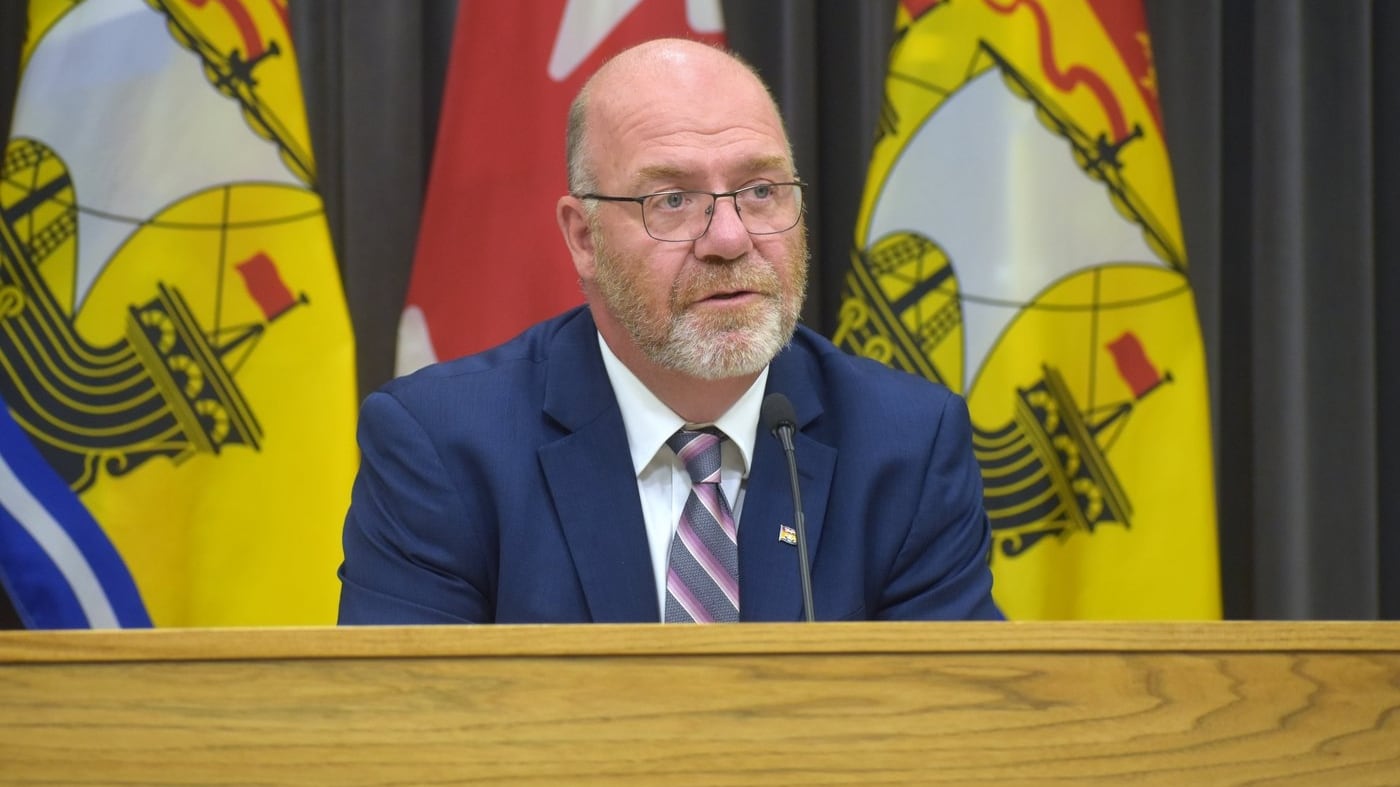
Finance Minister Rene Legacy said his department was continuing work to reduce the deficit through ongoing cuts to the civil service and other measures while also keeping essential services running.
“We are not in an either or situation here, we must meet New Brunswickers needs but we must continue to find ways to do it in a fiscally responsible manner,” Legacy told reporters in Fredericton.
“All the while looking for opportunities to meaningfully build our provincial economy.”
The province’s Social Development Department was listed as being $123 million over its projected budget, largely due to increased demand for its children, youth, seniors and disability services.
The Department of Health was projected to be over budget by $108 million amid higher operating costs for its regional health authorities and pharmaceutical services.
New Brunswick’s housing corporation and its Justice and Public Safety Department were also among the nine government bodies that were listed as over budget during the first quarter.
The province’s revenue over the three-month period was also projected to be $35.8 million lower. Officials said that’s largely due to a decrease in grants from the federal government and less money from the Atlantic Lottery Corp.
U.S. tariffs played a part, too.
The profit New Brunswick makes charging the forestry industry to cut down trees -- known as royalties -- was down $6.9 million largely due to “ongoing volatile and uncertain market conditions” officials anticipate to last at least until next spring.
However, officials cautioned that the fiscal update on Thursday was a snapshot in time that does not include the recent escalation in the trade war between Canada and the United States.
“It’s complicated,” Legacy said when asked about the impact the tariffs and counter-tariffs are having on the public purse.
Meanwhile, officials reported that oil exports -- the province’s other big mainstay -- helped drive overall domestic exports up $603 million from January to May, compared to 2025.
Crude oil is shipped from abroad, refined by Irving Oil in Saint John, N.B., and sent to the U.S., so there are no royalties for the government, unlike other provinces such as Alberta that is on track to reverse its budget deficit thanks to energy sales.
Glen Savoie, interim leader of the opposition Progressive Conservatives, said he wasn’t surprised the deficit was growing under Liberal Premier Susan Holt.
“They are hemorrhaging money. For them to overspend by another quarter billion dollars, it makes you wonder what the next three quarters are going to bring,” Savoie said by phone.
He added Holt’s recent announcement to consider lifting New Brunswick’s ban on natural gas extraction was a “Hail Mary” to get out of debt.
“The problem is … they have already outspent any proceeds from a shale gas industry by the time they finish their mandate in 2028.”
New Brunswick in the spring projected deficits for the next three years, including a projected $1.3-billion shortfall in the 2027-28 fiscal year and a $1.26-billion deficit the following year.
This report by The Canadian Press was first published Aug. 27, 2026.
Eli Ridder, The Canadian Press

