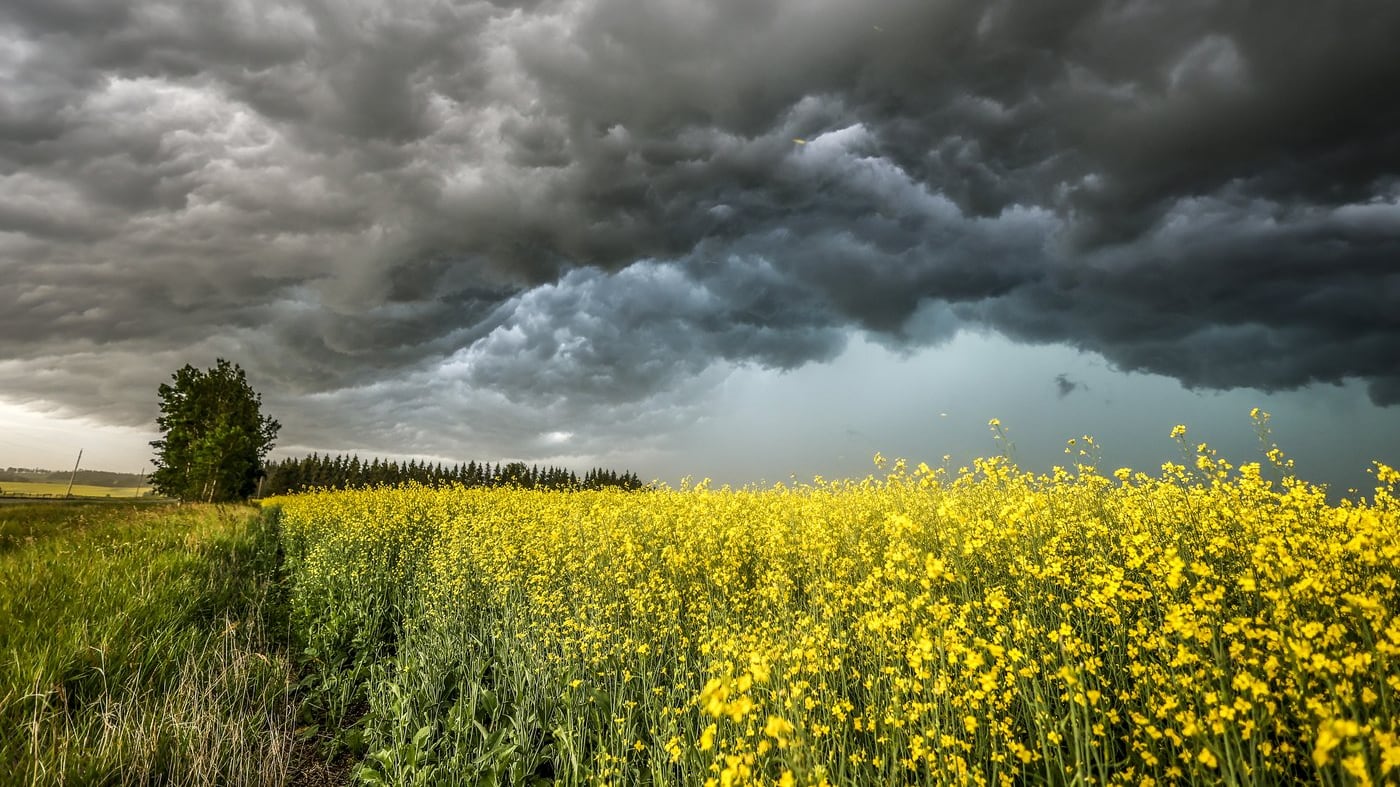
WINNIPEG -- Canadian farmers will produce 11 per cent less wheat and about the same amount of canola as they did last year, Statistics Canada said on Wednesday in its first crop production report of 2026.
But the government agency’s report, based on modeling and satellite data, estimated higher canola production than analysts expected.
Statscan made its estimates before the last two weeks of wet conditions, which have slowed the western Canadian harvest, raising questions about whether yields will fall.
Canada is the world’s largest exporter of canola and durum wheat, and a dominant supplier of high-protein spring wheat.
Statscan’s estimate of 22.1 million metric tons of canola is close to last year’s revised 22.2 million, which was a record crop. Statscan has a history of raising production estimates between this report and the final revised total.
While large, the crop will likely be consumed by increased domestic and foreign demand and leave tight leftover supplies before next year’s harvest, said Tony Tryhuk, director of futures trading at RBC Dominion Securities.
Canada’s spring wheat production is expected to fall by more than 3 million tons from 2025, Statscan said, to 26.5 million tons. Durum production, at 6.4 million tons, will fall by more than 800,000 tons from last year, it reported. Spring wheat and durum have suffered from the harvest rains, which can cause bleaching, sprouting and disease that reduce quality.
Analyst Jerry Klassen of Resilient Capital said Canada’s crops appear to have suffered from scorching mid-summer temperatures that knocked down yields from what had appeared in June to possibly be the biggest crop ever.
“The heat in July hurt the crop more than we were anticipating,” said Klassen, who expected a bigger wheat crop than Statscan estimated.
Canadian oat production declined 22.7 per cent in 2026, and barley production was near flat, Statscan reported.
Production estimates for Quebec, Ontario, Manitoba, Saskatchewan, and Alberta are calculated using model-based yields.
(Reporting by Dale Smith, Promit Mukkherjee and Ed White; Editing by Rod Nickel)

