Despite what U.S. President Donald Trump would have everyone believe, Canada has lots of what the United States and the world needs. But to turn the nation’s advantages into growth and global success, the country must build infrastructure and improve access to funding and capital.
Those are some of the findings of a new report by the Canadian Chamber of Commerce and PwC Canada, which looked at five critical sectors where Canada is strongest and found they all suffered from some of the same problems: they were missing pieces when it comes to taking a raw material and turning it into a higher-value product, and there was a slowness to act.
The report, titled “Beyond Potential: Turning Canada’s Advantages into Growth and a Better Life for All,” comes as trade talks between Canada and the U.S. remain stalled and Ottawa faces pressure to help Canadian businesses find new customers outside America.
The five sectors looked at were artificial intelligence and quantum computing, mining and critical minerals, energy, defence and agri-food.

“When we look at these challenges and unpack them, many are familiar and long standing,” said Candace Laing, president and CEO of the Canadian Chamber of Commerce and a member of the prime minister’s advisory committee, in an interview with CTV News Channel Tuesday.
“But what’s unique about this report is we outline these challenges, not generally as they apply to our economy, but as they apply to these five key sectors, which play a critical role in the current moment we’re facing.”
Artificial intelligence and quantum
Canada was an early global leader in AI research and talent, but Canadian companies struggle to compete globally. The report says they often can’t get the funding to grow past the startup stage and struggle to turn research into products people buy.
The result, the report says, is that Canada has become a net exporter of AI talent — a number of prominent figures in the AI industry who are now based outside Canada are Canadian-born or Canadian-trained. The report argues that with quantum computing, Canada has the chance to avoid the same mistake.
Mining and critical minerals
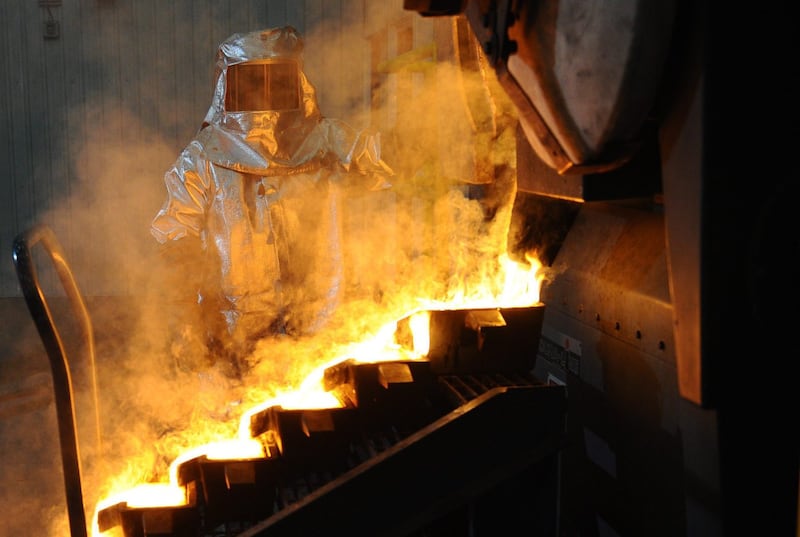
Canada has extraordinary geological resources, but the report says very few projects are positioned to move quickly. It says significant new production can take 10 to 15 years. Refining those minerals into usable industrial materials largely happens outside Canada, often in China. Fixing that, the report says, means faster permitting, new roads, rail and power for remote projects, and more skilled workers.
Laing said the permitting issue is one of the challenges that cuts across sectors.
“For any project … in mining or energy, permitting is slow,” she said. “So, what we were very happy to see in the Build(ing) Canada Strong Act is the commitment to one year review and approval process.”
Energy
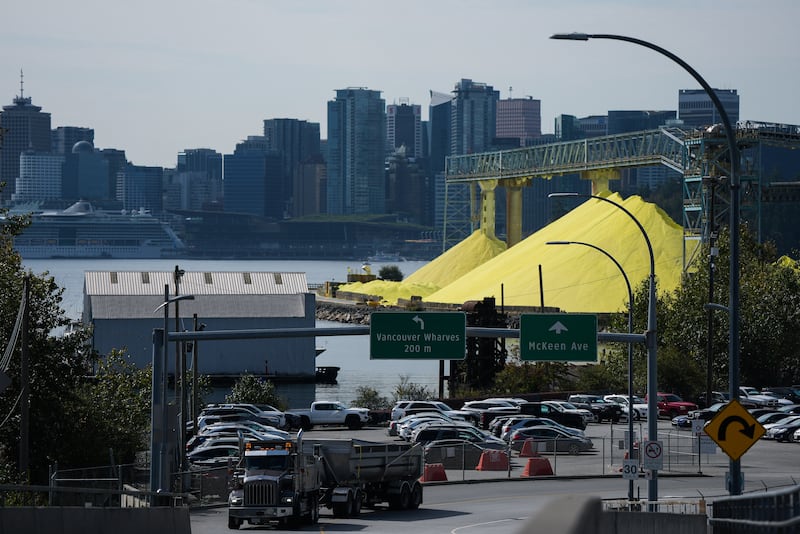
Canada is one of the world’s biggest energy producers, but about 85 per cent of its energy exports go to one customer: the United States. Reaching other buyers means building export infrastructure. The report notes Canada has just one large-scale LNG export terminal on the West Coast, while Australia and the U.S. already have deep commercial relationships with Asian energy buyers that Canada is still working to build.
Defence
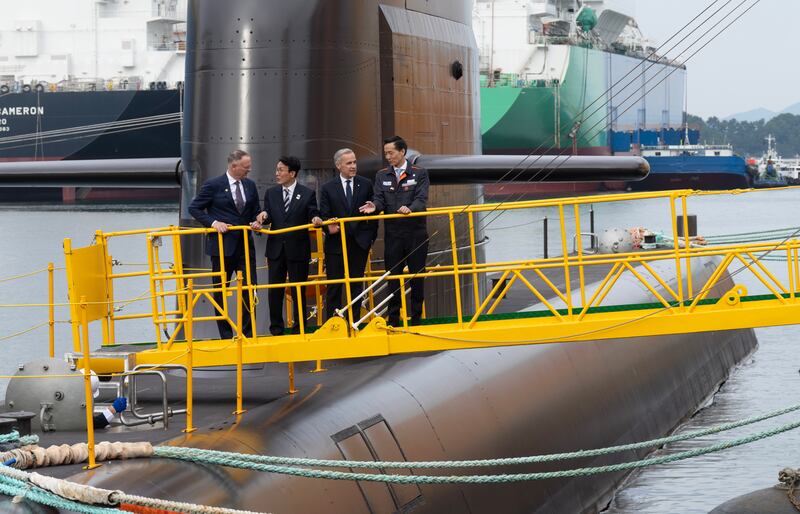
The report says Canada is about to nearly triple what it spends on defence. It warns that without changes to how Ottawa buys equipment, most of that money will go to foreign companies — and Canadian firms will end up building parts for someone else’s system, never owning the technology and never selling it abroad.
Eliot Pence, founder and CEO of Dominion Dynamics, told the report’s authors that every NATO country has a company capable of leading a major defence program except Canada.
Agri-food
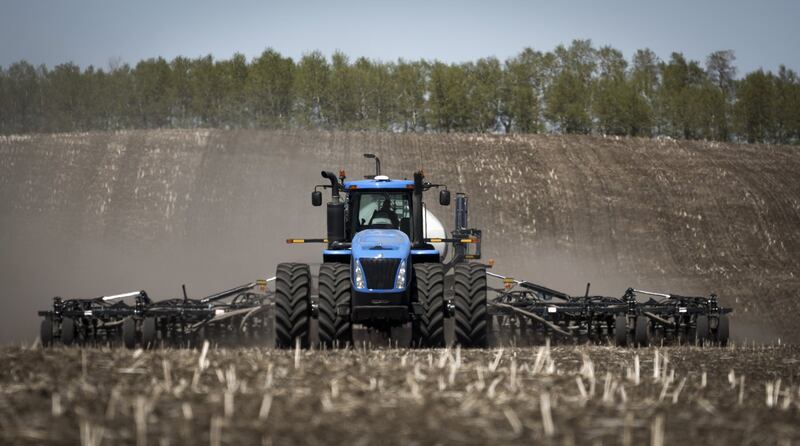
Canada is a farming powerhouse, but much of what it exports leaves raw or only partly processed. The report says the opportunity is in selling ingredients and processed food rather than bulk commodities and in fixing the rail and port bottlenecks that have sent international customers to competitors.
The report, based on PwC research and interviews with 20 CEOs and business leaders, says government and businesses need to treat what’s missing as a checklist: faster permitting, better access to capital, more infrastructure, specialized skills, stronger commercialization and better co-ordination across governments and industry.
Laing said the current economic environment makes addressing those longstanding issues more urgent.
“These five areas have missing components, again, familiar challenges, but if we miss these pieces, we could miss the very opportunity Canada has right now. There’s a door open and it won’t stay open. We have to act urgently to move through it,” she said.
Murad Al-Katib, president and CEO of AGT Foods, said in the report that Canada is stuck in a commodity mindset. The future, he said, isn’t just shipping raw bulk to other countries — it’s exporting ingredients along with finished and refined products, which are worth more.
François Poirier, president and CEO of TC Energy, is quoted as saying Canada has the skills and the fundamentals to compete internationally. What worries him is whether the country can move fast enough to react to market competition.
One business leader told the authors that if Canada is still holding investment summits in 2030 instead of putting shovels in the ground on northern infrastructure, roads and routes, it will have missed the mark.
In the key findings, the authors note work is underway to improve the situation with critical minerals, but that the transition “needs to be durable and trusted to matter.”
Laing said there are signs of progress, but the pace of change will be important.
“We’re on our way and we’re seeing some progress, but we hope to continue that momentum in the policy changes and speed we need to really achieve our full potential and really address the crisis and vulnerabilities we’re facing in our economy and country at the moment,” she said.
A separate report from Export Development Canada last week reached similar conclusions. The Crown corporation said Canada could add nearly $100 billion to its economy in the next decade by moving into processing, refining and advanced materials rather than exporting raw resources alone. It said agri-food, critical minerals, defence and aerospace have the most to gain.

