LNG Canada has confirmed it will be using Chinese steel for its upcoming Phase 2 expansion project in Kitimat, B.C.
In a statement to CTV News, an LNG Canada spokesperson says the decision is not a preference but a necessity.
“The challenge is not a preference for offshore steel, but the specialized fabrication capability required for modules of this scale and complexity. There are no fabrication yards in Canada that can manufacture and deliver the additional modules required for Phase 2,” the statement reads.
The company also says that “marine access is essential” in its decision to import steel from overseas.
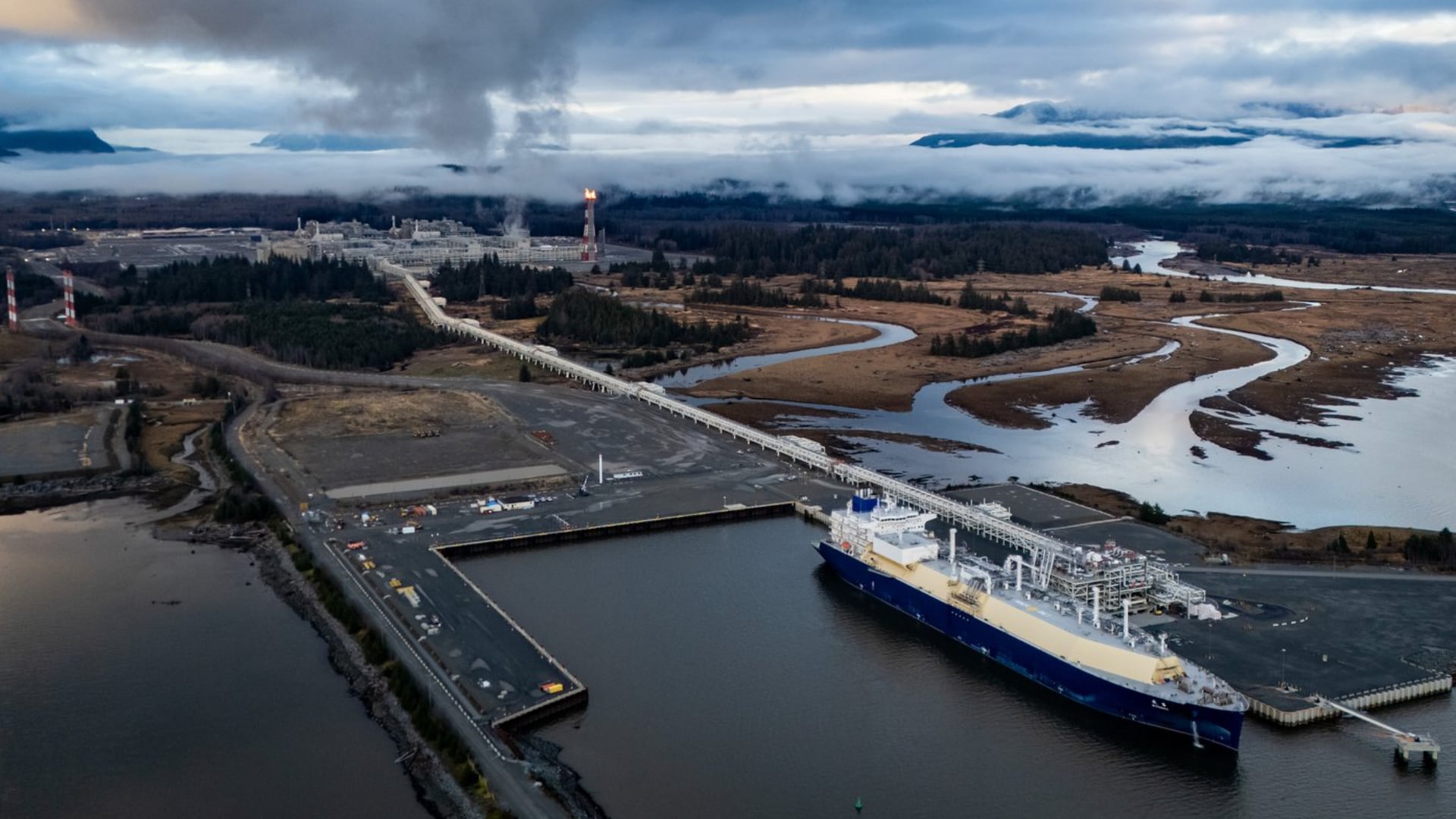
“Modules of this scale cannot be transported to Kitimat by road; they must be fabricated at a facility with direct access to tidewater and shipped by sea,” the spokesperson said. “Once in Kitimat, they can be received through LNG Canada’s existing module offloading facility, moved into position and integrated into the plant.”
LNG Canada added that the majority of the steel used in construction of a pipeline compressor for Phase 2 will be Canadian-sourced.
“Coastal GasLink is targeting almost 15,000 tonnes of steel from Canadian suppliers or mills, representing approximately 70 per cent of the steel required for that work,” the spokesperson said.
LNG Canada announced Tuesday that it’s going ahead with the Phase 2 expansion of the facility, which would double its capacity by the early 2030s, when the project is expected to be completed.
“Over $30 billion in LNG Canada (Phase) 2 will make LNG Canada the second-largest facility of its kind in the world,” said Prime Minister Mark Carney during Tuesday’s news conference.
Carney also said the expansion will create “thousands of new jobs” while connecting Canadian energy with global markets.
Phase 2 of the project will create two new processing units, also referred to as trains, at the Kitimat facility, increasing production from 14 million tonnes to 28 million.
The federal Conservative Party is criticizing the decision to use Chinese steel, saying it goes directly against the prime minister’s promise to “buy Canadian.”
“The fact that the steel fabrication cannot be done in Canada is another failure of Mr. Carney’s government to create the environment for steelmaking here at home,” says Conservative MP for Hamilton East-Stoney Creek Ned Kuruc in a statement issued Friday.
Kuruc also pointed to the partial shutdown of steel manufacturer Stelco’s plant in his hometown of Hamilton, putting hundreds of people out of work.
“Now, we learn that the project that the prime minister has touted as the second-largest private investment in Canada will use Beijing steel, at the exact time as our steelworkers are hurting the most,” said Kuruc.
The expansion will also include the addition of a new LNG storage tank, condensation tank, loading berth and expanded processing systems.
The company exports natural gas that is piped from northwestern Alberta and northeastern B.C. to the plant in Kitimat, where it is turned into a liquid state and then loaded onto specialized tankers bound for Asian markets.
LNG Canada is a joint venture between Shell, PetroChina, Malaysia’s Petronas, Japan’s Mitsubishi Corp. and South Korea’s KOGAS.

