


CALGARY – Alberta’s energy sector is benefiting from higher oil prices, but those same prices are contributing to inflation concerns that helped prompt the Bank of Canada to raise interest rates Wednesday, adding to borrowing costs for Canadians already struggling with housing affordability.
Calgary first-time home buyer Madeline Scarlett and her husband are hoping to find a permanent home for their young daughter after moving between rental properties.
“That would affect our monthly mortgage amount that we would pay,” Scarlett said of the rate hike. “That would affect our budget, like what we could afford.”

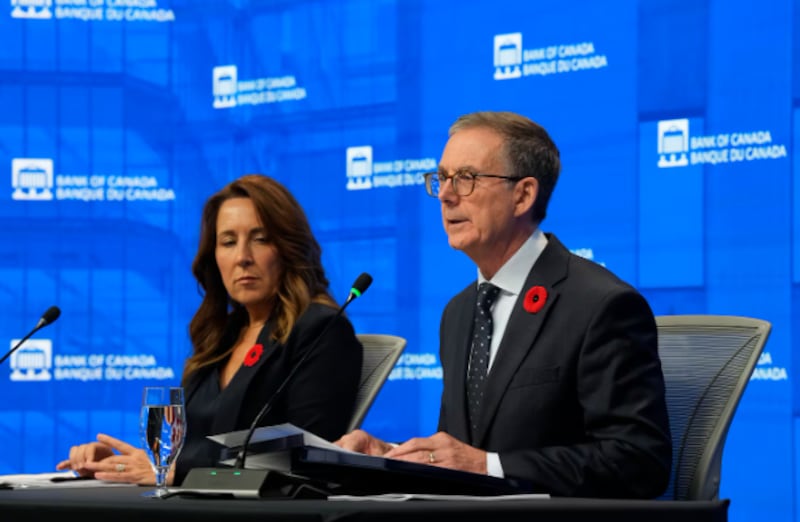
The central bank raised its benchmark interest rate by 25 basis points to 2.5 per cent, its first increase since July 2023, with inflation at 3.1 per cent.
For Canadians with variable-rate mortgages, the increase could mean higher monthly payments.
In an email, Jordan Lavin, a financial expert with NerdWallet Canada, said variable mortgage rates are expected to increase as lenders adjust their prime rates.
“On a new $500,000 mortgage with a 25-year amortization, monthly payments at those rates would rise from $2,483 to $2,549 – a difference of $66,” Lavin said.
The calculation assumes lenders pass along the full quarter-point increase. Borrowers with fixed-rate mortgages would not see an immediate change to their existing interest rate.
The Bank of Canada’s decision comes as higher oil prices boost Alberta’s energy sector, but those same prices are also fuelling inflation concerns that helped prompt the rate hike.
The ongoing conflict in the Middle East has disrupted global oil supplies, driving up energy prices.
And while the industry is benefiting, Calgary realtor Sukh Pangly said not everyone is feeling the financial boost.
“I think there is a lot of job opportunity here in Alberta,” Pangly said. “That being said, just by having a job doesn’t necessarily mean you can afford that mortgage.”
He said Calgary’s housing market has shifted in buyers’ favour over the past six to seven months, with more listings, greater negotiating power and some builders offering incentives.
“You can get the GST rebate off the purchase price, builder incentives, getting legal basement suites to offset the mortgage, monthly payment,” he said.
But saving for a down payment remains a challenge for many households with other expenses to take care of.
“Juggle bills and inflation and daycare, gas, food, all that stuff,” Pangly said.
Economics professor Moshe Lander of Concordia University questions whether the Bank of Canada was justified in raising interest rates.
“One sector doing well does not necessitate an interest rate increase, especially when that one sector is not the overall driver of the Canadian economy,” Lander said.
He also questions the timing, pointing to uncertainty surrounding U.S. trade policy and global conflicts that could significantly change energy prices and the inflation outlook.
“I think this was maybe a little bit too early to make that move,” he said. “And I think that it’s going to do a lot more damage than it does good.”
For Scarlett, buying a home has already required financial assistance from others, including a co-signer.
“We can’t afford homes by ourselves anymore, unlike our parents back in the day,” she said.
Despite the challenges, Scarlett and her husband are continuing their search for a forever home.
With files from CTV News’ Judy Trinh

