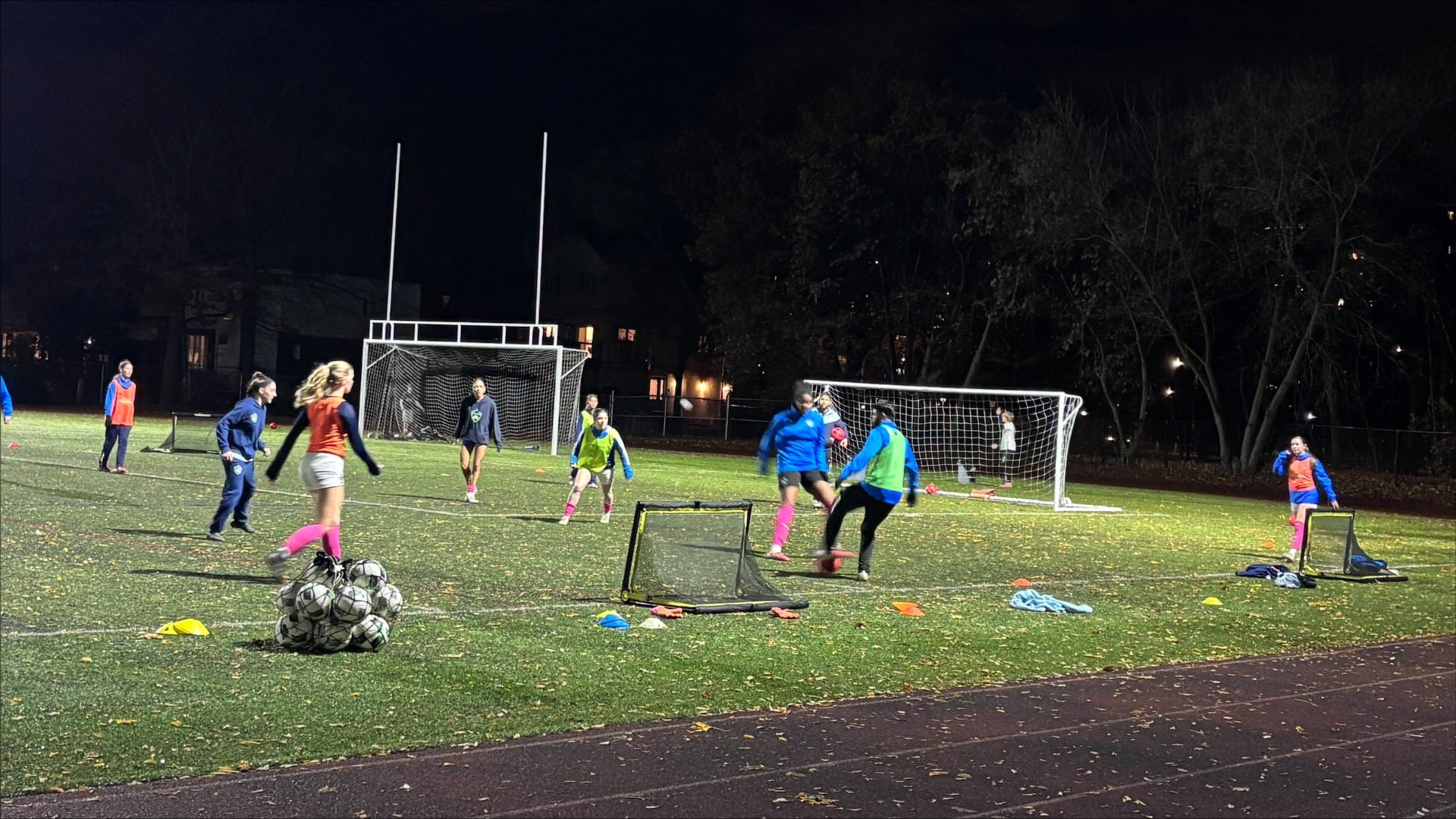
Canadian parents are limiting other expenses and, at times, going into debt just to cover the costs of their kids’ extracurricular activities, according to a Nanos Research survey commissioned by CTV News.
The survey, conducted between Oct. 31 and Nov. 2, 2026, asked 475 self-identified parents across the country what actions they take to pay for their children’s activities. The survey found 30 per cent of respondents reduce other expenses, while 14 per cent said they go into debt.
“There is significant pressure in terms of trade-offs,” said Nik Nanos, founder and chief data scientist with Nanos Research. “What is really striking about the numbers is that it if you are under 35 years of age, all of those things and all of those stresses ramp up.”
About four in 10 younger parents reduce expenses to pay for their kids’ activities.
Jessica Wruck pays about $10,000 every year for her two sons to play hockey, which includes travel and hotel costs, registration fees, and equipment.
“If we want to put our kids in the sport and we understand the cost beforehand, something else has to give,” she said. “In certain cases, we will extend our debt a little bit.”
She tries to offset costs by buying used equipment, she said. If possible, they will stay with family during out-of-town tournaments instead of paying for a hotel room and they pack their own food instead of eating at the rink.
“All those things help to sort of reduce your costs,” Wruck told CTV News.
Some Canadians have found other ways to afford extracurricular activities. According to the Nanos survey, six per cent of respondents forego forgo savings for their children’s education and two per cent work more to afford the costs. In rare cases, parents will dip into savings accounts or sell assets.
“People are still willing to do kids’ sports, I think, even with the rising costs,” Wruck said.
Limiting activities
Erin McCrea only enrolls her son, Anthony, in one extracurricular activity per year to help cut down on costs. He’s tried martial arts and swimming lessons. Right now, the 10-year-old participates in weekly art classes and hopes to take crocheting classes in the new year.
“The more we try, the more expensive it will get,” McCrea said. She juggles the cost of Anthony’s extracurricular activities with his after-school tutoring. McCrea says Anthony often gets experiences or activities as birthday and holiday gifts to help divide costs.
“Costs seem to be going up every year,” she said. “It gets expensive.”
Program providers feel the pinch
Karen Welch-Smith owns Funky Artsmiths, the art studio where Anthony takes his classes. She charges about $500 for classes in the fall and winter session with supplies included. Even though it costs Welch-Smith more to purchase art supplies, she has not increased program fees over the last couple of years. Instead, she tries to find cheaper alternatives for supplies.
“We are aware that families are maybe more thoughtful with their spending,” Welch-Smith said. “We try to keep costs down as much as we can.”
Despite the high cost of living, she has not seen a drop in registrations. Neither has Wruck, who runs a horse-riding centre south of Saskatoon. Rising costs have forced Wruck to increase lesson fees in order to cover overhead costs of the business.
As a parent who also struggles to pay for her children’s activities, increasing fees is not a decision she takes lightly.
“I do not want to raise my prices so high that the average person cannot afford riding lessons,” she said. “But if we do not increase our costs, we are either losing money or the business is not going to stay afloat or we are not going to be able to eat.”
Methodology
The results come from an omnibus survey conducted by Nanos Research using a dual-frame hybrid telephone and online random survey.
Nanos surveyed 1,058 Canadians, of which 475 self identified as having children.
The margin of error for this survey is plus or minus 4.5 percentage points, 19 times out of 20

