When former OPP organized crime investigator Rick Barnum heard the charges against four Ontario men accused last month of smuggling illegal tobacco by railway into the prairie provinces, he says his ears perked up.
If the raw-leaf tobacco the men allegedly smuggled into the country was destined for western Canada, Barnum says “that means they must now have a factory in western Canada,” which would be an unprecedented development.
“Because if you’ve got a factory in western Canada now, that completely changes the game. Completely,” said Barnum, who now serves as director of the National Coalition Against Contraband Tobacco.
The Oct. 28 bust was the culmination of an investigation by the Canada Border Services Agency (CBSA) and a team of Saskatchewan-based federal RCMP tasked with fighting organized crime.
A CBSA spokesperson told CTV News the investigation began in 2016, after a customs officer in the prairie region flagged an anomaly in the paperwork for a rail shipment.
“It was determined that a large shipment of goods from the U.S. was delivered to Canada without being reported to the CBSA, and that the undeclared shipments were moved across the border via rail containers,” the spokesperson said.
“From that original finding, the CBSA gathered more information to uncover suspected ongoing smuggling and subsequently engaged the RCMP.”
A joint multi-year investigation ensued, with the cooperation of CN Rail and the CPKC police, culminating in the charges announced late last month.
The accused are four Ontario men: Johnny Gamboa, Harminder Grewal, Rinnamoon Haddad and Avikesh Sharma, who now face a litany of charges in the alleged criminal conspiracy to smuggle undeclared American tobacco into the country, in violation of the Customs Act and the Excise Act.
The CBSA says the investigation was broad in scope, primarily impacting Alberta, Saskatchewan and Manitoba, as well as Ontario.
The border services agency would not specify where the railcars were entering the country, but confirmed the shipments they intercepted began their journey into Canada from the Chicago area.
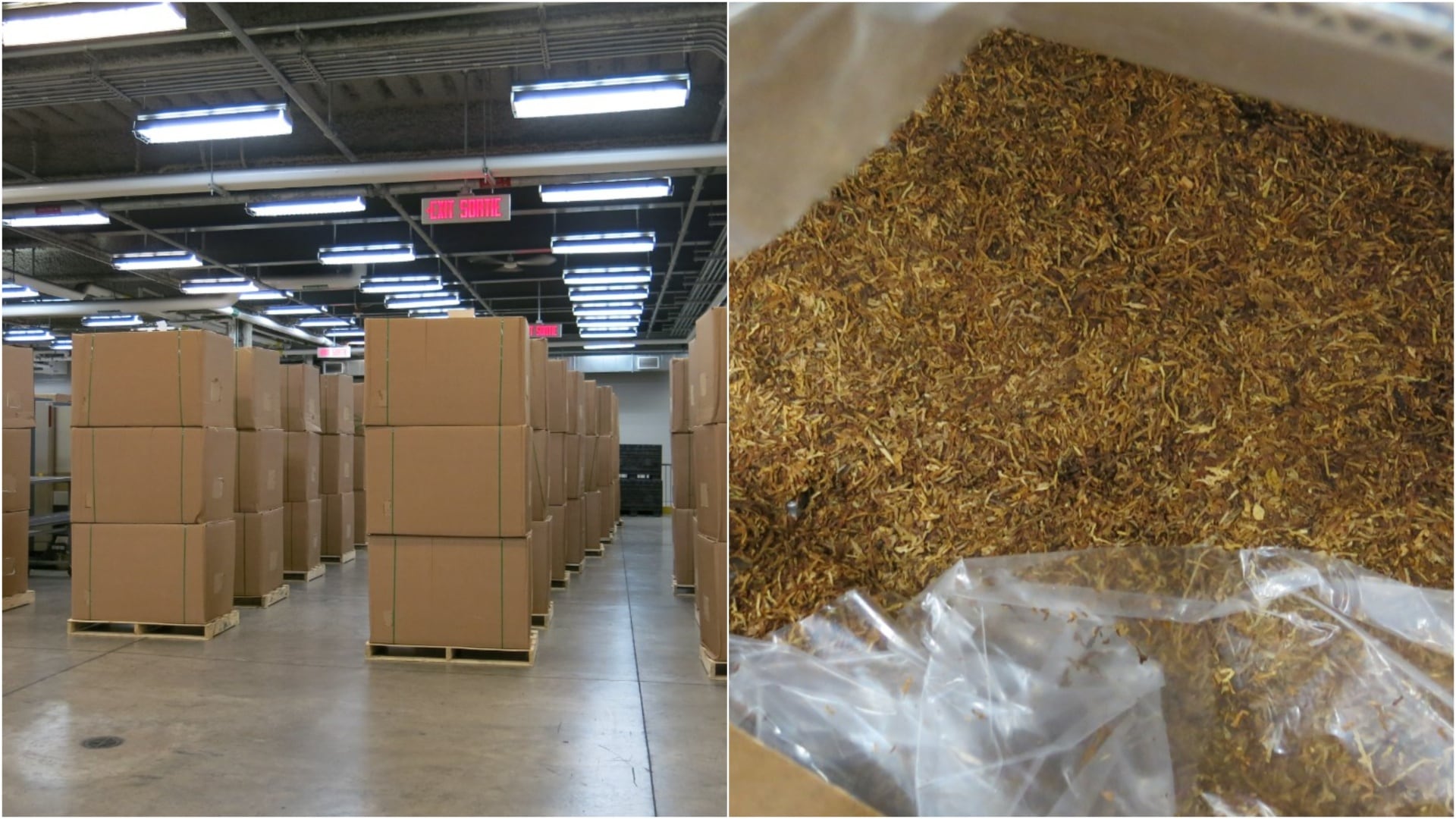
Investigators allege the four Ontario men smuggled nearly 116,000 kilograms of tobacco into Canada from the U.S., and across the four provinces, between October 2020 and April 2024.
The charges indicate that some of that tobacco was in raw leaf form. But if they knew whether that raw leaf tobacco was headed for western Canada, or southern Ontario for processing, neither the CBSA nor the federal RCMP would say. The RCMP declined to comment since the case is before the courts.
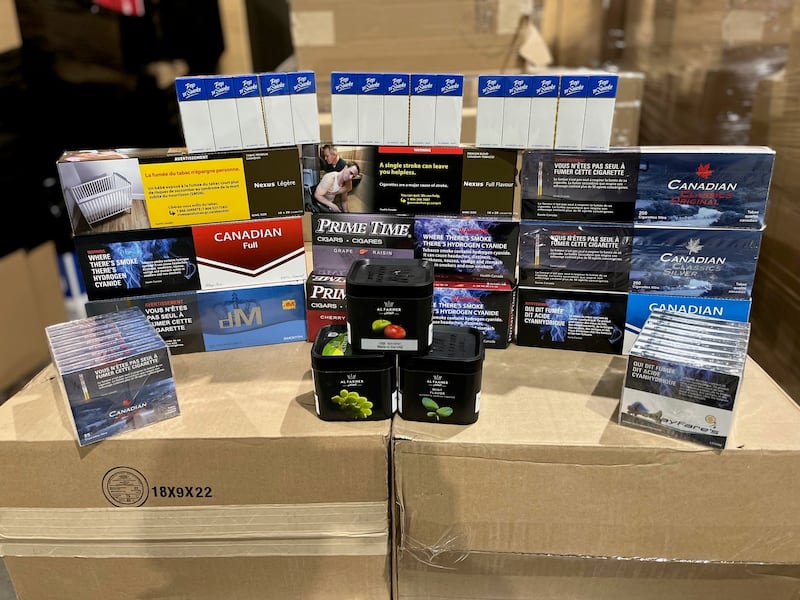
Virtually all the cigarettes sold in Canada, legal and otherwise, are produced in the region of southern Ontario centered around Canada’s most populous First Nation, Six Nations of the Grand River.
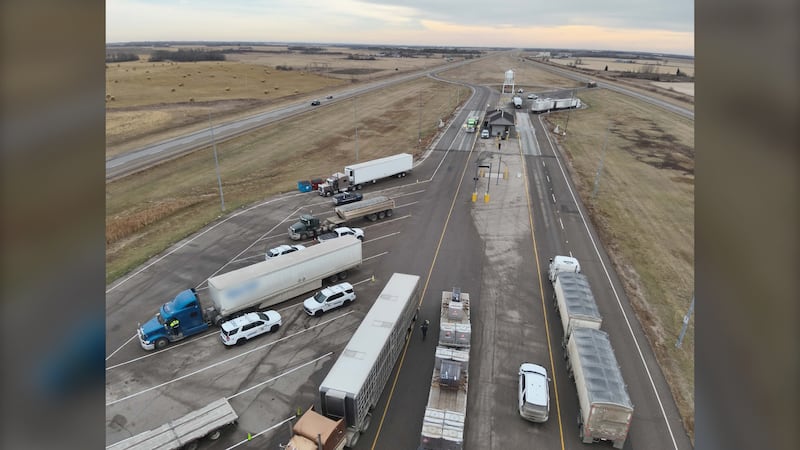
Each year, an untold number of trucks leave the region loaded with illegal cigarettes destined for western Canada.
Barnum estimates a truckload of illegal cigarettes earns approximately $1 million for criminal organizations, with packs selling for $5 on the streets of Saskatoon.
The Saskatchewan RCMP estimated the lost provincial tax revenue on a single large semi trailer seized last year exceeded $4 million. The cost of a pack of legal cigarettes lies somewhere north of $20.
With such a massive variance in price, consumers of the highly addictive product are increasingly turning to black market alternatives, and undercutting the excise and vice taxes intended to offset the future healthcare costs of smoking-related illnesses.
“Your tax revenues you think you’re going to get from legitimate tobacco are just going up in smoke,” Barnum said.
Nearly 60 per cent of all cigarette sales in Canada today are contraband, he says.

