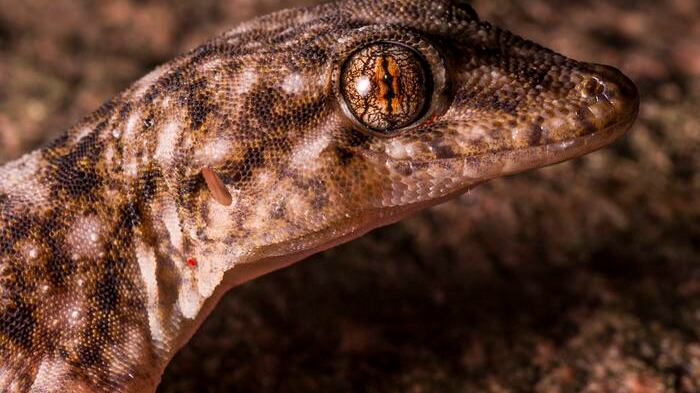
Scientists have documented in detail for the first time a rare new species of gecko that had, until recently, “managed to hide in plain sight” in the shrinking forests of Madagascar.
Found only in three small areas within roughly 15 kilometres of one another, paragehyra tsaranoro is considered “microendemic,” meaning it occupies what scientists call an “extremely small” habitable range.
The lizard is named after the Tsaranoro Valley, where the species was first observed. Covered in a rocky brown, white and tan pattern, with striking orange eyes, the geckos naturally blend in with the granite boulders found in their habitat, located near the sheer cliffs of southeastern Madagascar’s Andringitra Massif.
Scientists say the small patches of land that make up the tsaranoro’s territory were once part of a larger, connected area of forest -- one that has been “destroyed by the widespread deforestation” threatening biodiversity within the country.
The researchers behind the discovery have called for additional support as communities in the region work to conserve the species, which they recommend be classified in biological records as “critically endangered.”
“It appears that this landscape is full of hidden biodiversity gems, including other microendemic reptile species found nowhere else in the country,” said study co-author Francesco Belluardo, in a release.
“These community-managed reserves act as important refuges for local wildlife.”
Ongoing conservation efforts, he noted, have served a dual purpose. The patches of protected forest are known to be sacred, he says, as they are also home to the ancestral tombs of the Betsileo peoples.
“Protecting this cultural heritage has also helped safeguard local species, suggesting once again that conserving biodiversity often goes hand-in-hand with preserving cultural traditions.”

