STOCKHOLM — CTV News is reporting from Sweden in the second of a multi-part series ahead of Swedish King Carl XVI Gustaf and Queen Silvia’s trip to Canada Tuesday.
As Canada prepares for a royal visit from Sweden, much of the chatter has focused on whether Gripen fighter jets will join Canada’s military fleet.
But another facet of the Nordic country’s defence strategy has gained momentum in recent months: every Swede’s duty to defend the country.
The plan includes everything from packing emergency kits to private and public bomb shelters and volunteers to protect animals like cows and pets in times of crisis.
It’s part of a concept called “Total Defence,” creating the ability of an entire society to withstand crisis. While it may seem like a relic of the Cold War era to many Canadians, Sweden’s Defence Minister Pal Jonson told CTV News in Stockholm that enlisting all citizens to prepare for war is crucial.
“At the end of the day, we are not going to get the bang for the buck for our defence investments if we don’t have strong and resilient societies,” says Jonson.
‘Everyone is allowed to come in’
In a suburb of Stockholm, Niklas Ivert puts on his Billy boots and heads to the garden. He walks a few metres to the side of his home and enters his bomb shelter.
“Let’s go inside,” says Ivert, a father of two daughters. “This is for 60 people who can come in here for safety. The rules include that this space must be able to be empty in 48 hours of an emergency.”
There is neatly ordered outdoor furniture and tools in what is now a storage space. But there are big iron doors, an airlock and, in a padlocked locker, ventilation equipment to be assembled to provide clean air.
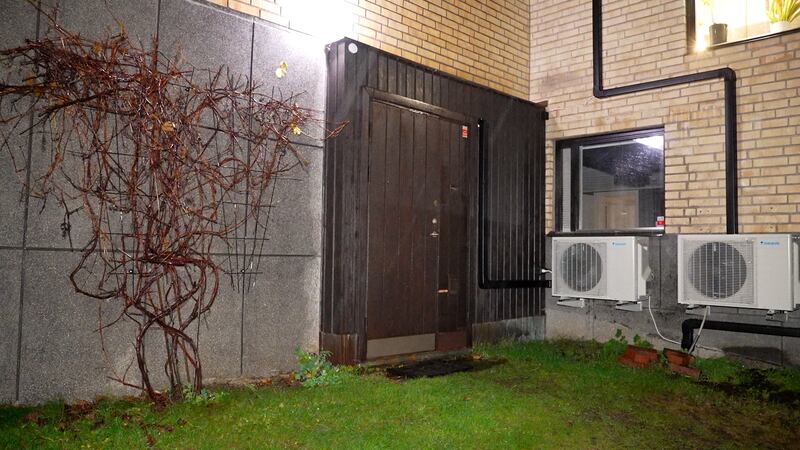
Ivert bought the house three years ago. The previous owners built the security shelter, one of more than 64,000 in Sweden. This was during the Cold War era when the government provided subsidies for homeowners wanting to build the safe spaces.
There is an online map showing the location of all shelters, and owning one comes with responsibilities.
“During a potential wartime, I have to open up for the neighbours and everyone is allowed to come in,” says Ivert.
A few months ago, someone from the neighbourhood knocked on his door after finding the location online to check if the shelter was still in place and could be used, a sign to Ivert that people are paying attention to the government’s renewed push for civil defence.
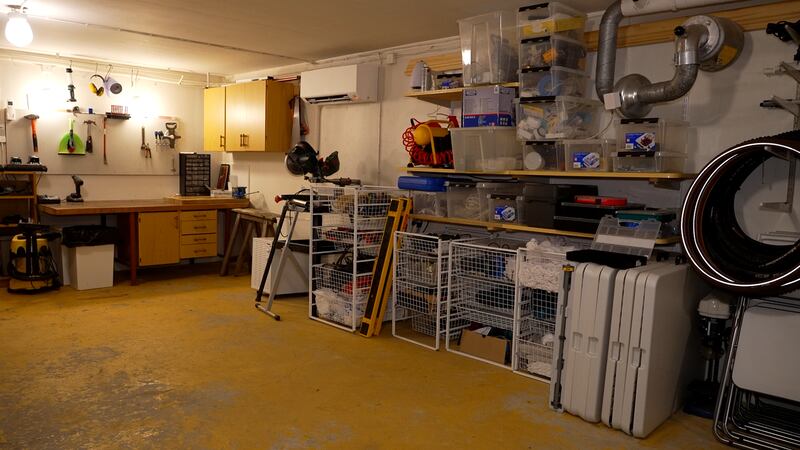
When Ivert purchased the home, he considered converting the space into a small apartment and contacted the agency in charge of public security.
“I asked, ‘What are the chances I could have this decommissioned’?” says Ivert. “They told me zero. Had I asked 20 or even 10 years ago it may have been possible. But now, no way.”
A changing world
Canada created a civil defence program with the creation of the Air Raid Precautions organization before the Second World War. Fallout shelters aimed at thwarting the effects of a nuclear attack were built during the Cold War, including the notorious “Diefenbunker” that was set up to protect the country’s top officials in Carp, Ont, near Ottawa.
That shelter is now a museum. The others have largely been destroyed, converted or left abandoned.
After the Cold War, emergency preparedness shifted to focusing on preparing for events like natural disasters.
But Sweden says the world has changed.
Geopolitical tensions and the war in Ukraine have pushed Sweden to refocus on its “Total Defence” plans. The government of the country of 10 million people has put out a new edition of a brochure called “In case of crisis or war” detailing the responsibilities of citizens, including being self-sufficient for at least a week. And it is investing in public infrastructure that had been left to deteriorate over decades of peace.
For instance, the government upgraded a public emergency shelter under a park on a hill in Stockholm that doubles as a parking garage.
“We have a warning system with an air raid siren, and the shelters are the physical way to protect the population. You could have a mass evacuation where you move people from the danger areas to safer locations,” says the director of the Department of Rescue Services and Civil Protection Henrik Larsson. “People need to be able to grab their emergency kit and run to a shelter wherever they find themselves.”
In peacetime, this space, carved out of granite and reinforced with concrete, is an ordinary looking parking garage where motorists come and go.
“Stockholm has a pretty bad parking space issue, so this is quite a good way to use this shelter in peacetime,” says Larsson.
The parking garage, designed to shelter 1,200 people, has recently been outfitted with new equipment. There is a sophisticated ventilation system, filters and airlocks.
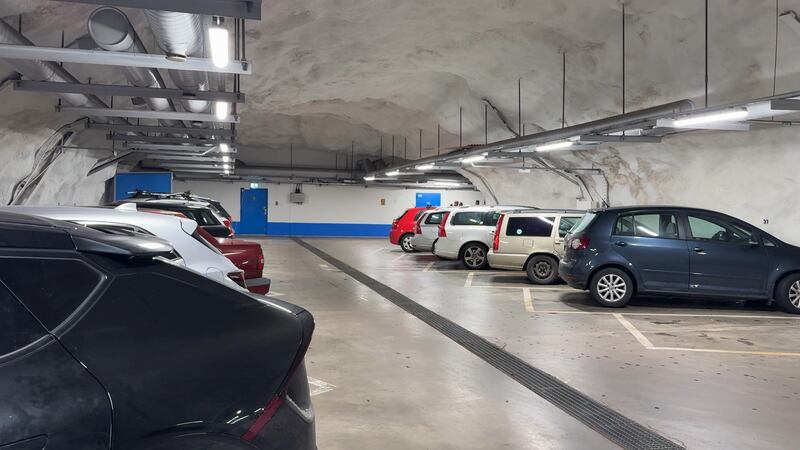
“One thousand two hundred people produce a lot of heat and need a lot of oxygen,” says the case officer at the Department of Rescue Services and Civil Protection Anders Johannesson. “There is also a water tank and all the equipment needed for basic needs in case of emergency.”
‘I am all in’
In the brochure “In case of crisis or war,” the Swedish Civil Contingencies Agency says, “We live in uncertain times,” and lists a series of serious threats other than war: extreme weather events, dangerous pathogens, outages across important IT systems and organized crime.
It also details what to pack for a potential evacuation, how to respond to air raids and how to care for pets. A volunteer organization called Blue Star focuses on caring for animals.
“We are trained on the national level to help out in crisis and disasters,” says Blue Star volunteer Louise Ribbing. “If there is a disease outbreak, for instance, we can help veterinarians with vaccination and also to take care of cats and dogs in case of mass destruction.”
Ribbing has always loved animals and has volunteered at the Royal Stables in the heart of Stockholm for eight years, which is home to King Carl XVI Gustaf’s horses.
“For over a hundred years, this has been the site of parades and ceremonies. It is also the first stop on state visits to Sweden,” says master of the Royal Stables Hakan Hedlund.
But Ribbing also decided to combine her love of animals with joining the ranks of Blue Star.
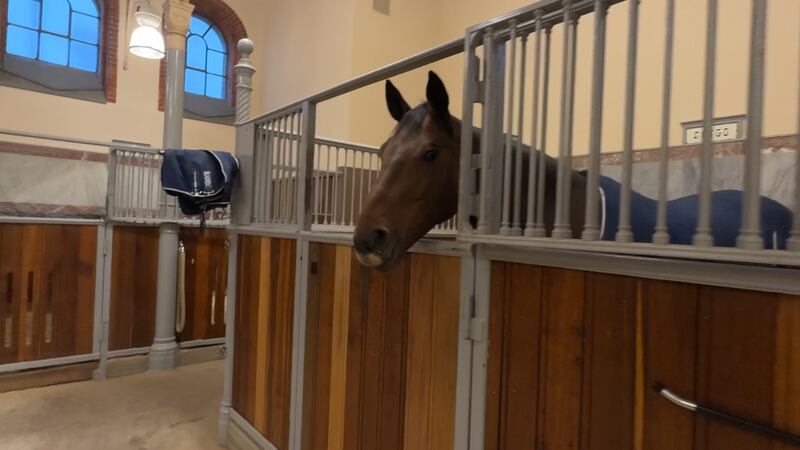
The initial rationale behind Blue Star was to protect animals like dairy cows, which are key to ensuring food production during times of crisis. But the role has expanded to include pets.
“When people were fleeing Ukraine in droves in the early days of the war, we could see they would come with almost nothing, but they had their cat or their dog with them,” says Ribbing. “Often, animals are part of the family nowadays.”
She helps raise awareness about having a supply of dry pet food on hand and knowing some basic animal health – part of her work to serve Sweden.
“If I can combine that with doing something to help my country,” she says, " I am all in."

