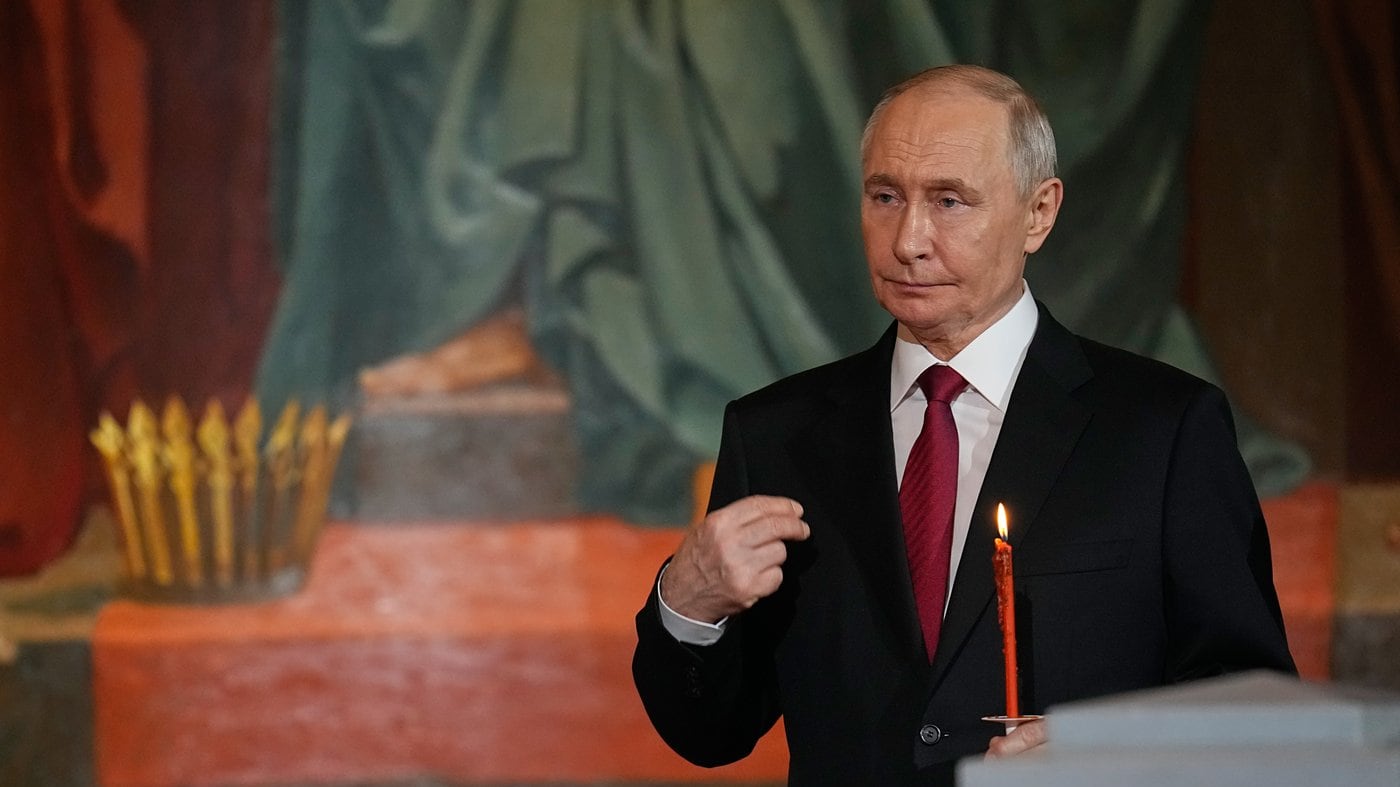
MOSCOW - Russia on Friday trimmed its benchmark interest rate, days after President Vladimir Putin sounded the alarm over a slowing economy and ordered his officials to boost growth.
Russia’s economy shrunk in the first two months of the year, according to official statistics, as the costs of its four-year war on Ukraine and Western sanctions mounted.
The central bank said it was cutting borrowing costs to 14.5 per cent from 15 per cent, though said it was still worried about the possibility for high inflation in the future.
In a statement announcing the rate cut, Russia’s central bank noted an overall weakening in growth and warned about “significant uncertainty regarding the external environment” and the government’s spending plans.
Last year Russia’s GDP grew by just one per cent and officials had been predicting another sluggish expansion in 2026.
Putin last week told a government meeting on economic affairs that the “trajectory” of growth was “currently below expectations”, with the economy having dropped by 1.8 per cent in January-February compared to the same period last year.
That was “below not only the expectations of experts and analysts, but also the forecasts of the government itself and the Central Bank,” Putin said.
The war in the Middle East -- which has pushed crude prices higher -- has offered Moscow some financial relief, with the International Energy Agency saying Moscow nearly doubled its earnings from oil exports in March.
But structural problems such as labour shortages, currency volatility, stubborn inflation and a weak investment climate, are crimping growth.
Businesses have criticised high interest rates -- ramped up to battle surging inflation -- as a brake on the economy.
The state has spent heavily on its offensive on Ukraine -- outlays that initially boosted growth but have hit parts of the economy not connected to the military.
Moscow’s budget deficit in the first three months of 2026 was the equivalent of US$60 billion, or 1.9 per cent of gross domestic product -- a bigger shortfall than it planned for the entire year.
The Central Bank on Friday cautioned that if state spending does not fall back towards the planned level, interest rates would have to stay higher for longer.

