TOKYO – Record participation in a team-Canada trade mission to Japan has resulted in more than $1 billion in commercial investments signed between Canadian and Japanese companies.
On Thursday, International Trade Minister Maninder Sidhu beamed as he watched executives from more than a dozen companies participate in signing ceremonies.
Sidhu said the historic trade mission has delivered “landmark results” resulting in over $1.7 billion in commercial deals – a new record for a Canadian trade mission.
“This is trade diversification in action. Canadian businesses are signing real agreements and opening new markets and deepening our partnership with Japan,” Sidhu said in a statement.
“I could not be prouder of what they have accomplished this week.”
Three hundred business leaders from 175 Canadian corporations traveled to Tokyo to explore partnerships with the Japanese. Global Affairs Canada said it was the most delegates present for a trade mission in Asia ever, and second worldwide to an event in Mexico earlier this year.
The companies that signed up for the Tokyo trip were from the AI, agriculture, clean energy and softwood lumber industries.
The federal government facilitated matchmaking events with investors in boardrooms and cocktail receptions. A small army of interpreters, mostly women, stood near discussion tables ready to translate if pulled into a conversation. Panel discussions with executives who had expanded their companies into Japan were also organized.
Denise Miura, who runs the Japan division of Canadian software company OpenText was one of the corporate ambassadors presenting to delegates.
OpenText is Canada’s largest enterprise software company and employs more than 300 people in Tokyo. It also has more than 2,500 corporate customers in Japan, including automakers and defence manufacturers.
Miura says that she has heard from global clients who want to diversify away from both the United States and China. She says both Japan and Canada have emerged as the “top desirable trading partners because they are trustworthy and have a shared value system.”
“They behave like adults in the room and you’re not seeing that a lot these days,” said Miura, the president of OpenText Japan, from her Tokyo office.
In her panel, Miura spoke about the Japanese approach, which she said requires a lot of due diligence and attention to detail.
“When I have colleagues who are frustrated because a request may seen nonsensical in the context of their normal business day but makes sense on the ground here – I always remind them, the trains always run on time in Japan.”
The largest group of participants on team Canada came from the defence and security sector. Both Canada and Japan are under pressure to spend more on the military. Canada has committed to a new NATO target of spending five per cent of GDP on defence by 2035. The Defence Investment Strategy calls for Canada to partner with allied nations like Japan to build up its military industrial capabilities.
“We’re interested in what Japan has to offer, and we’re interested in what we have to offer the Japanese,” said Defence minister David McGuinty after he toured a warship docked at the Yokosuka Naval Base on Monday.
Deep Sky, Blackberry sign deals
Among the Canadian companies that signed big contracts are stalwart technology firms and plucky startups.
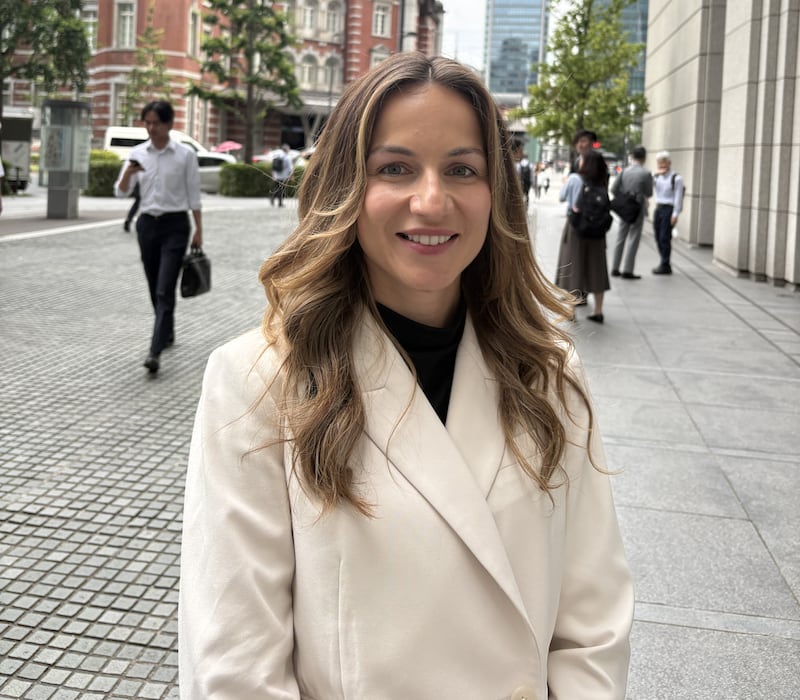
Japan’s second biggest bank SMBC has committed to investing in Deep Sky, a carbon removal company headquartered in Montreal with storage facilities in Innisfail.
CEO Alexandra Petre said securing the deal took multiple trips to Japan over several months.
“You cannot come to Japan and expect success overnight. Japan’s culture dictates that there’s a lot of investment required, a lot of face-to-face time and a lot of trust needs to be built before you can have meaningful partnerships,” said Petre in an interview with CTV News during a break between meetings.
BlackBerry also signed a deal with Astemo, a major Japanese auto supplier. Its QNX advanced driver assistance operating systems are in 275 million vehicles worldwide.
Montreal-based RSAT Space develops advanced satellite components and has partnered with Japan’s WARSPACE which specializes in optical laser communications.
SPARC Global Solutions, which brings together experts from government, industry and academia has signed an agreement with AutnHive to use its tools to keep artificial intelligence safe while building mapping tools for governments.
Zerokey, a quantum technology company based in Calgary also signed an MOU with Deloitte Japan to work together to use AI to improve efficiency in Japan’s industrial manufacturing, aerospace and defence sectors.
There were other companies that inked agreements, but Global Affairs said they preferred to keep their commercial dealings private.
Correction
This article has been updated to correct information on a deal between BlackBerry and a Japanese auto supplier.

