As the ongoing war in the Middle East continues to devastate energy supply chains in Asia, Japan’s top diplomat to Canada says his country sees enormous potential in Canadian oil as Prime Minister Mark Carney seeks to turn his energy superpower ambitions into reality.
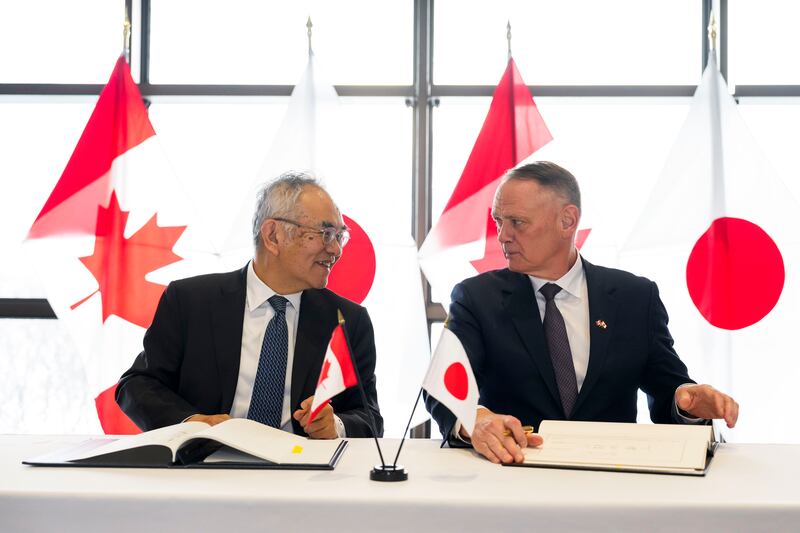
Ambassador Kanji Yamanouchi sat down with CTV Chief Political Correspondent Vassy Kapelos following Carney’s announcement last week that his government was referring the Alberta government’s newly proposed west coast pipeline to the Major Projects Office.
“It’s better for us to diversify the source of crude oil, not necessarily just from one part of the region, but from the world, and Canada has enormous potential,” Yamanouchi told Kapelos when asked directly if Japan wants to buy more Canadian crude oil.
Yamanouchi says the ongoing war in the Middle East is prompting Japan to seek to diversify energy suppliers. More than 90 per cent of Japan’s current oil imports are sourced from the Middle East and the certainty of that supply cratered following the U.S.-Israel war with Iran.
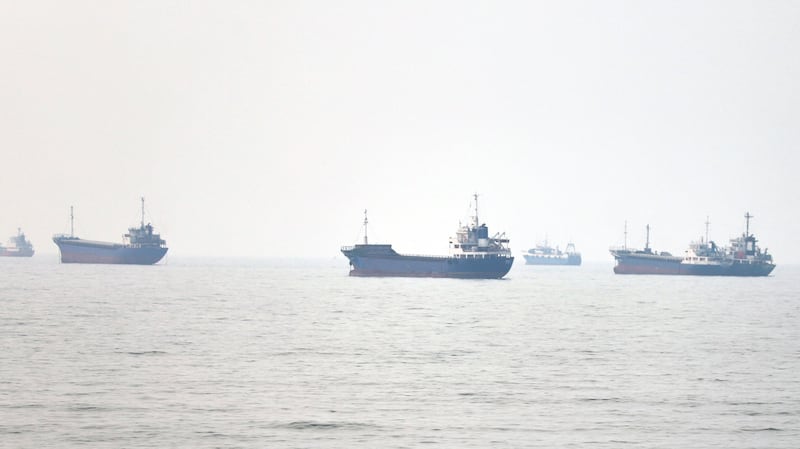
Tehran ordered the closure of the Strait of Hormuz at the onset of the conflict, and while U.S. President Donald Trump and his administration insist the energy chokepoint is open, oil tanker traffic flows remain a fraction of what they were before the open hostilities.
Yamanouchi pointed to this supply uncertainty, and Canada’s ambitions to build a new major oil pipeline to the west coast, as key to Japan’s interest in potentially sourcing more crude from Canada.
“To be very frank with you, before these pipelines there was not so much… possibility that Japan imports Canadian crude oil because of lack of infrastructure to all the oil existing in Alberta. But once you have the pipelines, you have the facility to export your oil to Asia, then that’s a totally different story," said Yamanouchi.
“Canada has an enormous intention to be an energy superpower, and Canada sees Japan as a close friend, then Japan sees Canada as a great partner,” he said. “And access from Canada to Japan, very, very good navigation, only takes 10 days.”
Proposed west coast pipeline
The proposed new west coast pipeline would carry one million barrels per day and would follow the route of the existing Trans Mountain pipeline. Combined, the two pipelines could transport nearly two million barrels per day of Alberta’s heavy crude oil to the west coast for export to Asian markets.
However, those markets, including Japan, have their own work to do in order to potentially receive and refine Canada’s product.
Most of Japan’s energy infrastructure is geared towards receiving and refining the lighter crude oil traditionally sourced from the Middle East.
Yamanouchi says he thinks this challenge is surmountable with new technologies and that the emerging export market in Canada coupled with the geopolitical uncertainty in the Middle East has changed the calculation in Japan.
“We have to think very differently. We have to have the diversification of the source of crude oil, and also I told you, trust. That Canada has trust. So now it’s a totally different situation,” said Yamanouchi.
Alberta in talks with Japan
The Alberta government, for its part, is already in talks with Japan about ways to export more Canadian crude oil to the country.
In an interview with Reuters last month, Alberta Energy Minister Brian Jean said the province has offered to help fund the construction of infrastructure in Japan that would enable Japanese companies to refine heavy crude oil. He also said the province is exploring whether heavy crude oil produced in the province could be combined with lighter synthetic oils to make a blend more suitable to refineries in Japan.

With files from Reuters

