WASHINGTON — Besides a social media post from U.S. President Donald Trump, the White House has said little about what he is calling “THE BIGGEST OIL DEAL IN WORLD HISTORY” in Venezuela.
Trump said the agreement announced Friday night would give the United States a stake in Venezuela’s vast oil reserves, a step toward his goal of extracting energy from the country after American forces captured then-President Nicolás Maduro in a middle-of-the-night raid in January and brought him to New York to face federal drug trafficking charges.
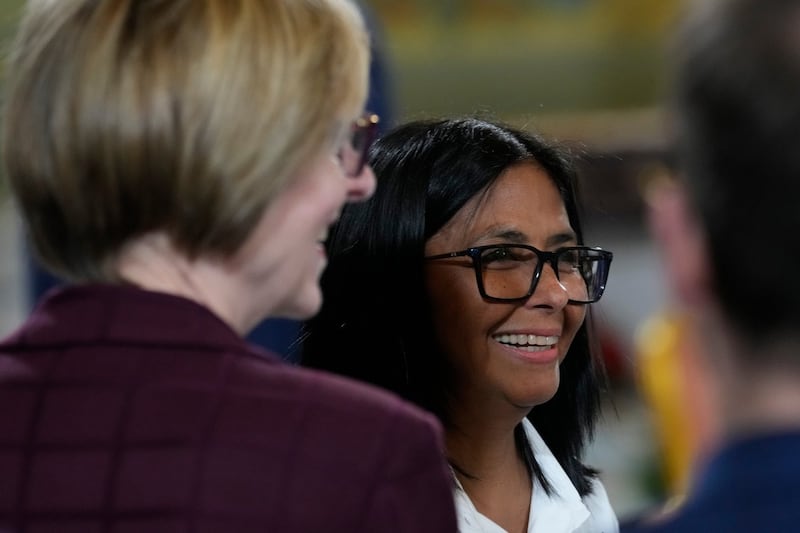
Venezuela’s acting president, Delcy Rodríguez, described the deal as a step toward economic recovery that will modernize the country’s oil industry. In a televised address to the nation late Saturday, Rodríguez insisted Venezuela’s sovereignty is secure and said she wants the country to become a global energy powerhouse.
But the answers to many questions, including how soon the reserves could be drilled and who will pay to make it happen, were not immediately clear. No text of any agreement has been released.
A look at what is known and unknown:
What are the terms?
The U.S. government and an unnamed private operator in Venezuela formed a new company that was given the rights to untapped oil fields for 100 years.
A statement from Rodríguez said the deal involves the development of 17 fields with a proven potential of 65 billion barrels. It said the agreement could draw US$100 billion in investment into Venezuela’s oil industry and yield over US$209 billion in taxes for Caracas.
The private operator — who has not been identified by the White House — is North America Blue Energy Partners, owned by Alejandro Betancourt, according to a source familiar with the deal. The White House did not immediately respond to a request for comment Monday.
The company currently produces about 200,000 barrels a day, which makes it the second-largest private operator in Venezuela behind Chevron, according to the source, who spoke on condition of anonymity because they were not authorized to release the information. NABEP already operates fields in the area and has infrastructure there, including pipelines and rigs, the source said.
Trump said the agreement was negotiated by Secretary of State Marco Rubio, Defense Secretary Pete Hegseth and Rodríguez.
The deal gives the United States 55 per cent effective output of the new private company, including an ownership stake and rights to buy oil at cost. American purchases of the oil will go toward the U.S. strategic oil reserves along with the military, according to a U.S. official who was not authorized to discuss the matter publicly and spoke on the condition of anonymity.
The company would be the second largest corporate holder of proven reserves after Saudi Aramco, according to the U.S. official.
The administration appears to be trying to find ways to make it easier for the private sector to invest in Venezuela’s industry through the deal, said Bob McNally, who was an energy adviser in former President George W. Bush’s White House. “However, investors will remain cautious even if the terms of the deal, once released, pass legal muster. A future president could withdraw, and Caracas has twice thrown foreign investors out,” McNally said.
Amos Hochstein, who was a senior energy adviser to former President Joe Biden, said the deal is uncharted territory from a legal and diplomatic perspective. It carries tremendous risk for companies thinking about doing business under the new arrangement, he said. Democrats could challenge the deal if they regain power in Washington, as could future administrations in Venezuela.
“There will be a lot of challenges to what was just announced,” Hochstein said. “I can only say, if it were me, I’d be nervous. And if I’m back in my old job in the next administration, then they should be nervous.”
Will gas prices go down?
Probably not any time soon.
Trump says the deal will help lower gas prices for Americans. That is an important objective for the Republican president as the Iran war slows the shipping of Persian Gulf oil and keeps prices elevated months before November elections in the United States.
But experts have repeatedly warned that Venezuela’s dilapidated oil infrastructure will take years and billions of dollars to repair. A substantial boost in production is not expected to happen quickly.
The deal could be “helpful in the long run, but it’s not going to do anything to change the price of gasoline at the retail station for Labor Day weekend,” said Amy Myers Jaffe, director of the Energy, Climate Justice and Sustainability Lab at New York University.
Neither side made clear who would pay for infrastructure investments and at what cost.
For now, the war with Iran is having more impact on gas prices than the agreement with Venezuela. Oil prices rose Sunday after the U.S. attacked Iranian rocket launchers on the Strait of Hormuz. The price for a barrel of U.S. oil was up 1.8 per cent to US$84.94.
The average price of gas in the U.S. was US$4.08 per gallon on Monday, according to AAA. That was up from US$3.19 a year ago.
Kevin Book, managing director at ClearView Energy Partners, said the oil industry is awaiting clarity on the deal’s details. Venezuela has room to increase its oil production, he said — in the past it produced more than 2.5 million barrels a day above current levels — but investments of this scale don’t happen quickly.
“It’s going to take time — many years — to deploy that much capital and produce the kind of incremental results that history suggests possible,” Book said.
How will Venezuelans react?
Some in Venezuela considered it a betrayal of what their government has stated repeatedly for decades: Venezuelan resources are for Venezuela, and leaders would not allow the U.S. government access to those resources.
At a market in eastern Caracas on Saturday, Douglas Borjas said he was upset about the announcement.
“I think they’re doing it to cling to power,” he said of Venezuela’s leaders. “It’s like, ‘I’m giving you a vast amount of petroleum as long as you leave me alone here in power.’”
He added: “The Venezuelan people deserve better. Venezuela has resources that can be exploited, but for the benefit of the people, not for the benefit of the corrupt elite.”
Harvard University professor Ricardo Hausmann, a former Venezuelan planning minister, called it a “shameful deal.”
“Venezuelans will not respect this illegitimate deal and no major US oil company will take it seriously because they know it will not last,” Hausmann said on social media, adding that Rodríguez “has no legitimacy or constitutional power to commit Venezuela to any such deal.”
In her national address, Rodríguez pushed back on some early criticism.
“One thing must be absolutely clear: Venezuela retains ownership and sovereignty over its resources,” Rodríguez said. She said the goal is to reach other agreements with transnational private companies such as Chevron, Repsol and Shell.
She added, “We want to be an energy powerhouse, a major oil producer, a significant gas exporter, and a major national petrochemical developer.”
What’s the reaction on Capitol Hill?
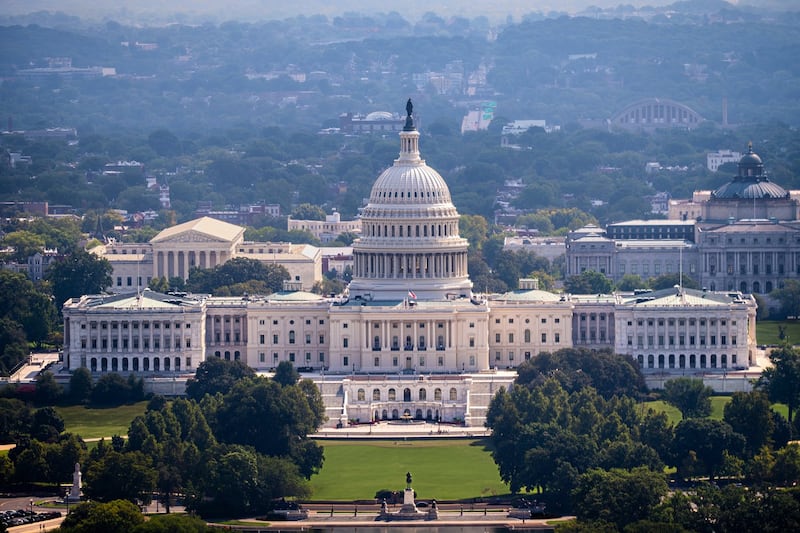
It is unclear whether U.S. Congress will play a role in the arrangement, but lawmakers from both parties were quick to weigh in.
Trump allies called it a win.
Sen. Bernie Moreno, R-Ohio, said it was a historic deal that helps both countries. “If it were up to DC Democrats, Maduro would still be in power, Venezuelan oil would be going to China at half price, and the people of Venezuela would be getting robbed by a corrupt regime,” Moreno wrote on social media.
It was condemned by Democrats who said Maduro’s capture was a means to this end.
Sen. Tim Kaine, D-Va., said Trump was always after Venezuela’s oil, branding it “corruption at epic scale.”
“Will prices come down for Americans? Who knows but likely not as much as Trump has forced them up thru his idiotic Iran War,” Kaine said on social media.
Sen. Chris Van Hollen, D-Md., said Trump “put our service members at risk to get Venezuelan oil for his billionaire buddies.”
What questions remain?
Many important details remain unclear, including who will cover necessary investments and how America’s stake in the company breaks down.
The U.S. will get 55 per cent of the company’s effective output, but it was not clear what portion of that comes from an ownership stake and how much comes from the right to buy oil at cost.
It also is unclear how the industry will react. Persuading big American oil companies to return to the region could prove a challenge given the political uncertainty and damaged infrastructure.
Chevron, the only U.S. oil company actively producing in Venezuela, declined to comment. Separately from Trump’s announcement, Chevron already had been in talks to expand investment in the country. Exxon Mobil also declined to comment.
Reflecting the lack of details from the administration, the American Petroleum Institute, the oil industry’s largest lobbying group, declined to comment Monday on Trump’s proposed deal. The group said it is continuing to review information as it becomes available.
David Oxley, chief climate and commodities economist at Capital Economics, said that on its face, the deal could double U.S. oil reserves and reduce dependence on crude oil from Canada and Mexico. But Oxley, writing in a commentary, cautioned that there are logistical hurdles and said the value of Venezuela’s reserves may have been exaggerated under former President Hugo Chavez.
Even with legal and security guarantees, it is not clear that U.S. oil companies “would be eager to invest,’’ he wrote, noting that “there simply might be more enticing commercial opportunities on offer elsewhere.’’
___
Collin Binkley, Juan Pablo Arráez And Regina Garcia Cano, The Associated Press
Arráez and Garcia Cano reported from Caracas, Venezuela. Associated Press writers Matthew Daly and Moriah Balingit and AP Economics Writer Paul Wiseman in Washington contributed to this report.

