WASHINGTON — U.S. President Donald Trump said Wednesday that oil prices that have surged because of the Iran war likely won’t come down until after U.S. midterm elections.
Oil prices on Wednesday jumped more than three per cent, pushing international Brent crude past the US$100 threshold for the first time since July as salvos between the U.S. and Iran escalated.
“Right after the election, oil prices are going to be tumbling downward,” Trump said. “I think it’s going to take a little bit longer than the midterm.”
Trump, in an exchange with reporters before traveling to Dallas for the midterm Republican convention, added that he believes Iran will finally relent after the pivotal elections are held in the U.S.
“They’re desperate to try and affect the election, so that we can get a nice weak group of people in there, and leave them alone and let them have their nuclear weapon,” Trump said.
He added, “I think the war’s going to end immediately after the election because they can’t hold out any longer,” Trump said.
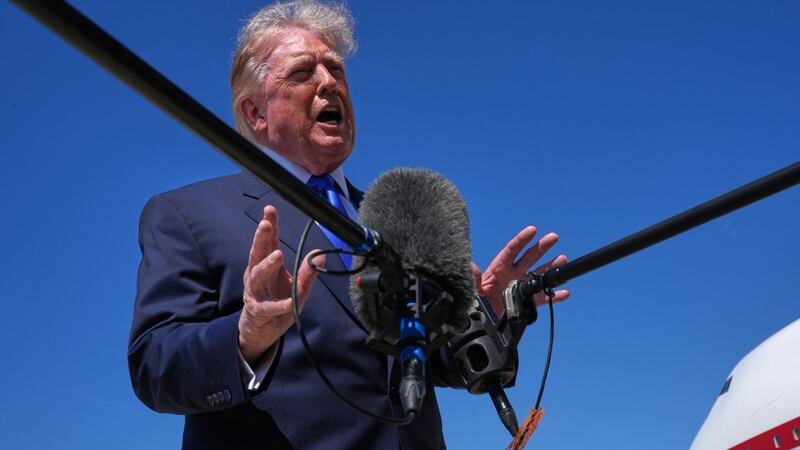
The president at the outset of the war said it would last a matter of weeks. The conflict is now in its seventh month. The U.S.-Israel war against Iran has led to a dramatic slowdown of Gulf oil moving through the Strait of Hormuz, which about 20 per cent of the world’s petroleum passed through prior to the conflict.
The comments were a striking acknowledgment from Trump about the status of the conflict as his Republican administration faces mounting pressure to address high gas prices as the war in Iran grinds on with no conclusion in sight.
Trump last week downplayed the conflict as “small potatoes” even as Republicans expressed concern the war will loom large with voters left navigating elevated gas prices and higher inflation.
The U.S. has tapped its strategic petroleum reserves, which in early August fell below 300 million barrels, down by more than 100 million barrels since the start of 2026.
Trump’s prediction that the war won’t be wrapped up until after Nov. 3 comes after U.S. Vice-President JD Vance last week steered clear of predicting that the conflict would be over by the midterm elections, in which Republicans are trying to hang on to their narrow majorities in Congress.
Vance told reporters he didn’t want to set “artificial timelines” for the war’s end.
“But when you ask, ‘When will this end?’ You’re asking me a question like, ‘When will the Iranians stop shooting at ships?’” Vance said. “I think the reality is, I don’t know the answer to that question. You would have to ask the Iranians.”
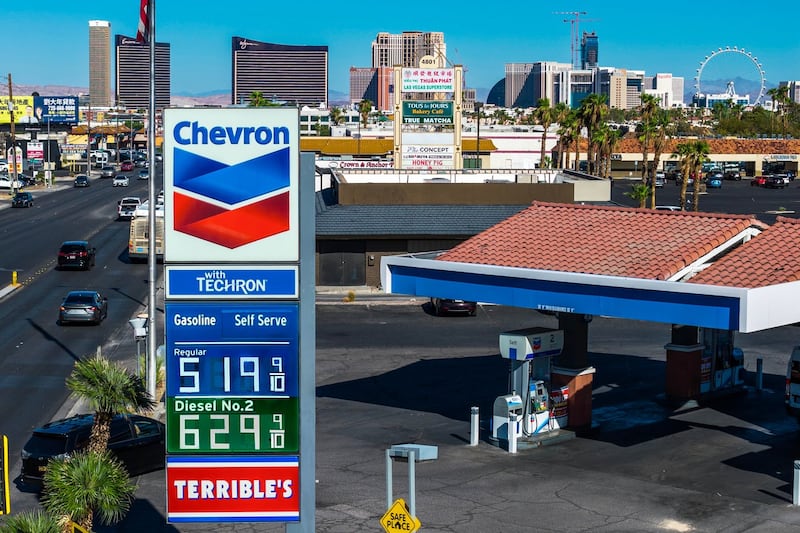
U.S. benchmark crude on Wednesday stood at around US$96 a barrel, and U.S. gasoline prices rose sharply overnight.
The average price for a gallon of regular gasoline ticked up 7 cents overnight to hit $4.22, now more than a dollar above what it cost at this point last year, according to AAA.
Diesel prices, which can have an outsize impact on consumers because it is used in shipping and production, hit an all-time high Friday and have continued to climb since. The average price per gallon rose to US$5.94 overnight, up nine cents from Friday.
Jet fuel has become so expensive that U.S. and international carriers have cut flights while raising fares and fees.
The latest market gyrations come after the U.S. military reported striking five Iranian tankers in response to attempted missile attacks on a Navy warship and after attacks by an Iranian-backed Houthi rebel group ignited fires at oil facilities in Saudi Arabia.
AP writer Cathy Bussewitz contributed reporting
Aamer Madhani, The Associated Press

