U.S. President Donald Trump is hosting Chinese leader Xi Jinping for their second summit this year, as they seek stability in a relationship under pressure from issues ranging from trade to Taiwan and Iran, as well as global worries about artificial intelligence.
Xi arrived in Washington on Wednesday for the first time in more than a decade. In the four months since the leaders of the two superpowers met in Beijing in May, he has overseen a surge in China’s trade with the world, while Trump — mired in the Iran war and with low approval ratings — is looking for economic wins he can tout to Americans unhappy with rising prices.
Here are some of the key issues for their summit at the White House on Thursday:
Trade truce or back to trade war?
Markets have watched for signs of an extension of a tariff truce announced after a Trump-Xi summit in South Korea set to expire on Nov. 10, and U.S. Treasury Secretary Scott Bessent said on Wednesday after talks with Chinese Vice-Premier He Lifeng that they had agreed to extend it until Jan. 10.
He said this would allow more time to work on a potentially bigger trade deal.
The so-called Busan Agreement in South Korea paused a trade war in which the world’s two largest economies threatened global supply chains with tit-for-tat tariffs that topped 100 per cent.
U.S. Trade Representative Jamieson Greer said this month the countries will make “some announcements on agriculture and non-tariff barriers” and traders will be watching for progress on an agreed mutual tariff reduction covering US$30 billion in goods — a step China could most easily take by cutting duties on U.S. agricultural imports.
Jets, farm produce
Trump will be looking to announce trade wins ahead of November midterm congressional elections, including by locking in high-profile purchases of Boeing aircraft and agricultural products.
Greer said on Monday China is making progress on a commitment to buy 200 Boeings but gave no indication that any additional orders are near.
Trump said in May that China could potentially boost its Boeing order, the manufacturer’s first major Chinese deal in nearly a decade, to as many as 750 planes.
However, Boeing CEO Kelly Ortberg last week played down some expectations among industry analysts that China could make another Boeing order around the Trump-Xi talks.
The White House said after the May summit that China had committed to purchasing at least $17 billion per year of U.S. agricultural products in 2026, 2027 and 2028.
U.S. Senator Pete Ricketts, Republican chair of the Senate Foreign Relations subcommittee on East Asia, said last week Trump should press Xi to honour those commitments and follow through on pledges to open its market to more U.S. beef exports.
China’s grip on rare earths
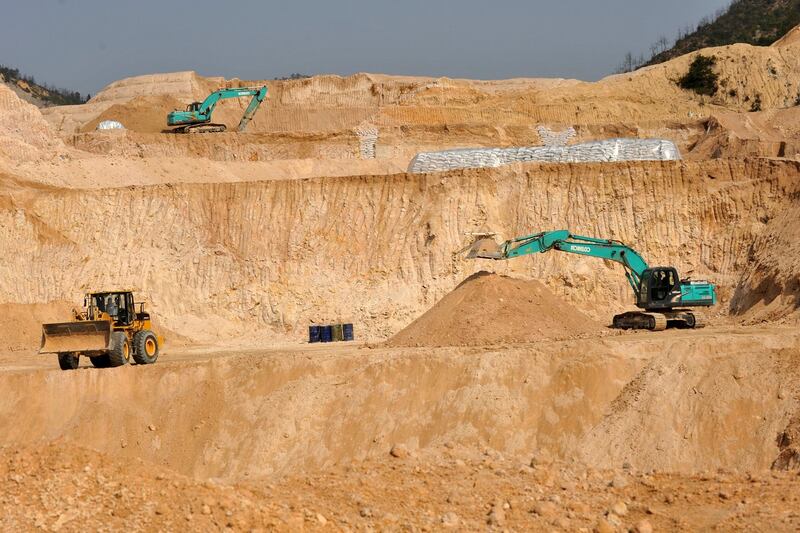
Beijing has been pressing the U.S. to further delay a rule that would bar thousands of Chinese firms from advanced U.S. technology, while Washington wants Beijing to ease export controls on rare earths and critical minerals vital for high-tech applications.
Experts say Trump has taken a less combative approach than usual ahead of his meeting with Xi because of China’s growing power thanks to the critical minerals issue. China controls up to 70 per cent of global rare-earth mining, 85 per cent of refining capacity, and about 90 per cent of rare-earth metal alloy and magnet production, according to consultancy AlixPartners.
The Trump administration has so far not threatened to slap steep tariffs on Chinese imports or to ban exports of U.S. technology, in contrast to the aggressive stances that preceded previous summits. Last year, in retaliation against Trump’s tariffs, China curbed rare earth exports and sent shockwaves through world markets.
Taiwan
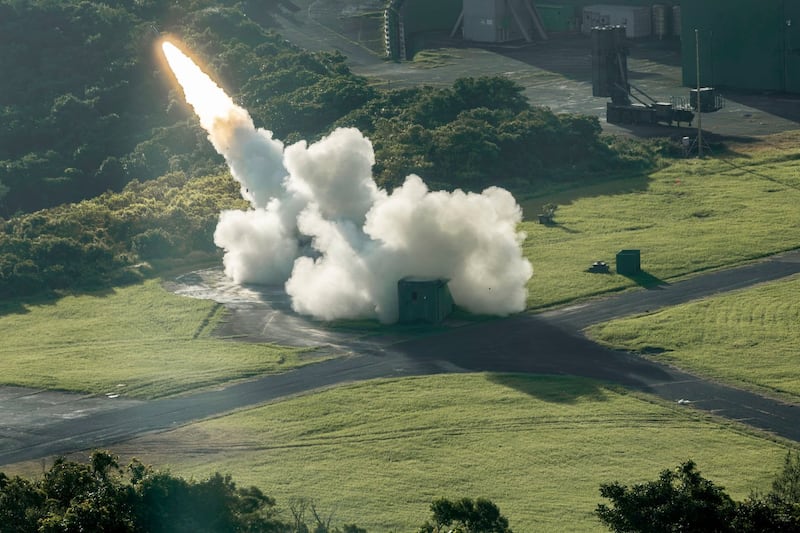
U.S. allies in Asia have grown increasingly concerned that in order to lock in economic wins, Trump may be tempted to soften Washington’s support for Taiwan, the democratically governed island claimed by China.
Taiwan strongly objects to the sovereignty claims, and while the U.S., like most countries, has no formal diplomatic relations with Taiwan, Washington is its most important international backer and arms supplier.
Trump said Xi pressed him on U.S. arms sales to Taiwan during the May visit, with the U.S. president later describing a pending package worth up to $14 billion as a “negotiating chip.”
As well as arms, people familiar with Chinese efforts told Reuters that Beijing also hopes to persuade Trump to state publicly that the U.S. opposes Taiwan’s independence instead of saying only that it does not support independence, which has been Washington’s formulation for decades.
Any U.S. shift on Taiwan would be highly controversial, raising questions about Washington’s resolve to defend the island and provoking opposition in Congress.
On Monday, U.S. Secretary of State Marco Rubio met with his counterparts from Japan and South Korea and reiterated the U.S. commitment to the defense of those key Asian allies, and the three nations expressed support for Taiwan.
In a letter to Trump on Friday, John Moolenaar, Republican chairman of the House Select Committee on China, wrote in a reference to Taiwan and US allies in Asia that Chinese objections to U.S. arms sales and security cooperation should be “rejected out of hand.”
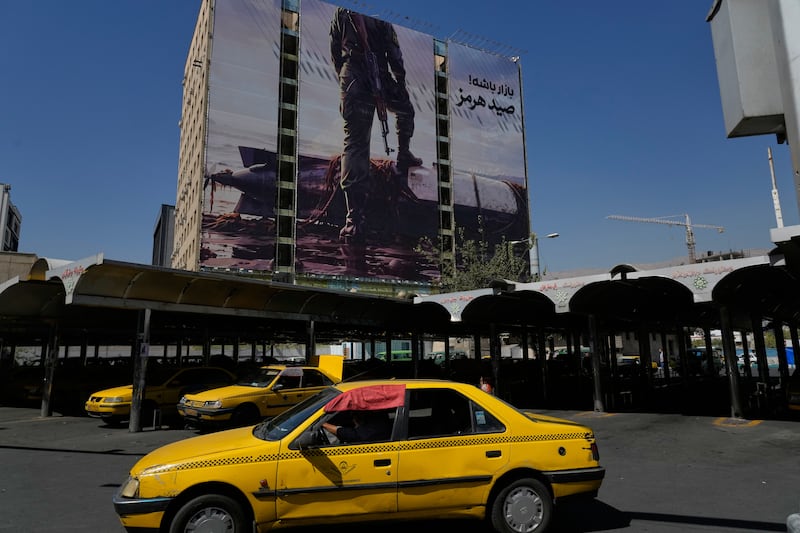
Iran war
China maintains close ties to Tehran and is by far the world’s biggest buyer of Iranian oil exports. Washington sees Xi as uniquely able to exert pressure on Tehran, but he has shown little inclination to do so.
Treasury Secretary Scott Bessent has said Trump and Xi would continue discussions on China’s financial ties to Tehran during the summit. But despite U.S. frustration with Beijing, Bessent stopped short of imposing penalties on Chinese banks when he unveiled an “economic onslaught” against Iran last month and warned countries to cut business ties with the country.
Last week, Trump brushed aside a report that Iran acquired satellite images of a base in Jordan from Chinese entities before an attack that killed three U.S. troops there in July.
Reuters reported last month that Beijing is selling billions of dollars’ worth of goods to Iran through a sanctions-evasion scheme. China’s foreign ministry says it is not aware of this.

Artificial intelligence
Analysts see artificial intelligence as a potential area for co-operation, given its implications for national security, economic competitiveness and military capabilities, and shared U.S. and Chinese concerns about misuse. However, experts say intense competition in the field between the countries is likely to limit the scope for anything beyond symbolic agreements.
Bessent said after talks with Chinese Vice-Premier He Lifeng at the weekend that the two sides discussed setting up a new U.S.-China AI dialog.
U.S. Secretary of State Marco Rubio said there was nascent thinking about “the equivalent of a hotline that we had during the Cold War” to avoid dangerous incidents that “could impact economies or societies and even lead to a conflict between nation-states.”
Dario Amodei, chief executive of U.S. AI firm Anthropic, warned this month that Chinese dominance in AI could pose security risks to the United States, a warning Chinese state media dismissed as coming from a “Cold War playbook.”
In a UN speech on Tuesday, Trump reiterated his opposition to new regulations on AI technology, saying U.S. law enforcement agencies would rein in the sector if needed.
By David Brunnstrom and Joe Cash
(Reporting by David Brunnstrom and David Shepardson in Washington, David Lawder and Antoni Slodkowski in New York and Joe Cash in Beijing; Editing by Kevin Buckland and Sonali Paul)

