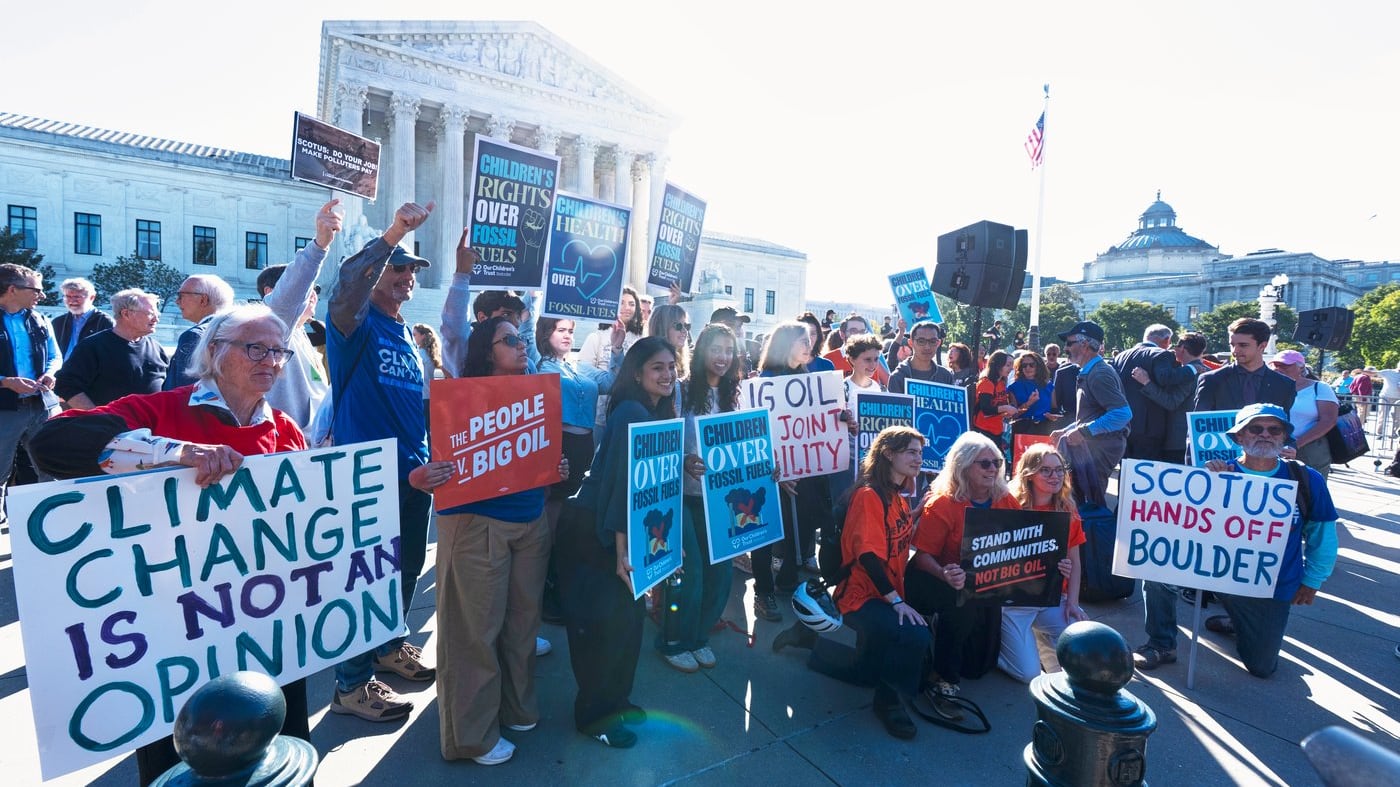
WASHINGTON — The U.S. Supreme Court grappled Monday with whether local governments can sue oil and gas companies in state court to help cover costs associated with climate change, an issue with potentially billions of dollars at stake.
Key justices appeared wary about the potential sweep of litigation, but torn over the complex questions of federal and state law raised by the case.
Officials in Boulder argue their lawsuit is an attempt to hold energy companies Suncor and ExxonMobil accountable for their contributions to climate change.
They say that worsening disasters such as floods and wildfires put a heavy financial burden on local communities, and the industry should bear part of that cost.
The city and county of Boulder first sued the oil companies in 2018, years before the 2021 Marshall Fire destroyed nearly 1,100 homes and left two people dead. Total damage was estimated at US$2 billion, the costliest wildfire in Colorado history.
The companies say that a flurry of lawsuits in state courts is not the way to deal with the global issue.
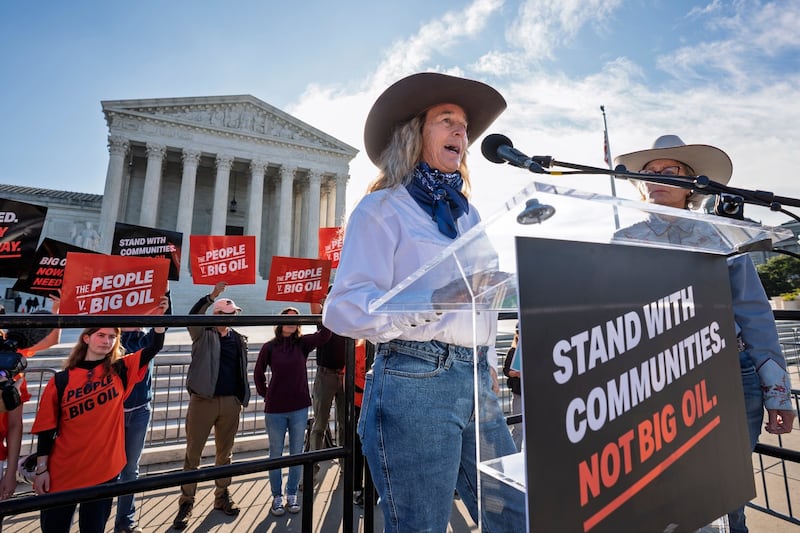
Boulder case is part of a wave of legal action against oil companies
Governments from largely blue-leaning areas around the country have filed similar lawsuits seeking damages that could total billions of dollars, part of a wave of legal action worldwide seeking to leverage action through the courts.
“Presumably, if you prevail, the next day, a municipality in every single state will file a lawsuit,” said Chief Justice John Roberts. “How do you think that will work out on the ground?”
Justice Brett Kavanaugh said a win by Boulder could bankrupt the oil companies and other potential defendants.
“I mean, anyone is a potential defendant for a suit like this. Any manufacturer, any business,’’ he said.
A win for the oil and gas companies at the Supreme Court, meanwhile, could shut down dozens of similar cases filed in recent years.
Suncor and Exxon argue that the Clean Air Act gives the federal government – not the states – the power to regulate emissions.
They have the support of the Trump administration, which argues the lawsuits are an unconstitutional attempt to regulate planet-warming emissions and impose Colorado’s state law beyond its borders.
But Roberts and other justices pointed out that state courts consider lawsuits about a myriad of issues that have nationwide reach. “I guess I’m not quite sure what makes this situation different from those,” Roberts said.
The court is also weighing a jurisdictional question that could allow it an “off-ramp” to avoid deciding the issues right away. Justice Ketanji Brown Jackson seemed like a vote in favor of that path.
“Why shouldn’t we wait and hear all of these claims once the state courts are done?” she asked.
Alito absent due to ethics recusal
The case was heard without Justice Samuel Alito, who recused himself just a week before arguments after facing calls to step aside because he owns stock in oil companies. That raises the possibility of a tie vote.
A deadlock would leave in place a decision from Colorado’s highest court allowing the case to proceed.
Attorney Kannon Shanmugam, representing the industry, urged the justices to reverse that ruling. He said the Boulder case was attempting to use the courts to decide a public policy issue that is properly up to Congress and other elected officials.
“Climate change is certainly one of the most pressing issues” facing the country, but the lawsuit “is exactly the wrong way to go about” addressing it, he said.
Principal Deputy Solicitor General Sarah Harris said Boulder’s case “egregiously exceeds” the state’s authority. The county essentially declares itself a victim of actions that occurred largely out of state, she said.
But Kevin Russell, an attorney representing Boulder, argued that state lawsuits can address damage in Colorado, regardless where the fossil fuels are produced.
Boulder is not trying to regulate greenhouse gas emissions or stop the companies from continuing to produce oil and gas, Russell said. Instead officials are seeking to hold the companies accountable for allegedly misleading the public about their contribution to global warming by burning fossil fuels, he said.
“Chapter 3” of the case trilogy, after tobacco and opioids
Justice Elena Kagan compared the climate case to previous state-based lawsuits against the tobacco industry and opioid makers.
“This is Chapter 3,” she said, noting the similarities of states claiming harms from products produced nationally and even internationally.
“This is a different book,″ replied Shanmugam, the industry lawyer. Harms claimed by Boulder “are diffused nationwide and indeed worldwide,” he said.
Trump’s Republican administration has rolled back environmental regulations, including a move last month by the Environmental Protection Agency to repeal rules that limit emissions from power plants fueled by coal and natural gas. States and cities have already sued over the repeal of the power plant rule.
The conservative-majority Supreme Court has been skeptical of environmental regulations in the past, including in a 2022 decision limiting the EPA’s authority to regulate carbon dioxide emissions from power plants.
A decision is expected in the coming months.
___
Lindsay Whitehurst and Matthew Daly, The Associated Press
Associated Press writer Nicholas Riccardi in Denver contributed to this story.

