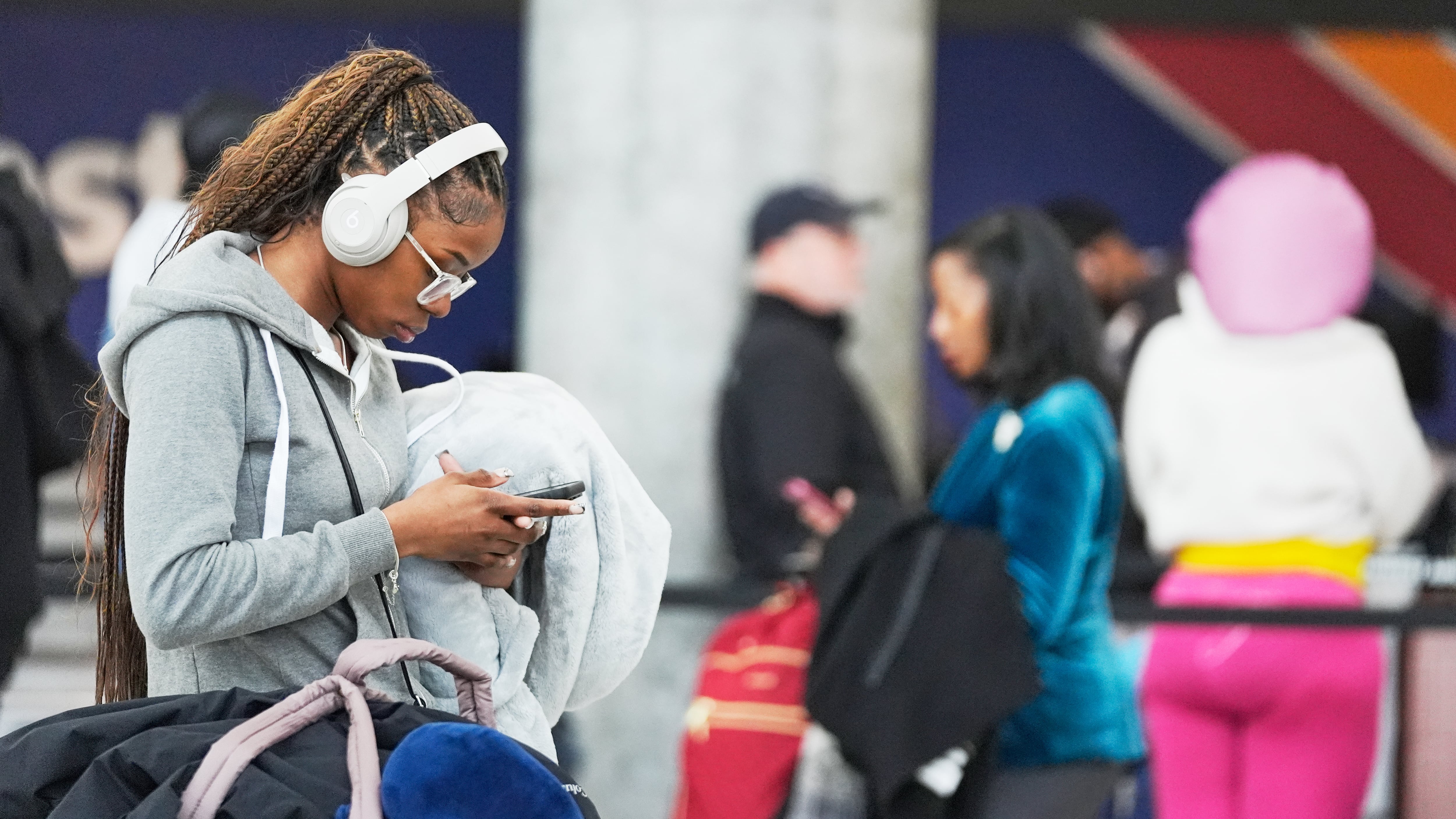
New U.S. government rules on flight disruptions coming into force early next year could affect passengers coming from Canada, though experts are divided on whether they will have a significant impact.
The U.S. Department of Transportation (DOT), which published the new rules on the Federal Register daily journal in September, is reclassifying 10 types of events that cause flight delays and cancellations as outside the airline’s control. These events include a passenger’s death, unscheduled mechanical issues, severe weather, cybersecurity attacks and potential tech outages.
The rule was supposed to take effect Oct. 19 but was postponed until Feb. 1, 2027.
The department acknowledged in the notice that “the total value of amenities and compensation currently provided by air carriers to consumers will be reduced under this final rule.”
Katy Nastro, a travel industry expert based in New York, said the new rules may mean travellers won’t be entitled to the same type of protections they used to have.
“So basically, it’s taking some of what was the responsibility of the airlines and recategorizing them … outside of the airline’s control,” Katy Nastro, a travel industry expert based in New York, said in a video interview with CTVNews.ca on Friday. “And very simply, for travellers, that means you may not be entitled to the same type of protections that you are now.”
“Now, when this new rule goes into effect, you as a passenger, if you are impacted due to an unscheduled maintenance event, this is outside of the airline’s control, meaning that they’re not now forced, or really obliged, to provide a hotel voucher or a meal voucher,” she added.
Airline passenger advocacy group FlyersRights is suing the U.S. Department of Transportation over the rules, which they say shift the costs from airline delays to passengers.
“A change in reporting classifications is not permission to reduce passenger rights,” Paul Hudson, president of FlyersRights, said in a news release Friday. “... The rule sneakily transfers costs from airlines back to passengers for delays involving mechanical problems that are the responsibility and fault of the airlines.”
Nastro, a correspondent with the Flighty flight-tracker app, said the change will affect anyone “travelling within the U.S., to the U.S., or from the U.S.,” regardless of their nationality or the airline, if their flight experiences certain types of disruptions that are now outside the airline’s control.
“In certain circumstances, it does grey the disruption category for consumers,” Nastro said. “This new regulation … just makes it even more confusing for travellers when they’re trying to navigate what exactly they’re entitled to in terms of disruption protections.”
Under the current DOT regulations, Nastro said disrupted flights may allow travellers to get hotel or meal vouchers, rebook flights or get refunds.
Gábor Lukács, president of Air Passenger Rights, said he believes the new rules would have no impact on Canadian travellers flying to or from Canada from the U.S. or via the U.S. because they would have some rights under Canada’s Air Passenger Protection Regulations (APPR). He said the APPR would also apply to those with U.S. connections on one ticket, such as a passenger who travels from Toronto to Beijing with a connection in San Francisco.
“People who actually just fly between Canada and the U.S. or fly to or from Canada via the U.S. will be unaffected at all,” Lukács said in a phone interview with CTVNews.ca.
However, he said Canadians who are not flying to Canada or from Canada are among those who will be affected by the new rules. This includes those who first drive over to the U.S., and then fly out from the U.S.
“The only time you would not be covered (is) if your travel has nothing to do with Canada,” he added. “… Just because you hold a Canadian passport, doesn’t mean that you can rely on the APPR. But if you started or ended your travel in Canada, then the APPR will apply to you.”
Still, he said Canada’s passenger protection regulations are “weak” with rules that are “unnecessarily complex” and “very difficult to enforce.”
He said the U.S. rule change’s effect is “primarily administrative,” because it involves how flight disruptions are being reported and passengers aren’t compensated in cash for flight disruptions in the U.S.
Lukács said the main issue with the new rules will be unexpected maintenance issues, which he said is “completely unreasonable.”

