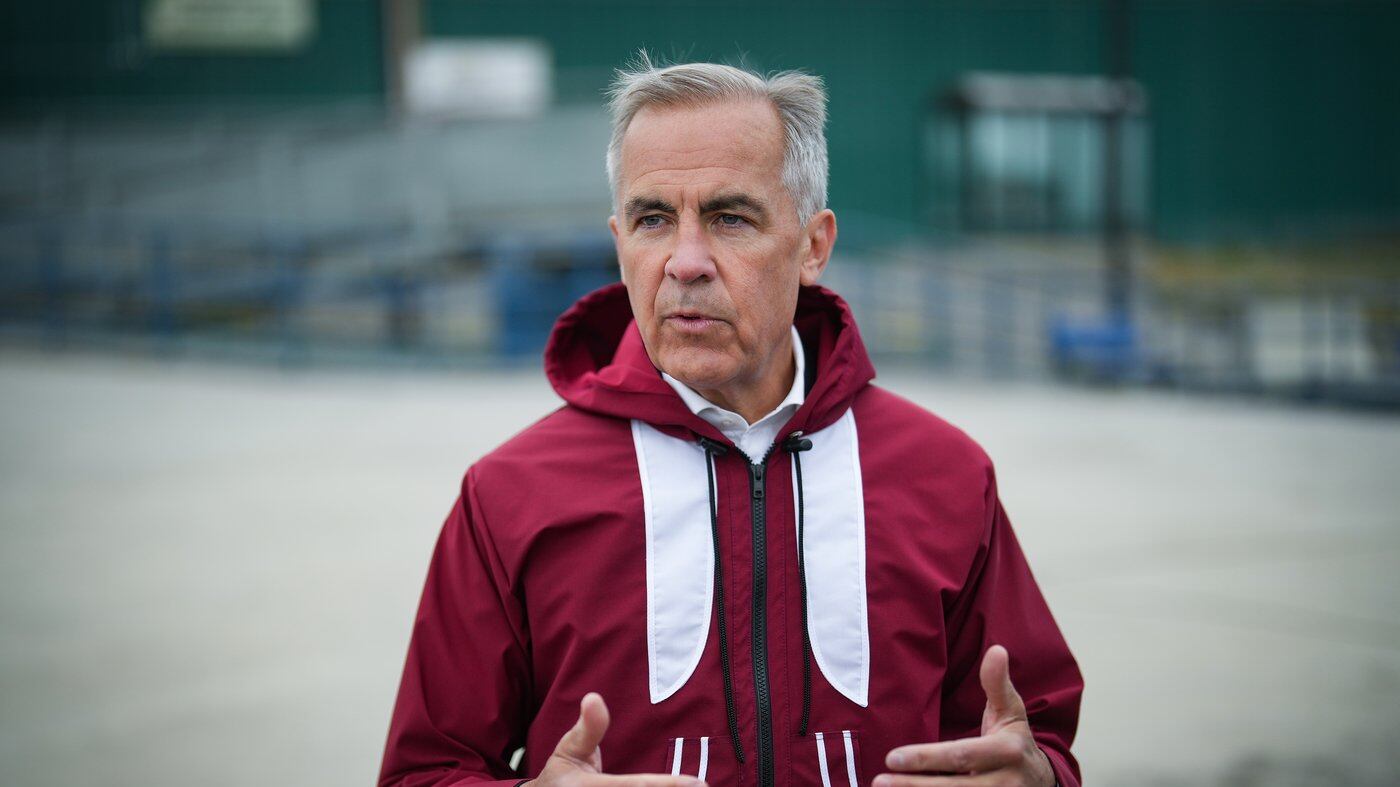
INUVIK — An Inuit leader who met Thursday with Prime Minister Mark Carney to discuss the federal government’s controversial major projects legislation says he has been assured the bill respects treaty rights.
Natan Obed, president of Inuit Tapiriit Kanatami, told reporters in Inuvik, N.W.T., that leaders attending the meeting of the Inuit-Crown Partnership Committee with Carney have had a “fulsome conversation” about Bill C-5.
“We’ve had reassurances that the bill … will not interrupt the processes under our modern treaties and that there will be full partnership of Inuit within these processes,” he said.
Carney spent much of Thursday meeting with Inuit leaders to discuss the legislation, also known as the One Canadian Economy Act. Several ministers, including Northern Affairs Minister Rebecca Chartrand and Indigenous Services Minister Mandy Gull-Masty, also attended.
During an afternoon break, Obed said Carney was unequivocal in saying the legislation would not violate modern treaties.
“When it comes to project reviews, the focus has been on what types of nation-building projects are Inuit interested in building, how can we identify those projects together, and then, how can we make good on those projects by implementing them,” he said.
“So the prime minister and his cabinet ministers couldn’t have been any clearer in their assurances to Inuit leadership about the upholding of the constitutionally protected agreements that we have with the Crown.”
In a statement Thursday afternoon, Carney said the meeting was about “building our shared future and Inuit Nunangat’s full economic potential.”
“In partnership, Inuit and the federal government will build major projects that connect and transform our economy, create greater prosperity and opportunities and build a stronger Canada,” he said.
The recently passed One Canadian Economy Act gives Ottawa the power to fast-track projects it considers to be in the national interest by sidestepping environmental protections and other legislation.
Some Indigenous leaders have accused the federal government of failing to consult with them adequately when the legislation was being drafted and amended.
Obed previously criticized the federal government over the legislation and told senators studying it last month that Ottawa has been hypocritical in its approach to reconciliation.
He said at the time the legislation didn’t respect Indigenous Peoples’ rights and warned that fast-tracked projects could end up before the courts.
One court challenge has already been launched by First Nations asking a judge to find the legislation unconstitutional.
Carney promised the day the bill was passed to hold talks with First Nations, Inuit and Métis leaders to get input on how projects can proceed.
After Carney met with First Nations leaders in Ottawa last week, some chiefs said they were left with more questions than answers and no clear idea of how the government plans to implement its agenda.
In his opening remarks Thursday, Carney said there’s much work to be done on closing infrastructure gaps and improving social services in the Arctic, and warned that the region’s security is under threat.
He also insisted that Bill C-5 “fully respects” treaty rights.
“It fully respects treaty-based environmental assessment processes,” said Carney. “In fact, those will be essential for anything that we move forward.
“What the act does is it creates conditions for the federal government to be more effective and efficient in our part of the partnership.”
Several cabinet ministers, including Northern Affairs Minister Rebecca Chartrand and Indigenous Services Minister Mandy Gull-Masty, also attended Thursday’s meeting.
This report by The Canadian Press was first published July 24, 2025
With files from Alessia Passafiume and Dylan Robertson in Ottawa
Aaron Sousa, The Canadian Press

