

Conservative Leader Pierre Poilievre is calling on the Liberal government to scrap Canada’s temporary foreign worker program (TFW) and stop issuing visas for temporary foreign workers, in a bid to free up jobs for Canadians.
Poilievre made the appeal in Mississauga, Ont., on Wednesday alongside Conservative immigration critic Michelle Rempel Garner, saying the move would “protect our youth and workers.”
“Under this proposal, existing permits would be wound down until the program is entirely eliminated,” he said. “Canadian jobs will go to Canadian workers.”
In a press release on Wednesday, the Conservatives say they’d implement a “separate, standalone program for legitimately difficult-to-fill agricultural labour” in place of the existing temporary foreign worker system.
“The Liberals have to answer: why is it that they’re shutting our own youth out of jobs and replacing them with low wage temporary foreign workers from poor countries who are ultimately being exploited,” Poilievre said Wednesday, accusing the Liberals of “breaking” Canada’s immigration system.
The temporary foreign worker program has been in place since the early 1970s, and has undergone several changes in the decades since its inception. In 2014, the government of former prime minister Stephen Harper reformed the program, making it mandatory that businesses hoping to hire a temporary foreign worker must first prove they were unable to hire a Canadian citizen or permanent resident for the job.

Poilievre, who was employment minister in Harper’s cabinet at the time, defended the move.
According to Statistics Canada, there’s been a “large increase” in the number of temporary foreign workers in Canada in recent years, much of which can be attributed to the number of study permit holders with or without work permits.
But the latest data from Immigration, Refugees and Citizenship Canada (IRCC) show the number of temporary foreign workers arriving in the country declined in the first half of 2025 compared to the same period last year.
“With continued reductions planned for 2025, Canada remains on track to sustainably manage temporary resident levels as outlined in the 2025-2027 Immigration Levels Plan,” wrote IRCC spokesperson Isabelle Dubois in an email to CTV News on Wednesday.
When asked by a reporter about the consequences for business owners who say they need temporary foreign workers, Poilievre said he doesn’t believe there’s a need for the workforce, but rather a desire on behalf of businesses to pay people less.
“Nearly three quarters of the temporary foreign workers in Canada do jobs that pay below average wages, which means that they ultimately are taking jobs from the people in Canada that need them most,” he said. “These workers should not be demonized. They are being taken advantage of.”
“Nor do we have a problem with immigrants who come here to build a family and start a life, pay their taxes, follow the rules and integrate them with the Canadian way of life,” he added.
Pointing to businesses prioritizing temporary foreign workers over Canadians, Poilievre cited a job posting at Booster Juice offering $36 an hour and specifically seeking out a temporary foreign worker.
The job posting in question states the business is seeking out a temporary foreign worker because it could not find a Canadian worker for the job, and adds Canadian citizens and permanent residents are still encouraged to apply for the posting.
Some sectors “rely heavily” on the temporary foreign worker program, according to Statistics Canada, including agriculture, forestry, fishing and hunting, and accommodation and food services, among others.
TFW program ‘has a role’: Carney
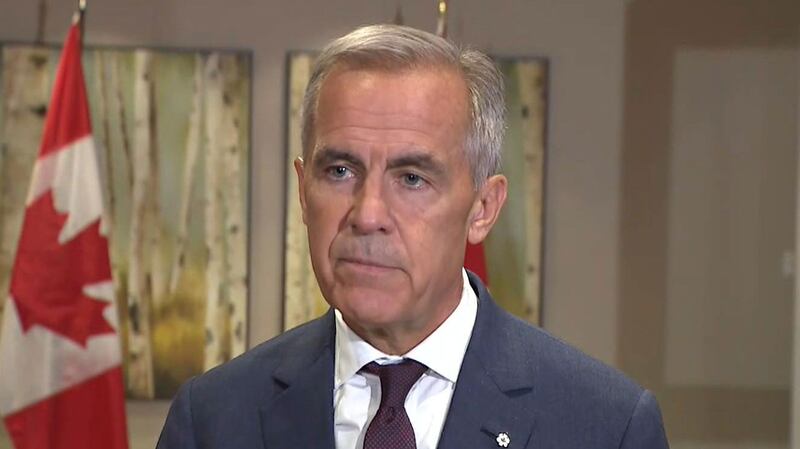
Ahead of a meeting with his cabinet on Wednesday, Prime Minister Mark Carney said the TFW program “has a role.”
“It has to be focused in terms of its role, and it’s part of what we’re reviewing, as part of what we will be discussing how well the temporary foreign worker program is working and how our overall immigration system is working,” Carney said, when asked by a reporter to respond to Poilievre’s comments earlier in the day.
“We’ve been absolutely clear as a government that we want, and we’re putting in place, policies so that the overall level of immigration as proportion of the population will decline from around seven per cent today to around five per cent several years from now,” he added.
Workers ‘vitally important’ for food production: CFA
In an interview with CTV News on Wednesday, Canadian Federation of Agriculture President Keith Currie said the temporary foreign workforce is “vitally important to food production and food security” in Canada.
“Do we need to change (the program) and fix it? Sure, that that’s something we can look at,” he said. “But use agriculture as an example and bring everybody up to those standards, instead of just throwing it out.”
Currie said that while Poilievre wants to see the agriculture stream of the FTW program continue in some capacity, he doesn’t see a way in which scraping the program overall won’t harm the agriculture industry.
Meanwhile, Dan Kelly, president and CEO of the Canadian Federation of Independent Business, called the idea of eliminating the TFW program “ridiculous.”
“I take no issue with adjusting the levels of temporary foreign workers, changing some of the program constraints, but to suggest that we end the program is completely divorced from what’s happening in the labour market across the country,” Kelly said in an interview with CTV News Vancouver on Wednesday.
Kelly said Canada has “dozens and dozens of local labour markets,” so to potentially ask an unemployed automaker in Ontario to move to rural Saskatchewan to work at a local pizza place is “unrealistic.”
“Anyone that looks at the demographics across the country knows that there are major gaps in our labour force, with very few new entrants into pockets of Canada, and the jobs and the people are not all lined up in the right sectors and in the right locations,” Kelly said. “The temporary foreign worker program is one of the few immigration streams that small businesses can use to bring a specific person in for a specific job in their community.”
Also in an interview with CTV News on Wednesday, Migrant Workers Alliance for Change Executive Director Syed Hussan said Poilievre is trying to sow division with his call to axe the TFW program.
“Pierre Poilievre is simply trying to get back into the game after losing the federal election, and he’s doing so on the backs of migrants,” Hussan said. “He’s trying to create xenophobia, racism and division and attacking migrants so as to divide working people, to distract from those who are truly responsible for our crisis, which is the corporate elite.”
Hussan added the youth unemployment crisis is due to failure by both Liberal and Conservative governments, not temporary foreign workers.
With files from CTV News’ Rachel Aiello and Brennan MacDonald

