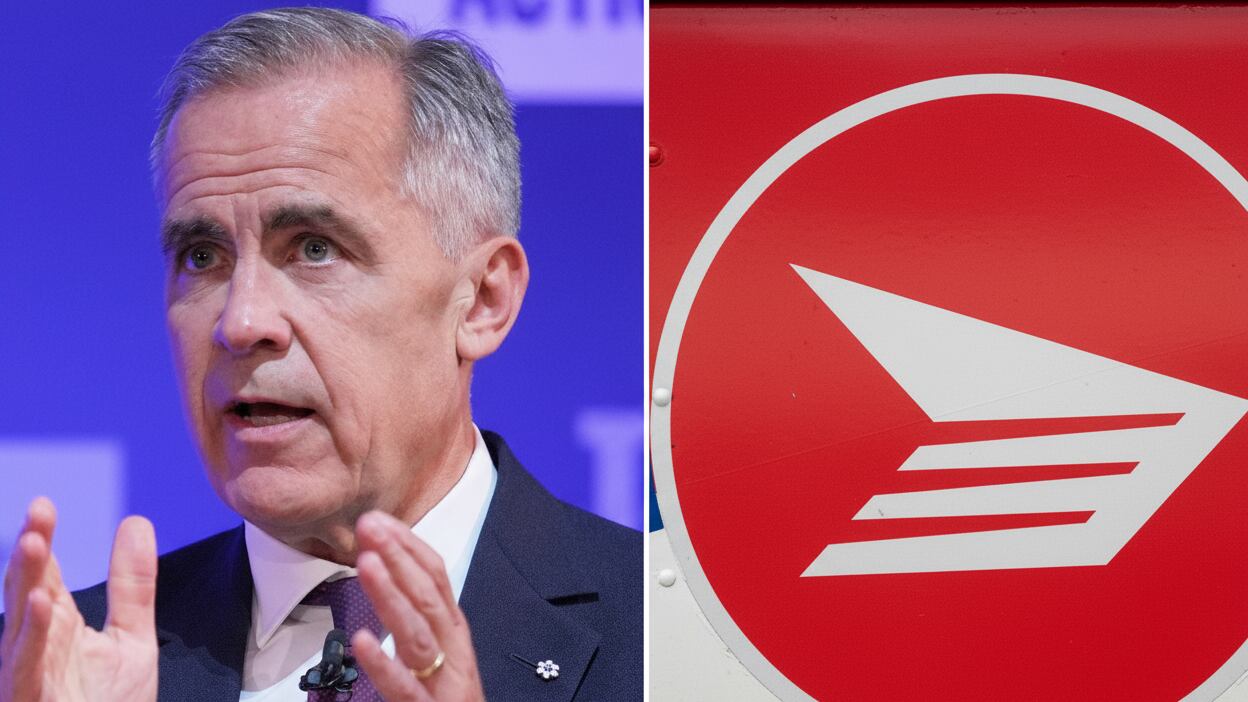
James Moore is a former federal cabinet minister under prime minister Stephen Harper, and a columnist for CTVNews.ca.
If Mark Carney is to succeed as prime minister – with success being broadly described as helping to make Canada more united, prosperous and secure through responsible leadership and policy – he has one of the great political balancing acts to engineer that we have seen in modern times.
He has demonstrated an admirable willingness to be an agent of change in some areas, most notably when he chose to end the consumer carbon tax earlier this year.
The pathway to that pivot was straightforward: He sought and received a clear mandate to shed the Trudeau policy when he ran for and won the Liberal Party leadership on that commitment, and he was granted that mandate because Liberal Party members, presumably, surrendered to the collapse of public support for the policy and chose Mr. Carney as an agent of change to trigger the policy reversal. A clear example of retail politics done efficiently.
But now, six-and-a-half months into being prime minister, his capacity to make other needed policy shifts to shed the failed policy approaches of the Trudeau government are going to be tougher and tougher.
It is one thing to replace Justin Trudeau in the office of the prime minister, but after three terms, the inertia of a Trudeau-recruited and Trudeau-loyal caucus and cabinet crew is going to be a challenge to pull in a different direction than they’ve been pushing for almost a decade.
In some ways, it is not reasonable or rational to expect thoughtful adults who are filled with ideals, egos and passions to reverse course on a decade’s worth of policies that they have rationalized, argued for, campaigned on and made commitments to – even if it is the correct thing to do.
To ask passionate adults to undo all the work, sweat, politics and compromises they’ve been committed to for a decade and go the other direction — even when it is necessary and in the public interest to do so — is not something that comes naturally to people in the public spotlight. But there are times when it must happen, and either those political actors accept the new direction of their new leader’s mandate, or they need to get out of public office and allow fresh forces to carry the fight for the newer cause.
Prime Minister Carney was able to affect the needed change on the carbon price, but many tougher challenges are on the horizon. Liberal members of Parliament and ministers who may have already mixed a little too much water in their red Liberal wine for their liking have a gut-check moment in front of them now: Either commit to the urgency of the current moment and support the needed change from the failures of Justin Trudeau, or move on from public life and allow someone else the opportunity to serve.
Politicians come and go; no one in politics is indispensable; and there is always a time to move on. For many, that time is now.
Back to Prime Minister Carney and the balancing act. This week, one issue exemplified the box that he finds himself in: The need to modernize Canada Post. In 2015, Justin Trudeau promised home mail delivery for all Canadians would be guaranteed. He committed that the reforms to Canada Post’s business model that were actioned by the government of Prime Minister Harper would be reversed.
In arguing for the matter, this is how then-Liberal MP Geoff Regan put the issue in Parliament on Feb. 25, 2014:
“Hon. Geoff Regan (Halifax West, Lib.): Mr. Speaker, last week Canada Post announced that some of my constituents would be the first to lose home mail delivery under the five-point action plan. I have already heard from seniors and people with disabilities who say they will no longer be able to access their mail. Mr. Holloway from Bedford who has a disability says it will be very difficult to get to a community mailbox. He relies on Canada Post to pay his bills and access government services. Mrs. Blackwell, a senior who lives on a street with no sidewalks, says it will be dangerous for her to walk to get her mail, especially in winter. Mr. Brown lives on a busy highway and is worried about where Canada Post would put a community mailbox that would be safe to access. Canada Post should suspend its misguided plan, conduct real consultation with Canadians and ensure everyone continues to have reliable postal service.”

I assume Mr. Holloway, Mrs. Blackwell and Mr. Brown each voted for Mr. Regan in the 2015 campaign, but they surely weren’t impressed that the promise of home mail delivery for all Canadians by the Liberals was never met after three terms in office by Mr. Trudeau. Further, they will surely not be impressed that the Liberals under their new leader are going in the similar direction today as was set back in 2014 by Canada Post under Prime Minister Harper, because it is a necessary set of reforms.
The politics of Justin Trudeau in 2015 got in the way of better public policy, but here we are, after a lost decade, and a new Liberal prime minister is moving forward out of sheer necessity. Good on him for doing so.
While Mr. Regan is no longer in office and may not like the new/old reforms, many of his colleagues who were elected in 2015 alongside him are still in office and will action these changes and defend what they once thought indefensible.
But that’s how Canada gets stronger, more prosperous and is more effectively governed. You learn, accept the reality of the evidence in front of you, make an informed choice, be strategic about implementation and move forward.
These tests of the capacity to pivot are going to get harder and harder for Liberal MPs, ministers, staff and the whole of the Liberal government, but many more are necessary if Prime Minister Carney is to succeed for Canadians.
The carbon tax pivot, the Canada Post reforms are only a beginning to what Canada must do to weather our economic storms, trade challenges, productivity trends, structural deficits, national defence modernization, social safety net re-enforcements, and tax reforms towards competitiveness.
I wish them well in finding the strength to do the wiser things in government.
More from James Moore:

