Prime Minister Mark Carney has set a goal to double Canada’s non-U.S. exports over the next decade.
“This will generate $300 billion more in trade,” said Carney Wednesday night in a half hour pre-budget address given in Ottawa. “That’s new orders for Canadian resources, technologies and expertise.”
To make that dream a reality, Canadian ports will need to play a big role in diversifying Canada’s trade, and Maritime ports are eager to play a big role.
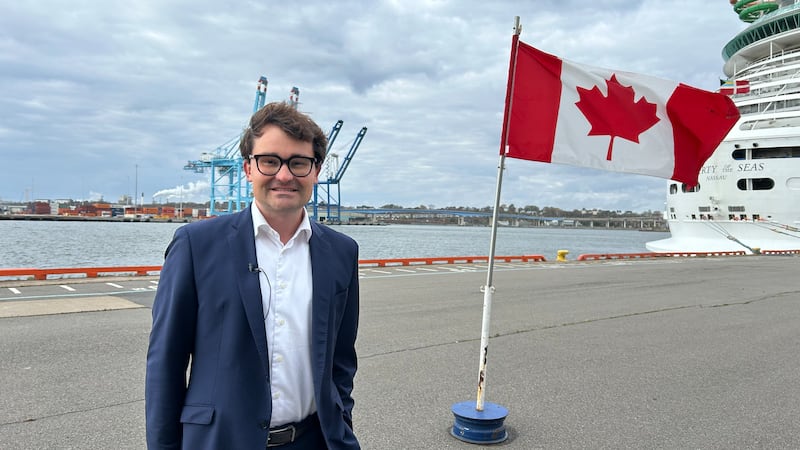
Port Saint John CEO Craig Bell Estabrooks says the trade plans are a big deal for container ports like his and Halifax, and he believes his New Brunswick port is primed and ready to play a big role.
“I think we’re extremely well positioned,” Bell Estabrooks says. “Our nation building project is just wrapping up.”
Bell Estabrooks says a decades-long enhanced modernization of the port is nearly complete. He says DP World, which operates the six container cranes within the harbour, also have growth plans of their own that will benefit the trade diversification.
That enhanced modernization will allow for larger vessels to load up on site in the future. He also says the port would love to get into the Indo-Pacific and trans-Pacific markets.
“Trade diversification is clearly a priority, ports are clearly a priority, and we think that is to the benefit of Canadians and people in New Brunswick,” Bell Estabrooks says. “There’s a lot of ancillary positive benefits that come with focusing on new markets from an infrastructure standpoint, from an employment standpoint, and then just from a general overall health of the Canadian economy. We see it as being very positive.”
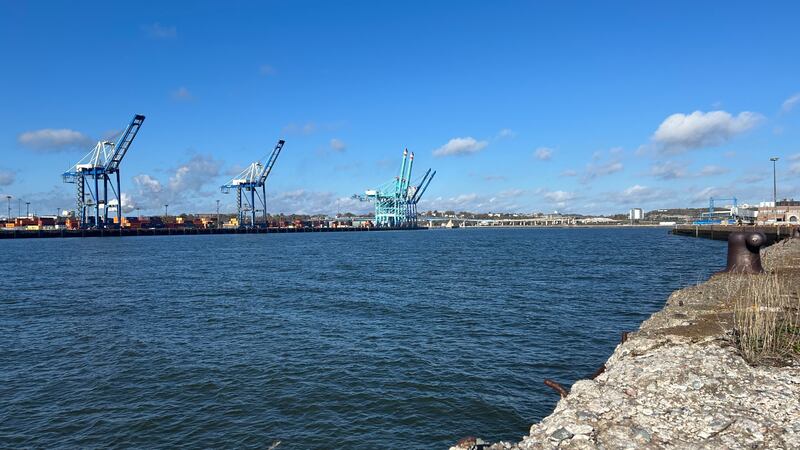
The port currently operates at a capacity to move 800,000 to one million TEU’s (twenty-foot equivalent units).
Estabrooks says it’s not just the infrastructure around the harbour which has the port feeling prepared to boost its operations, but the infrastructure that has been invested in around the site.
Multiple rail lines, including CPKC, run onto port property directly, which Bell Estabrooks believes is another benefit for global markets looking at Canadian ports.
“We want to continue to make investments in those assets because in some way, shape, or form, we think that’ll untap even more economic activity,” Bell Estabrooks says, adding Americold’s cold storage facility being built on the waterfront should be operational next spring and will also drive activity.
The port’s CEO believes there is still more investment to be had, including an improved Simms Corner in Saint John’s west end to help facilitate a smoother flow of goods.
“That’s what we’re working on right now with our provincial government and federal government,” he says. “Those projects may not be as big in scale as others that you’re hearing in nation building, but it’s absolutely nation building because you’re going to put it in context with all the investments that have already been made.”
New Brunswick Interim PC Leader and MLA for Saint John East Glen Savoie credit New Brunswick ports, including the facility in Belledune, have done great work in bringing in businesses and diversifying what they offer to customers.
That along with upgrades to and around the site have changed the way global markets can look at the province.
“There are ports around the world that can easily link up with our ports in Saint John and Belledune,” believes Savoie. “I think I would be remised if I didn’t mention the port in Bayside as well. That is an opportunity area for us to be able to export more products.”
The region’s other major hub, the Port of Halifax, released a video Thursday outlining its strengths and role it can play in Canada’s trade diversification plans.
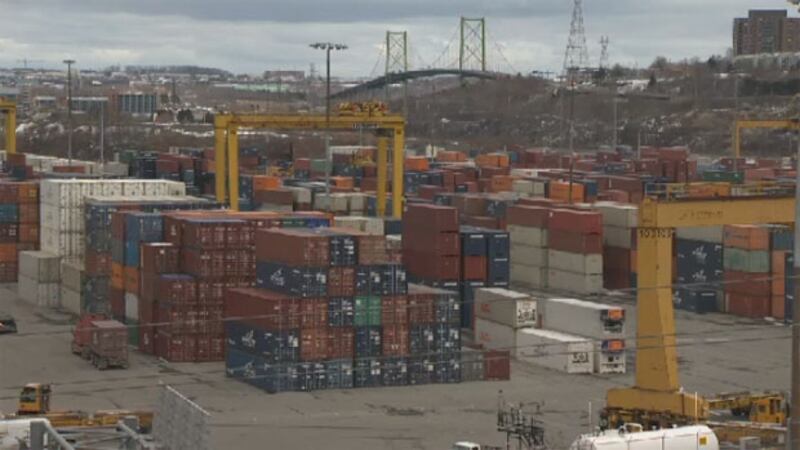
At a Halifax Chamber of Commerce luncheon last week, Halifax Port Authority CEO Fulvio Fracassi shared details about the port’s future when it comes to the trade front.
“We are the only port in Eastern Canada that can berth and service the mega ships that are increasingly being deployed on global trade routes,” his speech sent to CTV News Atlantic by the Port of Halifax reads. “Our port can receive vessels that can carry upwards of 18-thousand 20-foot containers or TEUs. This is significantly more than any other Eastern Canadian port.”
The speech goes on to tout the port’s four cargo terminals, and claims the Halifax port is the “most connected in Canada” with 16 different services connecting the nation to 150 other countries.
“We need an ambitious and bold vision for the port; a vision focused on connecting Canada with the world by being a leading ultra gateway and hub,” Fracassi says. “By being a port synonymous with world class excellence, capitalizing on our strengths and ready to grow our contribution to the city, region and Canada as whole.”
More details on possible investments into Canadian ports, including Halifax and Saint John, will come when the federal budget is released on Nov. 4.