OTTAWA -- Polarization, radicalization and erosion of social cohesion are making the world a more dangerous place, according to the head of the Canadian Security Intelligence Service.
CSIS Director Dan Rogers described a security environment destabilized by “unpredictable” global events and intensifying competition between states that is adding pressure on the spy agency.
“All aspects of national security have risen in urgency and priority – the demands on our service are unrelenting, and there is no clear path to a simpler future,” said Rogers on Thursday in a public speech about looming threats on the horizon. “But while challenged, CSIS remains strong and able. We have trusted partners in Canada and abroad. Together with them, we’ve acted decisively to keep Canadians safe.”
It was the first time in the agency’s history that the country’s top spy has stepped out of the shadows to deliver a public speech to a room of security analysts and reporters.
Analysts noticed a marked shift in focus.
“For the last several years, the service has been clear that the priority threats to Canada have been in the areas of espionage and foreign interference and that was largely downplayed in the speech,” said Stephanie Carvin of the Norman Paterson School of International Affairs.
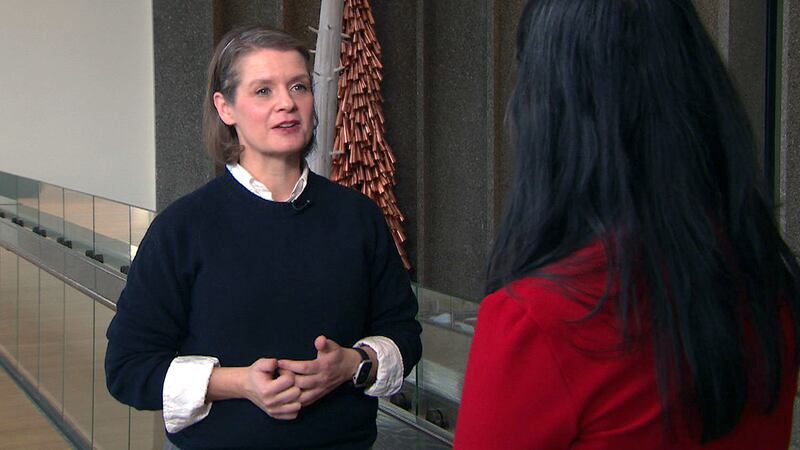
“The threats that were really amplified were about violent extremism. The CSIS director is responsible for reflecting what the service is presently preoccupied with.”
Carvin noted the worrying trend that one in 10 terrorism investigations at CSIS now involves a minor under the age of 18.
But even as Rogers moved toward more transparency, other security experts say what was most revealing laid in what was not said.
What was left out
Rogers opened his 20-minute speech by highlighting violent extremism. He reminded the audience that 2025, marked 40 years since the “worst terrorist attack in Canadian history – the bombing of Air India Flight 182.”
He said the death of 329 people serves as an “important reminder of the consequences of violent extremism.”
The two perpetrators of the 1985 attack, one who pleaded guilty, and the other who was killed in gunfight in India, were associated with a Khalistani separatist group.
However, Rogers did not mention more recent events involving allegations the Indian government was involved in the 2023 killing of Sikh activist Hardeep Singh Nijjar. Two years ago, former Prime Minister Justin Trudeau stood in Parliament to say that national security agencies had “credible” information of a “potential link between agents of the Government of India and the killing of a Canadian citizen.”
Less on China and India
On Thursday, Rogers deflected a reporter’s question about characterizing the current threat level posed by India.
“It’s something CSIS still continues to be very vigilant against. I would say when we have more to say on the subject, we’ll be able to say it. We won’t be afraid to call it out.”
Wesley Wark, a senior fellow at the Centre for International Governance Innovation, says that’s an example of “intelligence diplomacy in action.”
Wark told CTV News that a CSIS Director has to wear “two hats.” Rogers is the head of a service that investigates threats but also takes on the role of a “diplomatic influencer” when he meets with his Indian security counterparts.
“Advancing security agreements is part of a broader diplomatic effort at normalization,” Wark said.
While it has been India and China that has dominated much of the discussion around foreign interference, Rogers chose to highlight the activities of Russia and Iran in his inaugural public speech.
Rogers revealed that CSIS had to redirect its resources over the past year to “counter the actions of Iranian intelligence” which involved detecting, investigating and disrupting potential threats against individuals.
Russian and Iranian Interference highlighted
The most detailed example of counterintelligence Rogers presented was regarding Russia. CSIS took action to inform several Canadian companies that Russian agents were using front companies in Europe to procure goods to support Vladmir Putin’s war on Ukraine.
Rogers directly referred to Russia 11 times in his speech. Compare that to four total references to China or the PRC or Chinese spies, and only one transnational repression reference to India.
“We should read into that something with respect to (Canada) trying to normalize relations there. I’m sure that was part of the calculus,” said Leah West, an associate professor of international affairs at Carleton University.
This past summer, Prime Minister Mark Carney invited India’s Narendra Modi to attend the G7 Summit. And just this week, foreign affairs minister Anita Anand met with her Indian counterpart in Toronto. In a news release, Anand said the two ministers met to “enhance cooperation in key areas, including energy, trade and people-to-people ties.”
In October, Prime Minister Mark Carney met with Chinese President Xi Jinping on the sidelines of the Asia Pacific Economic Cooperation summit. Carney expressed that the two nations were at a “turning point,” and were embarking on a new strategic partnership. A remarkable flip for Carney, who during the election debates in April, named China as Canada’s biggest security threat.
After his bilateral meeting, Carney told reporters that he and Xi did speak about foreign interference and transnational repression but acknowledged that the Chinese may not “recognize the level of concern we have about these issues…but we have a structure to manage them (in Canada.)”
Where is the Foreign Influence Registry?
West, who was part of the Research Council of the Public Inquiry into Foreign Interference, says she doesn’t think there is an adequate system in place to protect people from transnational repression.
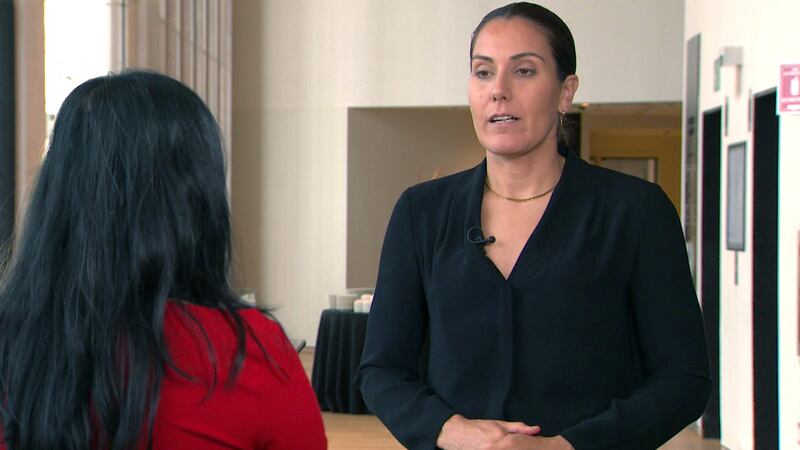
“I think China seeks to advance its interests in Canada, and where they have strong diaspora interests, by whatever means necessary, using whatever means are at their disposal.”
In the CSIS threat analysis, Rogers pointed to both Russia and China’s growing interest in the Arctic. The agency has observed attempts to gather intelligence on governments and private companies in the region.
Although Canada did pass Bill C-70, an act to countering foreign interference last year – key aspects of it have yet to take effect, including the creation of a foreign influence registry.
West sees the registry as even more important as Canada moves to reset its relationship with China and India.
“The idea is that this registry will make things clearer about who is openly advocating on behalf of clients in foreign states.” West says that allows the government to focus on the real threats – the ones not yet on the registry.

