


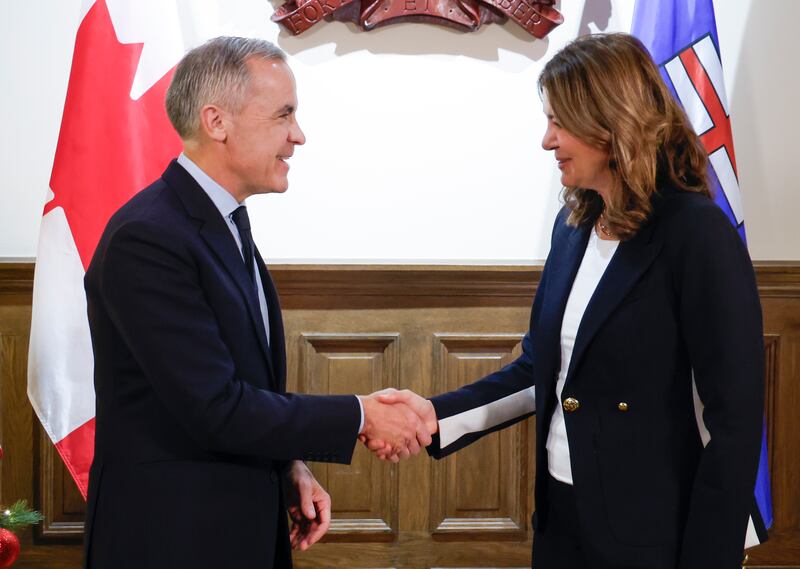
Prime Minister Mark Carney has signed a major energy agreement with Alberta Premier Danielle Smith, laying the conditions for a new oil pipeline to be approved under the federal major projects law.
- Read CTV National News correspondent Rachel Aiello’s full copy: Carney, Alberta sign major energy agreement
Here’s everything that happened on Nov. 27, 2025:
6:43 p.m. ET: Carney thanks Guilbeault, but defends climate strategy
In a statement, Carney confirmed that Guilbeault will stay on as a Liberal MP, while defending his climate strategy.
The prime minister said that, while he was “deeply grateful” for his ex-minister’s contributions, “a climate strategy based solely on regulations and prohibitions will not achieve our climate objectives not least because it will fail to generate the alignment of interests required for this historic undertaking.”
Carney also said that while the two men “may have differing views at times on how exactly we make essential progress,” he’s glad Guilbeault “will continue to offer his important perspectives.”
Rachel Aiello, CTV National News correspondent. Read the full story here.
6:20 p.m. ET: MOU is ‘historic’: former Alberta premier Kenney
Former Alberta premier Jason Kenney called the deal between the respective federal and provincial governments a “historic agreement.”
“The agreement is not a substitute for actual shovels in the ground, but it is a big repudiation of the astonishingly stupid, self-defeating energy policies of the Trudeau era,” Kenney said.
“There is no denying that today’s agreement is huge progress, and at least points the way to a more prosperous future driving by Canada’s largest creator of jobs, tax revenues, and wealth.”
Hunter Crowther, CTVNews.ca digital producer
6 p.m. ET: Environmental advocates not happy
Several environmental groups provided their thoughts on the signing.
Anna Barford, an oceans campaigner with Stand.earth, says the MOU wipes out any progress made to improve the conditions for wildlife
“Today Prime Minister Carney has torpedoed decades of work in salmon and fisheries recovery and wildlife protections to gamble the future livelihoods in the region by designating the West Coast a tar sands tanker sacrifice zone.”
Sierra Club Canada released a statement, saying “there is no economic case for a new pipeline as the world shifts away from oil and gas.”
The Canadian Press
4:59 p.m. ET: Guilbeault condemns plan
Guilbeault published a statement on his resignation on X.
“I remain one of those for whom environmental issues must remain front and center. That is why I strongly oppose the Memorandum of understanding between the federal government and the government of Alberta,” reads the statement.
Luca Caruso-Moro, CTVNews.ca journalist
4:20 p.m. ET: Ex-environment minister resigns
Canadian Identity and Culture Minister and former environment minister Steven Guilbeault is resigning from Prime Minister Mark Carney’s cabinet.
The news comes just hours after Carney signed a memorandum of understanding with Alberta laying out a series of measures aimed at strengthening cooperation on major infrastructure projects, namely a potential pipeline.
The source said the timing of the minister’s resignation, and the MOU, are connected.
Guilbeault plans to stay on as an MP in the Liberal caucus.
Mike Le Couteur, CTV National News journalist. Read the full story here.
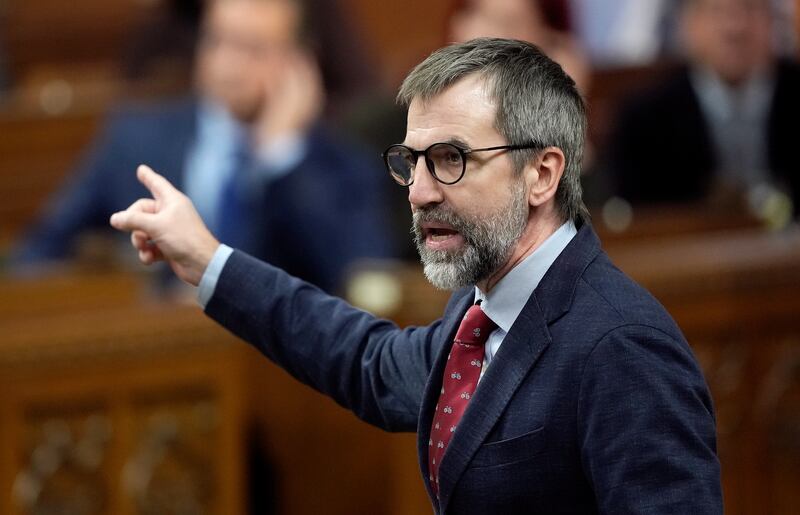
4:10 p.m. ET: B.C.’s ‘anxiety’ over energy agreement
B.C. Premier David Eby said he had “anxiety” about the agreement signed between Alberta and Ottawa, calling it a “very significant risk of taking our eye off the prize.”
Calling it a “distraction to real projects,” Eby described a lack of private interest in buying or building an eventual pipeline, which he said remains without a clear route nor adequate Indigenous support.
Eby says the federal government’s focus on Alberta is both “distracting” and “pulling time away from real projects that can be delivered in the near term.”
“We have huge projects, really exciting projects in our province right now, that will employ thousands of people and create billions of dollars in revenue,” Eby said.
He added that B.C. is “leading the country” in federal major projects, with “four times more projects than any other province.”
Joe Van Wonderen, CTVNews.ca writer. Read the full story here.
3:30 p.m. ET: A climate ‘race to the bottom?’
A new pipeline agreement between Alberta and Ottawa is raising concerns that key climate policies could be opened up to province-by-province negotiation.
Alberta has agreed to strengthen its industrial carbon price, but the deal proposes to suspend clean electricity rules for the province and extend the timeline for it to cut down on highly polluting methane emissions.
The head of the Pembina Institute, an energy transition thinktank, says renegotiating federal climate policies will sow investment uncertainty and delay action.
There’s no pipeline on the table, but today’s memorandum of understanding commits both the federal government and Alberta to work towards building one to the West Coast.
Prime Minister Mark Carney says the deal will help Canada diversify its exports and strengthen the economy.
The head of the Canadian Climate Institute, Rick Smith, says offering carveouts based on politics rather than evidence is a shortsighted compromise that will increase emissions of planet-warming gases and invite provinces to ask for their own special treatment.
“That could trigger a race to the bottom,” he said in a statement.
The Canadian Press
2:28 p.m. ET: Pipeline MOU changes nothing: B.C. First Nation
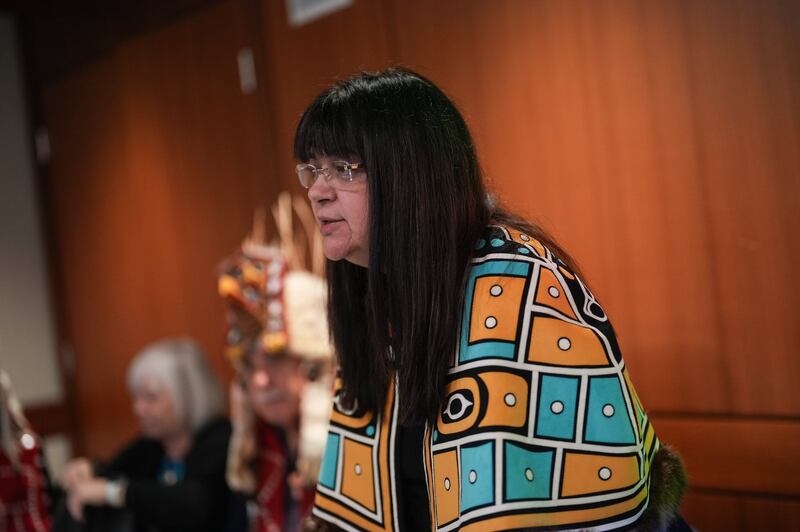
The president of the Coastal First Nations in British Columbia says the signing of a memorandum of understanding on a proposed oil pipeline to the West Coast “does nothing” to increase the chances it will happen.
Marilyn Slett says in a statement that a tanker ban on the north coast “is not up for negotiation,” and the First Nations “will never tolerate any exemptions or carveouts, period.”
She also says the nations have “zero interest” in co-owning or benefiting from a project she says has the potential to destroy their way of life, citing the risk of a catastrophic oil spill.
British Columbia’s Energy Minister, Adrian Dix, says Canada needs to focus on “real projects” in contrast to “performative politics” after the signing of the deal.
Dix says a “Team Canada” approach should embrace projects that are creating jobs and unlocking financial opportunities, as opposed to “MOUs on projects that don’t exist.”
The Canadian Press. Read the full story here.
1:07 p.m. ET: A private-sector endeavour
The memorandum of understanding outlines “construction of one or more private sector constructed and financed pipelines,” an element both Smith and Carney addressed in their remarks after signing the agreement.
“If there’s not a private sector component, there won’t be a pipeline,” Carney told reporters. Later speaking to CTV News, Smith told Chief Political Correspondent Vassy Kapelos that she was confident there would be private sector interest in such a project.
Luca Caruso-Moro, CTVNews.ca journalist
12:55 p.m. ET: What about B.C.?
Carney is speaking with reporters now. He was asked if he was willing to approve a pipeline without the support of B.C. – a province with a premier who has been critical of the negotiation process between the federal government and Alberta.
“Just to be clear, this agreement today between Alberta and the government of Canada is a first step,” he said.
Also highlighting the need for consent from Indigenous communities, he later added: “There’s a lot more work to do.”
Luca Caruso-Moro, CTVNews.ca journalist
12:30 p.m. ET: Smith touts ‘a new beginning’
Smith is delivering public remarks now – pointing to a “few key beliefs” shared between herself and Carney.
She says the prime minister “made it clear” that he would support a “thriving” Canadian energy sector with Alberta at its heart.
“A new relationship and a new beginning need a starting point grounded in good faith,” she said to a round of applause.
Luca Caruso-Moro, CTVNews.ca journalist
12:15 p.m. ET: Tanker ban exemption possible
The new federal-provincial agreement marks a historic reset of relations between the two governments, but has the potential to complicate dynamics with another.
B.C. Premier David Eby has vehemently opposed the approval of a new oil pipeline to the West Coast and has called it unacceptable that his province has been excluded from proposed pipeline talks.
The memorandum of understanding notes the federal and Alberta governments have agreed to “engage” with British Columbia “to further the economic interests of B.C. related to their own projects of interest,” and involve B.C. First Nations, to ensure they share in the financial benefits, should the pipeline proceed.
Though, it also notes that if an Alberta bitumen pipeline does get approved by the Major Projects Office (MPO), the federal government will make any appropriate adjustments to the Oil Tanker Moratorium Act, essentially opening up an exemption to the federal tanker ban.
Rachel Aiello, CTV National News correspondent. Read the full story here.
11 a.m. ET: Calgary ‘pivotal’ in agreement
Carney is set to deliver remarks and take part in a fireside chat hosted by the Calgary Chamber of Commerce later today.
The chamber says it hopes to learn more from Carney about what he thinks about the memorandum of understanding signed with Smith.
“It’s our opportunity to host the prime minister and answer questions about what he sees as Alberta’s role in growing Canada’s economy,” said Deborah Yedlin, CEO of the chamber of commerce, on CTV Your Morning Calgary Thursday.
“The energy sector is going to be pivotal to ensuring we can pursue those opportunities to diversify our economy. The prime minister has said that Canada’s going to be an energy superpower.”
Mason DePatie, CTVNewsCalgary.ca journalist. Read the full story here.
Wednesday: B.C. First Nations: Pipeline will ‘never happen’
The president of the Coastal First Nations in British Columbia said Wednesday an oil pipeline to the province’s north coast “will never happen” and slammed Ottawa for negotiating with Alberta on a possible pipeline deal without involving First Nations.
Alberta Premier Danielle Smith has spoken of a “grand bargain” which would see the proposed Pathways Alliance carbon capture project move forward alongside an oil pipeline to the B.C. coast. She has said Alberta intends to submit a pipeline proposal to the federal Major Projects Office in the spring.
Marilyn Slett, president of the Coastal First Nations, said in a news release her group – which represents nearly a dozen First Nations along the B.C. coast – has faced a “wall of silence” from the federal government on a possible pipeline deal with Alberta.
“Such conduct is not honourable and is fundamentally at odds with Canada’s constitutional, legislative and international obligations to coastal First Nations,” Slett said.
“While the details of this MOU remain to be seen, under no circumstances can it override our inherent and constitutional rights and title, or deter our deep interconnection of mutual respect for the ocean.”
The Canadian Press. Read the full story here.

