Alberta Premier Danielle Smith says she wants to work with British Columbia on a potential new pipeline but still hopes to convince that province to lift the federal tanker ban.
Speaking with reporters in Calgary on Monday, Smith said she understands B.C. not wanting to expand port infrastructure along its coast.
“But we do have some existing ports that we can build on, and I’m hopeful that we’ll have a constructive conversation about it,” she said.
Smith made the remarks when directly asked about comments B.C. Premier David Eby made to CTV Question Period on Sunday, who after months of vehement opposition to a bitumen pipeline, said he is open to one if the tanker ban remains in place.
“My anxiety is about this oil tanker ban, which is the foundational social license piece for tens of billions of dollars of investment in B.C.,” Eby told host Vassy Kapelos.
“If we can agree that the oil tanker ban is going to stay in place, then let’s have those conversations,” Eby later added.
Prime Minister Mark Carney and Smith signed a historic memorandum of understanding (MOU) last week, outlining the conditions that need to be met for a new oil pipeline to the Pacific to proceed.
Leading up to the MOU announcement, Eby called it “unacceptable” that his province had been excluded from those discussions and warned that a tanker ban exemption would threaten projects already in development in the B.C. north coast region and consensus among coastal First Nations.
The tanker ban was officially enacted in 2019, but a moratorium on oil tanker traffic off the B.C. north coast has existed since the ‘70s. The ban prohibits oil tankers carrying over 12,500 metric tons of crude or persistent oil from docking, loading or unloading at ports on the B.C. north coast, and applies to waters from the northern tip of Vancouver Island to the Alaskan border and encompasses the islands of Haida Gwaii.
“We will never tolerate exemptions to an oil tanker ban that has existed for over 50 years, and it is foundational to protecting our economy and our way of life,” Coastal First Nations President Marilyn Slett said to the media on Thursday, after the MOU announcement.
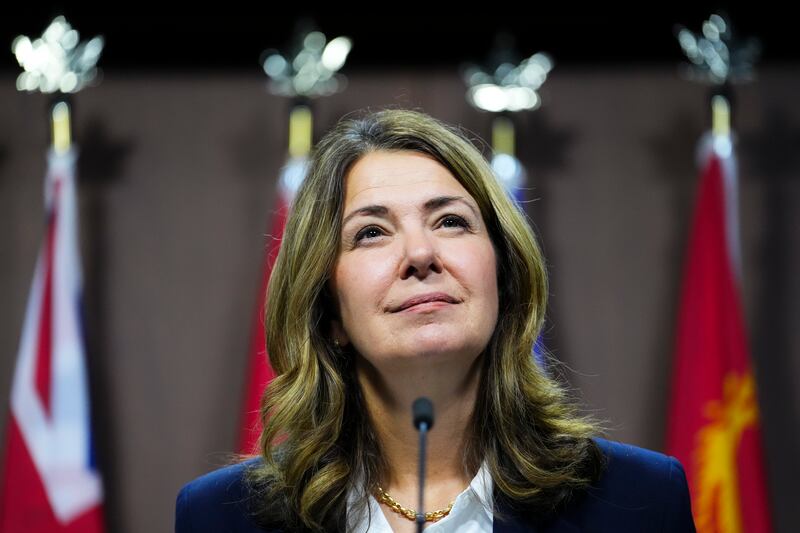
Smith acknowledged concerns in that region but pointed to the Port of Prince Rupert in B.C.’s northwest coast, saying there needs to be “more of an open mind” about that location.
“I understand the concern about going through kilometres of channel and the issues that have been raised. I understand that concern,” Smith said. “But when I look at the Port of Prince Rupert, a lot of those issues don’t exist there because it is right on the ocean.”
“I think you’ve got tankers going past up, going to Alaska, around those same waters. I think that there has been a demonstration that we can do that safely,” Smith added.
When asked if the Port of Prince Rupert is her preferred route and whether negotiations with B.C. could happen to lift the tanker ban in that area, Smith said “the decision is in the hands of the federal government.”
“We want to get as much buy-in, and we want to have as much benefit for British Columbians as we possibly can, and that includes British Columbia First Nations,” Smith said.
The latest comments from Smith and Eby mark a change in tone for both, who were publicly at odds over a potential new bitumen pipeline for months prior to last week’s MOU announcement.
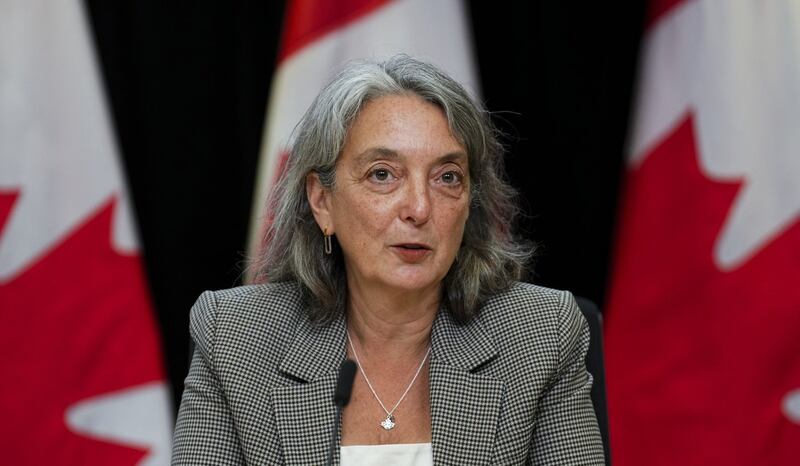
B.C., First Nations must agree: environment minister
Environment and Climate Change Minister Julie Dabrusin testified before the House of Commons committee on environment and sustainable development on Monday and was pressed repeatedly on whether the MOU will lead to a pipeline.
Asked by Conservative Alberta MP David Bexte on whether she supports a pipeline, Dabrusin said she supports it “if the provinces and the Indigenous Peoples are in agreement.”
“I think it’s really important. I would not override Indigenous Peoples’ agreement, and I would not override the province of British Columbia,” Dabrusin added.
When asked if B.C. will ultimately get a veto, Dabrusin said “the prime minister has been clear.”
“(Carney) said it in the House of Commons that there needs to be agreement from the province of British Columbia and of Indigenous Peoples, and we are not going to override the jurisdiction of our provinces, and we’re not going to override the rights of Indigenous rights holders.”
The federal government has ultimate jurisdiction over projects that cross provincial borders.
According to the MOU, there is a commitment to construct “one or more private sector constructed and financed pipelines, with Indigenous Peoples co-ownership and economic benefits” with a “route that increases export access to Asian markets.”
But there is no explicit obligation for a pipeline that would route through the B.C. north coast.
The MOU also says an application for a pipeline project will be ready to submit to the Major Projects Office (MPO) on or before July 1, 2026.

