The commission responsible for organizing the official leaders’ debates during federal elections no longer wants the responsibly of arranging the post-debate press conferences after the acrimony that unfolded during the 2025 campaign.
Michel Cormier, executive director of the last round of federal election leaders’ debates, shared the commission’s position with MPs, during Thursday testimony before the Procedure and House Affairs Committee.
Cormier said that, while the commission recommends it continues providing on-site accreditation and press room resources, it should no longer be responsible for organizing or providing a venue for the post-debate scrums, leaving that up to each party to plan their own, if they so choose.
This comes after the cancellation of the post-debate scrums that were supposed to follow the April 17 English-language leaders’ debate. Cormier told reporters at CBC-Radio Canada headquarters in Montreal that night that organizers felt they could not guarantee “a proper environment.”
At the time CTV News reported, citing sources, that security concerns were the rationale underpinning that sudden decision. Concerns were raised and tensions flared after various right-wing outlets — that the commission granted accreditation to — monopolized the post-French-language debate scrums the night prior.
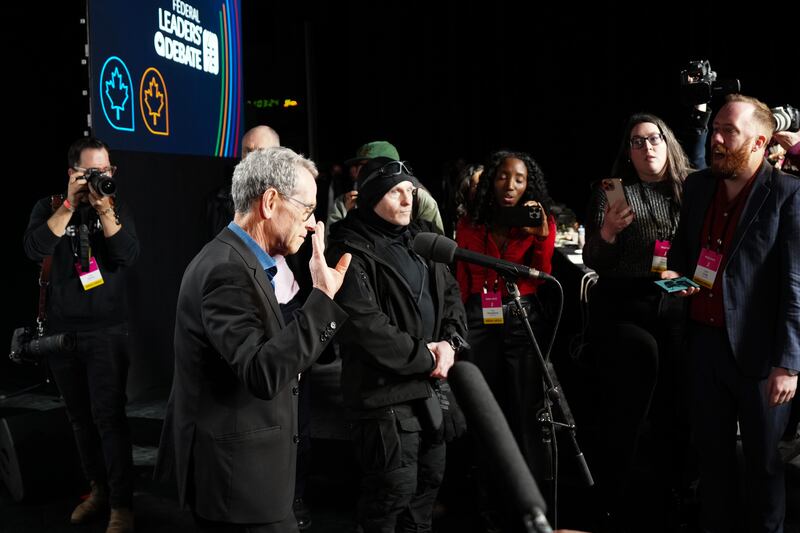
MPs press Cormier
During the hearing MPs from all parties pressed Cormier for more details on this recommendation and the rationale behind it.
Conservative MP Grant Jackson said his party backs the decision to move away from organizing the post-debate question-and-answer sessions, though his Conservative colleague Andrew Lawton later pressed Cormier on why the commission, in his view, has tried to “prevent certain journalists” from taking part.
During the 2019 and 2021 federal election campaigns, Rebel News won court injunctions allowing them accreditation for the debates. This time around, Cormier told CTV News the day of the English debate that the debate-organizing body had accredited the organization and affiliate entities to avoid another legal battle, though admitted in another media interview that he was not aware that outlet had registered as a third-party advocacy group.
Liberal MP Chris D’Entremont asked Cormier whether the commission going forward should be accrediting “everybody that has a podcast mic,” or if there should be more rigorous criteria. Cormier responded to say that he doesn’t think the commission has the capacity or mandate to litigate those questions.
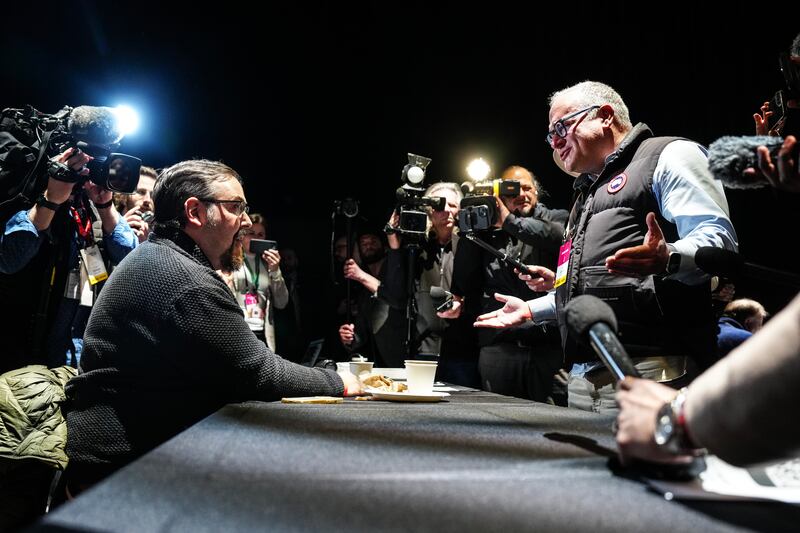
“We will abide by the court rulings that we have to admit a wide spectrum of media organizations,” he said. “And we’re happy to do that.”
In a series of back-and-forth exchanges with Bloc Quebecois MP Christine Normandin about the decision, Cormier conceded there were “shortcomings,” but described it as a “perfect storm” of circumstances surrounding the 2025 debates.
He cited the wider press pool – some 200 journalists from 60 outlets were accredited – and the fact that they were largely all contained to one room together, as a trigger for the tension.
Pressed on whether the commission was abdicating its responsibility, Cormier said no, as the post-event question-and-answer sessions are not central to the commission’s mandate. He said the commission has concluded it can’t “guarantee a sufficiently calm treatment of party leaders.”
Cormier said because reporters – whose news outlets pay considerable amounts of money to travel with the parties – have access to question the leaders regularly during the campaign, he doesn’t see skipping the formal scrums as a detriment to the public interest.
He also told the committee that it would be easier, if there was a consensus on what journalism is or what constitutes as a news organization.
“But now we’re in a situation where we have a lot of different players, who don’t agree on the standards of journalism, and it creates a very unstable environment in some of these situations.”
Changes to participation criteria, too
Acrimony also arose the week of the leaders’ debates after the commission dis-invited then-Green Party co-leader Jonathan Pedneault from participating.
The rationale the commission gave — in the face of threats of legal recourse over the last-minute move — was that the party wasn’t running candidates in at least 90 per cent of ridings as the organizers’ required.
Now, the commission is also suggesting changes to the decision-making process around which leaders are eligible and invited to participate in future debates, to align with Elections Canada’s final list of confirmed candidates.
Typically, that list is only released a week or so before the debates, Cormier testified, adding that the commission was under the impression that leaders wanted more time to rehearse.
“But, you know, after consultations and after the debates, we came to the conclusion that one week was actually enough,” he said.
Both recommendations for changes to how the next round of leaders’ debates are organized, are among the recommendations made in the commission’s post-election report.
Cormier told MPs that report has been before the minister responsible for democratic institutions, Dominic LeBlanc, since September.
Cormier said he’d enact these changes should he still be the commissioner by the time the next writ drops, given the unpredictability of the next election call due to the current minority government dynamics. For now, they remain recommendations to his potential replacement.