


Conservative Leader Pierre Poilievre’s motion calling for the House of Commons to declare their support for a new Alberta pipeline failed Tuesday, after a day of considerable parliamentary wrangling.
By a vote of 139 to 196, the motion – the official Opposition’s final opportunity of the year to force a vote on an issue they deem pressing – was defeated, and by the same margin, so too was the Conservative’s last-minute attempt to amend the wording to try and secure more support.
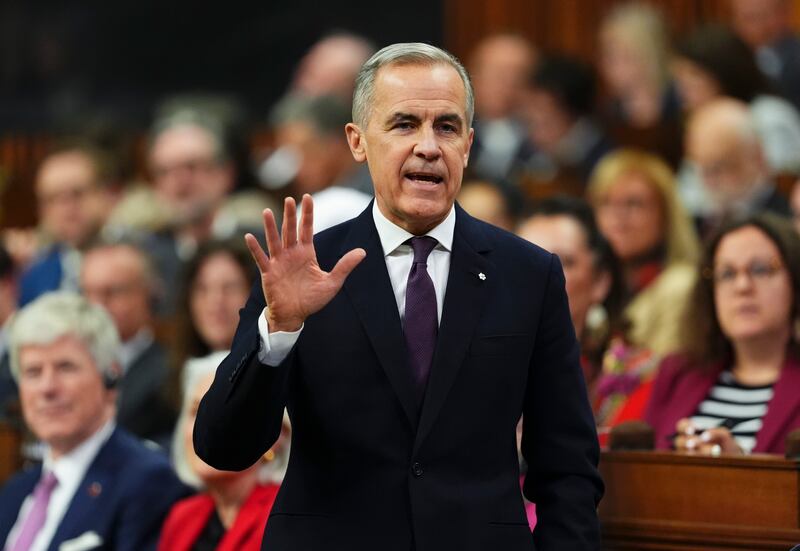
Pressing Prime Minister Mark Carney on his government’s decision to vote against the motion, Poilievre asked how Canadians could believe his words if he’s willing to vote against them.
Carney shot back, saying it wasn’t that simple.
“It’s not just the pipeline. It’s not just pathways. It is an industrial price on carbon ... it is reductions in methane... it is net-zero 2050, it is building Alberta strong, Canada strong,” the prime minister said, noting some of the key elements left out of the Conservative motion.
The motion prompting Tuesday’s parliamentary showdown explicitly asked the House to “take note” of the memorandum of understanding (MOU) signed between the federal and Alberta governments signed last month.
It went on to call for the support of “the construction of one or more pipelines enabling the export of at least one million barrels a day of low-emission Alberta bitumen from a strategic deepwater port on the British Columbia coast to reach Asian markets,” including through “an appropriate adjustment to the Oil Tanker Moratorium Act, while respecting the duty to consult Indigenous peoples.”
This wording was pulled directly from the MOU, which outlined the conditions that need to be met for a new oil pipeline to the Pacific to proceed.
However, the Liberals were quick to note Poilievre’s motion left out key other pieces of the MOU, such as Alberta’s commitment to industrial carbon pricing and other climate measures, co-ownership opportunities for Indigenous Peoples, engagement with British Columbia and the need for a private proponent.
Why did Liberals vote against?
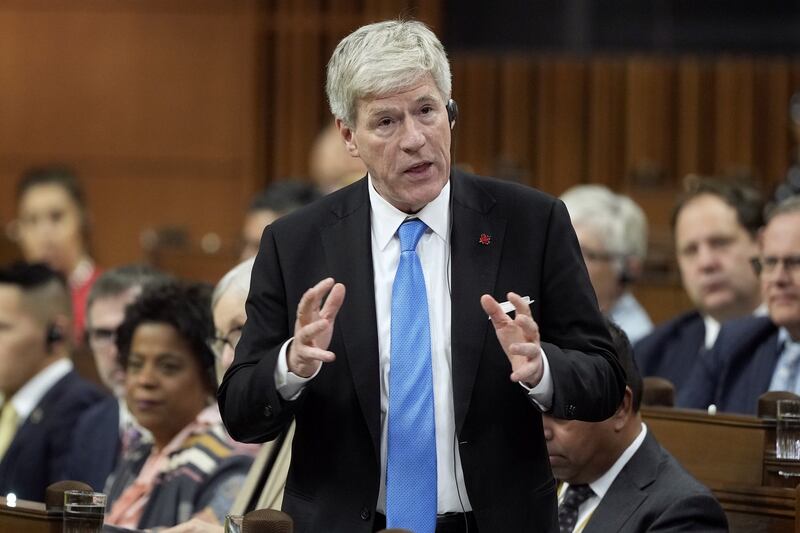
It was on this basis – and a broader accusation of using the motion to sow division – that the government announced late Monday it would be voting against the Conservative motion, taking some of the political wind out of Poilievre’s sails, stating what he was forcing the House to vote on “ignores critical elements” of the MOU.
“Canadians see the motion that’s before us today for what it is,” Energy Minister Tim Hodgson told reporters on Parliament Hill. “It’s a cheap political stunt, and so we will not be supporting the motion.”
“This motion doesn’t reflect the full agreement, and actually, I think says a lot about what the Conservative Party is,” said Environment and Climate Change Minister Julie Dabrusin.
“Today’s motion that’s being put on the floor is not a ‘no’ vote for the MOU, it’s a ‘no’ vote against the Conservatives playing games and creating optics and wasting parliamentary time when they should be voting on things that are way more important,” Indigenous Services Minister Mandy Gull-Masty said.
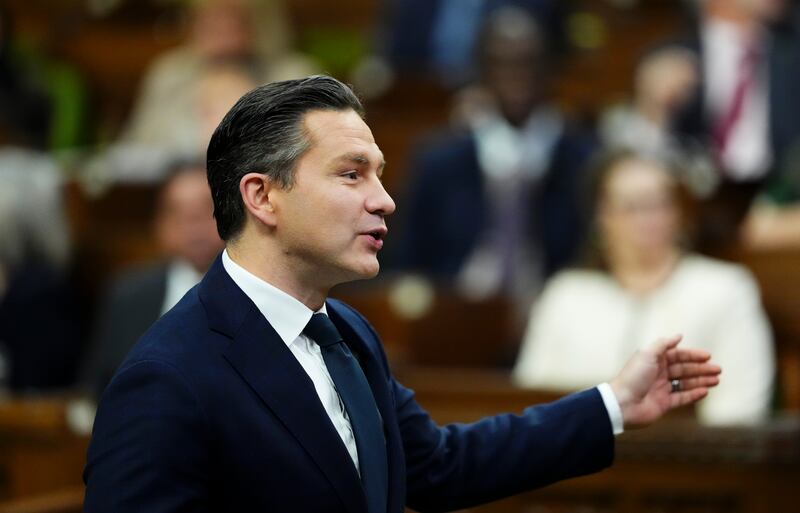
After these concerns were expressed, Poilievre rose in the House midday to offer a compromise.
Poilievre cites ‘excuses,’ offers to amend
“I’m going to help brush away those excuses for them. We’re going to amend our own motion in order to include the things the Liberals claim we left out,” he said.
The proposed amendment sought to update the motion to mention Alberta’s carbon capture and storage project, providing “meaningful opportunity for Indigenous rightsholders to participate in consultation processes and economic opportunities through Indigenous ownership, partnerships and benefits,” and the need to engage with British Columbia and further economic interests in that province.
However, Poilievre’s amendment notably omitted any mention of Alberta agreeing to strengthen industrial carbon pricing in that province, which was also part of the MOU.
“If the Liberals are telling the truth when they say they support the whole MOU, then they should be prepared to vote for any part of the MOU,” Poilievre said.
In eliminating any curiosity around whether the Liberals would think twice about supporting the motion with updated wording, Government House Leader Steven MacKinnon called the Conservative motion “a trainwreck,” and said his party was “very confident” in the actual energy agreement made with Alberta, as well as their position on the motion.
Also speaking to host Vassy Kapelos separately, Conservative House Leader Andrew Scheer insisted his party’s motivations were to present a motion Liberals could vote for, to show potential investors “the consensus here in Ottawa.”
The motion was non-binding, meaning the outcome of this vote does not materially impact any potential future pipeline approvals.
With files from CTV News’ Stephanie Ha

