OTTAWA — Both Germany’s TKMS and South Korea’s Hanwha submitted their final bids to win a lucrative contract to build Canada’s next generation of submarines ahead of the March 2 deadline.
CTV News has learned how the proposals will be evaluated and details about what the bids will contain.
Tens of billions of dollars in economic incentives are attached to the bids, but according to both German and Korean sources, neither proposal will contain an offer to build a car assembly plant in Canada, despite diplomatic pressure from Industry Minister Melanie Joly to attach autos to a sub deal.
The requests for proposals (RFP) are now in the hands of Defence Investment Agency CEO Doug Guzman for assessment. Then it will be up to cabinet to decide the winner.
Multiple government and private sector sources have told CTV News that a decision is expected to be announced in June before Parliament’s summer break.
The federal government wants to purchase up to 12 conventional, diesel-electric powered submarines to replace its aging fleet. The first one must be delivered by 2035, if not sooner.
Both TKMS’s Type 212CD and Hanwha’s KSS-III submarines meet the technical requirements of the Royal Canadian Navy. The submarines must have attack capabilities to launch both torpedoes and missiles that can hit targets on land.
In both cases, the submarines will be assembled overseas but will use various Canadian components. The bids must also have a long-term proposal to maintain and repair the vessels that spans the lifecycle of the fleet.
The federal government’s evaluation criteria are divided into four sections:
- Submarine platform, weighted 20 per cent
- Sustainment, weighted 50 per cent
- Financial, weighted 15 per cent
- Strategic and Economic Partnerships, weighted 15 per cent
Who can deliver on time and on budget?
Despite Hanwha’s confidence that the speed of its production cannot be matched, a German source familiar with the bids told CTV News on background that the TKMS timeline is “much closer than the Koreans think.”
The official did not disclose a delivery date but said more details could be revealed later this week. Germany’s secretary of state and TKMS CEO Oliver Burkhard are expected to attend a defence conference in Ottawa.
The official said the Canadians have not told TKMS that their production timeline needs to be sped up, but if required, the ship maker would have government support to fast-track the delivery of subs to Canada ahead of German and Norwegian orders already in the queue.
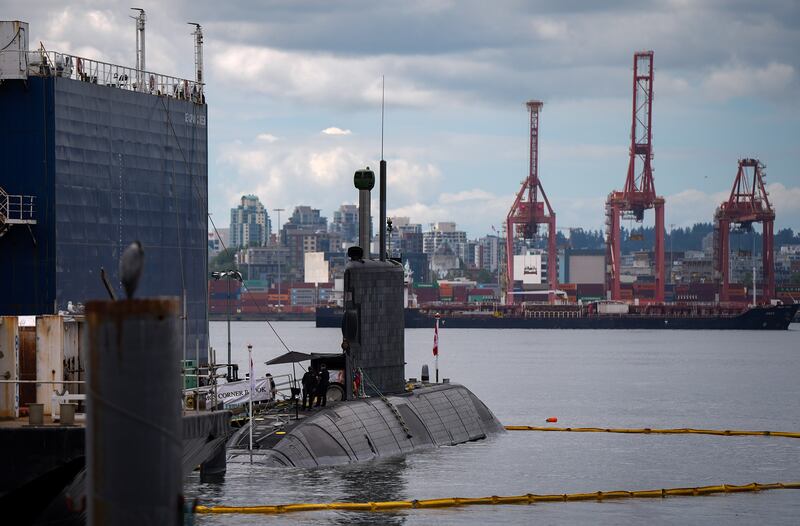
The Royal Canadian Navy’s four Victoria-class submarines are nearing obsolescence. The South Koreans have promised to deliver the first submarine by 2032, three more by 2035 and the full dozen by 2044. It takes approximately six years to build one submarine.
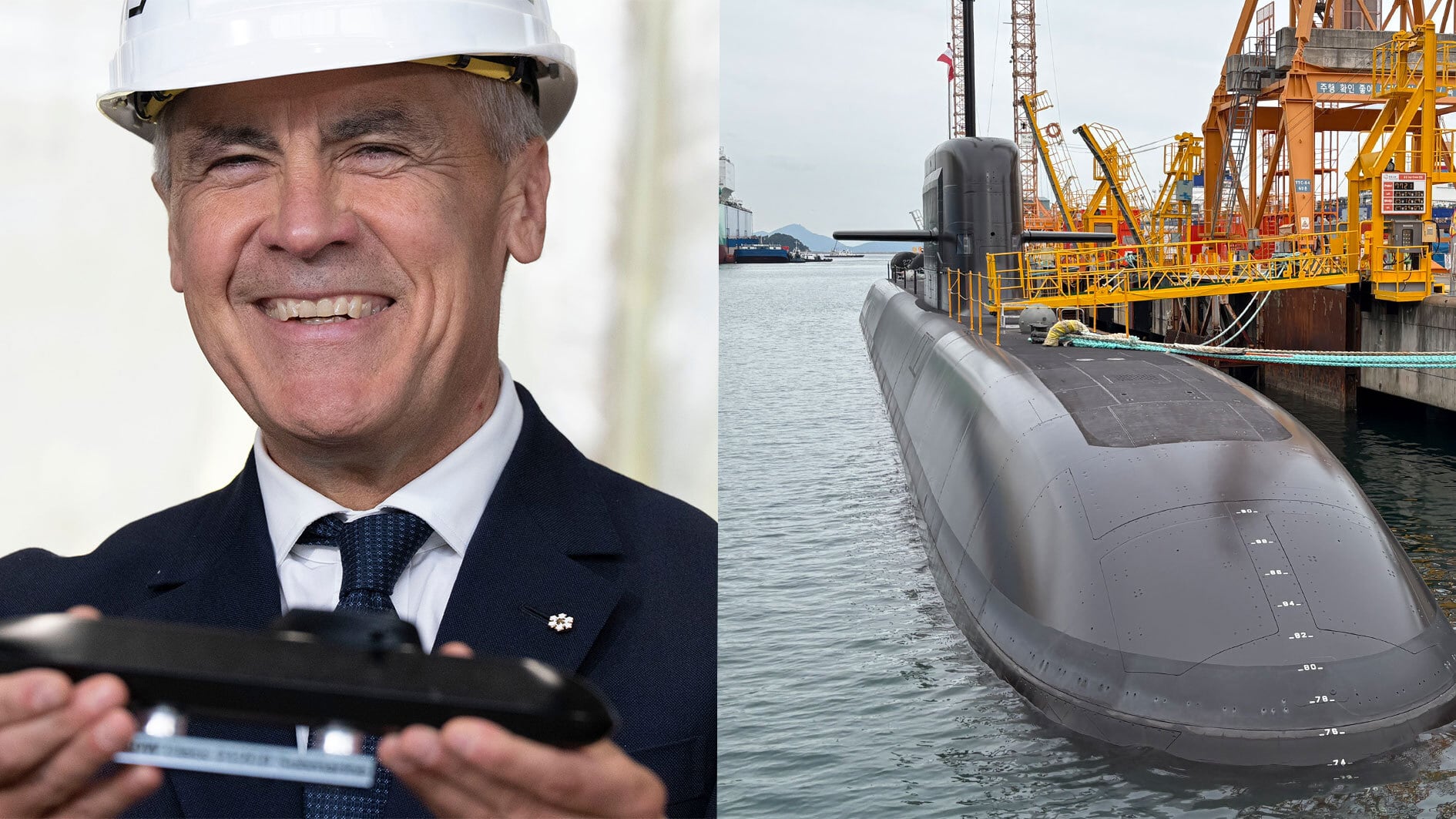
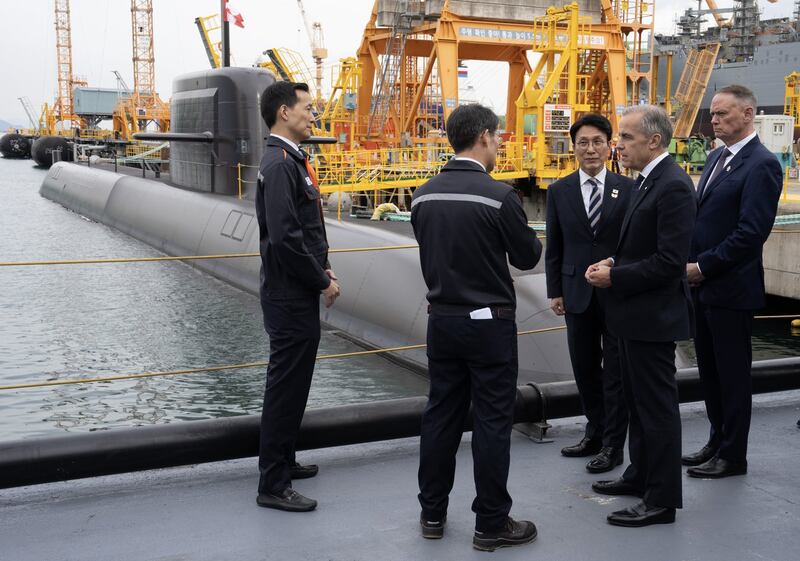
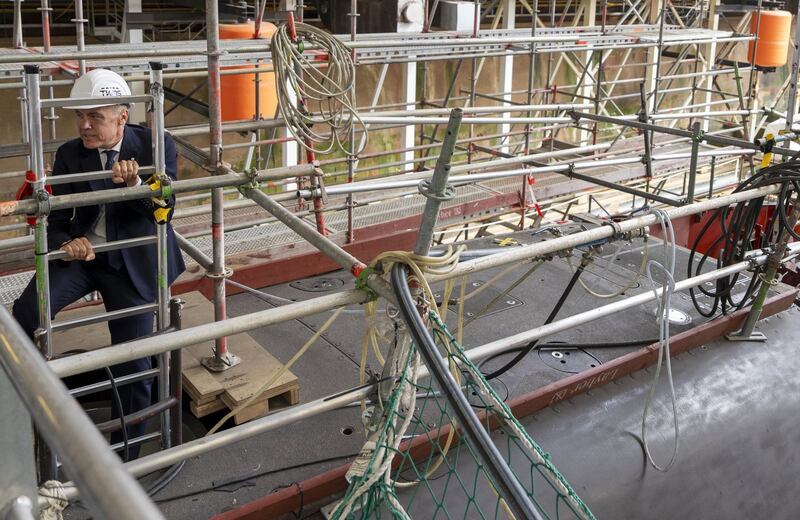
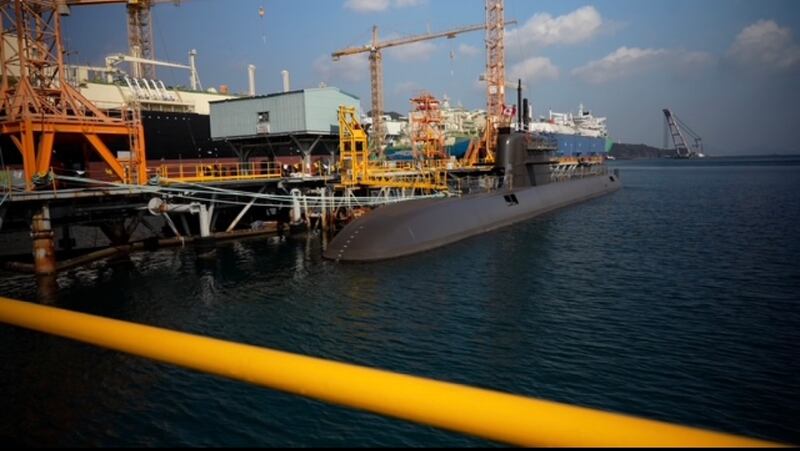
Last fall, the prime minister toured a completed KSS-III submarine that was already in the water. Mark Carney also toured a 212CD vessel in Kiel, Germany, that was on the assembly line.
Previously Hanwha officials have said that each submarine will cost approximately $2 billion to build, but now the head of its Canadian subsidiary is indicating the cost could go up with the addition of Canadian components after the first four submarines are delivered.
“I think there’s an expectation that localization does come with a cost,” said Hanwha Canada CEO Glen Copeland in an interview last week, shortly after the company submitted its RFP. “But we’ve kept at a reasonable level for Canada that they will understand.”
Copeland did not provide new cost estimates. At this point TKMS has also not provided a cost estimate.
Economic benefits
Although it is not offering an auto plant, the South Koreans are proposing to create a hydrogen-fuel infrastructure hub in Canada.
A domestic torpedo manufacturing plant is also in the bid, which states that the weapons for the KSS-III can be built in Manitoba, Nova Scotia, New Brunswick or Quebec.
Copeland says Hanwha’s proposal will create 25,000 Canadian jobs a year, with a peak of up to 40,000 jobs annually in the early 2030s.
These jobs will include workers hired to build a maintenance facility in Halifax and Esquimalt, B.C., as well as staff trained to maintain and repair subs. The jobs created also include the manufacturing of components that go into the submarine such as the missile delivery apparatus and communications systems.
Hanwha has signed 17 memorandums of understanding (MOU’s) with Canadian companies and expects to sign up to 25 non-binding agreements at the end of this week.
TKMS has not publicly disclosed how many jobs it expects to create in Canada, but it has also signed several teaming agreements. Among its signed partners are Seaspan Shipyards, construction company EllisDon and naval equipment maker Marmen.
Some Canadian companies also have signed agreements with both competitors.
In the case of Algoma Steel in Sault Ste. Marie, Ont., Hanwha says it will buy steel from the company but also loan it money to build a steel beam plant.
German sources say TKMS also has an agreement with Algoma but it’s unclear what that could entail at this time.
The 212CD will not have Canadian steel in its submarine. The vessel requires a type of magnetic steel that is not produced in this country, but the official who spoke to CTV News said that TKMS will invest in the domestic steel industry in another way.
NATO vs. defence partnership
Analysts say as a founding member of the North Atlantic Treaty Organization or NATO, Canada may face diplomatic pressure to secure its submarine fleet from an alliance member.
TKMS has the advantage of currently being the supplier for 70 per cent of submarines in NATO and has promised to bring Canadian companies into its global supply chain.
It is building the 212CD as a joint fleet with Norway. The two countries are working together to build a specialized submarine maintenance facility in Bergen, Norway.
Officials are suggesting that Canada, a trusted NATO partner, could use the same blueprint to build its facilities in B.C. and Nova Scotia.
Signing a procurement contract with a fellow NATO nation may also be easier. Officials suggest that so much security diligence has already gone into the contract between Norway and Germany with TKMS that it would be efficient for Canada to use that contract as a template.
“We are aware that the NATO membership is a factor, but it’s not the deciding factor in the end for a prime minister that has to sell this to his people,” the source said.
Despite being a non-NATO member, South Korea’s Hanwha is already supplying weapons to at least six NATO members. It provides armoured vehicles to Poland, Norway, Finland, Turkiye and Romania. It has also sold rocket launchers to Norway and produces ammunition for the United Kingdom.
Last year, South Korea signed a Security and Defense Cooperation Partnership with Canada, committing to stronger military collaboration and communication between defence ministers and top soldiers. Just last week, the two nations signed an agreement to share and protect top secret military information.
If Hanwha wins the submarine contract, South Korea has offered to start training four submarine crews, or 200 personnel. It would provide the Canadian submariners with a dedicated training facility at the naval base in Jinhae, South Korea, along with a tactical simulator.
It’s unclear what the Germans are proposing in terms of training, but officials are expecting a close race.

