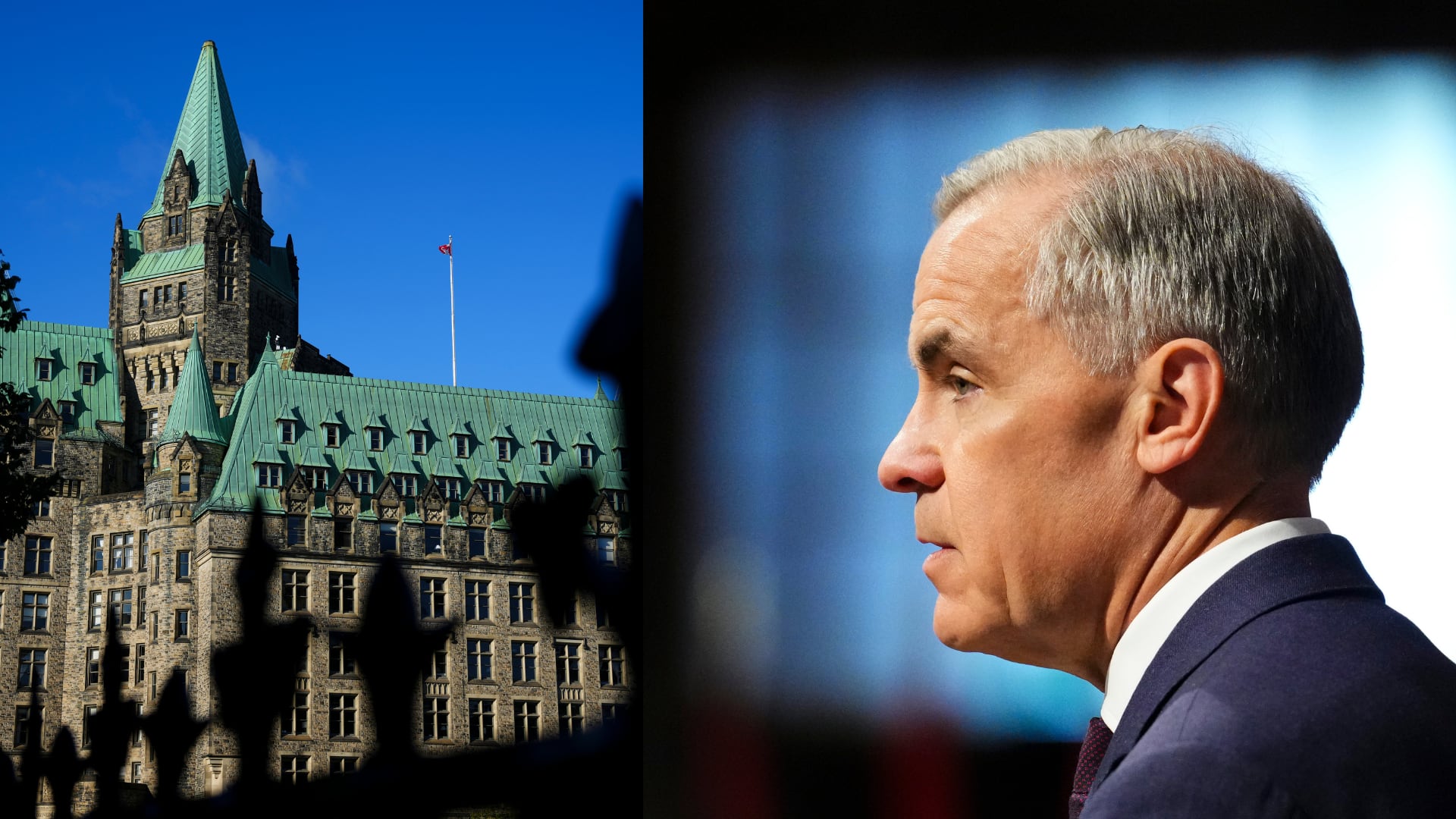
Canada’s budget watchdog predicts Canada’s deficit doubled during the last fiscal year from $36.3 billion to $72 billion, citing “modest revenue growth” and growing expenses “largely reflecting the introduction of new measures.”
That’s according to the Parliamentary Budget Officer (PBO)’s June outlook published on Thursday. The figures represent an estimate based on public accounts analyzed by the PBO, though the federal government has not yet released its costing.
The PBO also reports net new spending will amount to $68.4 billion from 2025 to 2031.
Predictions
Trade uncertainty and slower population growth has reduced “potential output growth in the short term,” the PBO notes.
It predicts real GDP growth will dip from 1.7 per cent to 1.1 per cent between 2025 and 2026. That figure should rebound in 2027 to 1.6 per cent and continue to grow modestly in the years that follow, according to the report.
It’s a portrait of an economy obscured by trade headwinds and international uncertainty. While the war in Iran has led to ballooned fuel pricing, “non-energy exports remain subdued, constrained by ongoing U.S. tariffs,” the report notes.
“Inflation is projected to average 2.6 per cent in 2026, as higher commodity prices offset downward pressure from excess supply and easing shelter costs.”
The office predicts the Bank of Canada will hold its key interest rate at 2.25 per cent through this year. However, should pressures caused by the U.S. and Israel’s war on Iran subside, the PBO expects the central bank to gradually raise its rate to 2.5 per cent by mid-2027.
Canada’s present unemployment rate was 6.9 per cent as of April, according to Statistics Canada. The PBO expects the rate to drop to 6.4 per cent next year and fall further to 6.1 per cent between 2028 and 2030.
Personnel costs to rise
The PBO also notes a projected increase in personnel expenses over the next five years.
Spending is projected at $69.2 billion in the 2025-26 fiscal year, down from $73.9 billion from the previous period.
The federal government is in the midst of a widespread restructuring. Last July, Finance Minister François-Philippe Champagne asked cabinet ministers to find “ambitious” savings within their respective departments. Prime Minister Mark Carney has said reductions to the federal workforce would happen “naturally through attrition.” Budget 2025 put a number on the potential savings: $13 billion.
“Savings will be achieved by restructuring operations and consolidating internal services, adjusting programs to realize efficiencies, and in some cases moving away from programs that are not meeting their objectives,” reads a federal notice on workforce reductions.
As of May 6, more than 5,000 positions in Employment and Social Development Canada have been cut, and nearly another 1,000 other workers were included in workforce adjustments and career transitions. At Health Canada, more than 1,000 positions were eliminated.
The cuts affect a wide range of departments and ministries. Find a full list here.
Despite that, the PBO expects personnel expenses to rise by $10 billion in the 2026-27 fiscal year, and $86 billion by 2031.

