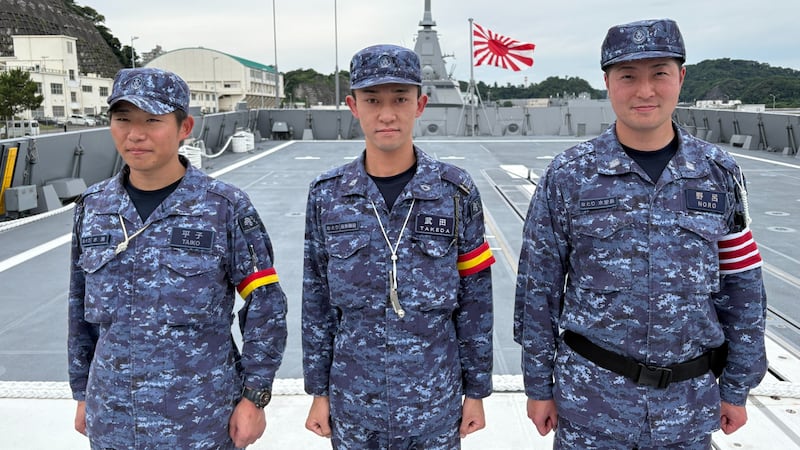
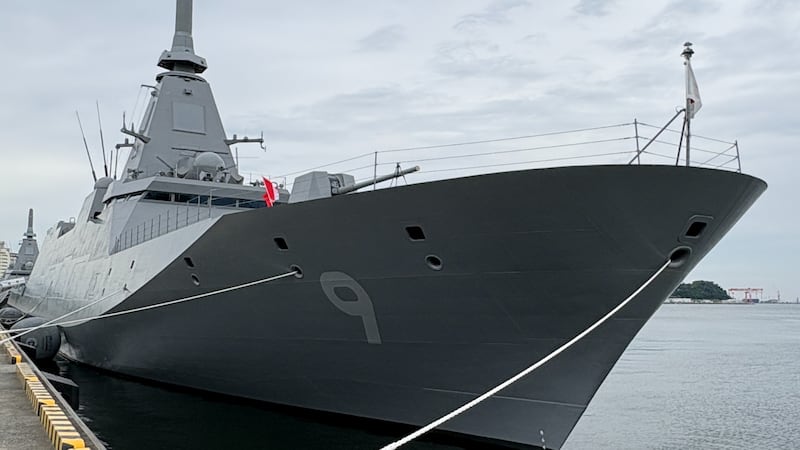
TOKYO, Japan – The JS Natori, a newly commissioned warship, embodies the future of Japan’s Self-Defence Force. Built by Mitsubishi Heavy Industries, the frigate has a vertical-launch missile system and can sail in stealth mode.
Japan has already sold a fleet of the frigates to Australia and it’s looking for more buyers. Future versions of the ship could also be a potential platform for a partnership with Canada, which has the technological expertise that could augment what Japan builds.
“We’re interested in what Japan has to offer, and we’re interested in what we have to offer the Japanese,” said Defence Minister David McGuinty in an interview with CTV News after he toured the frigate docked at the Yokosuka Naval Base.
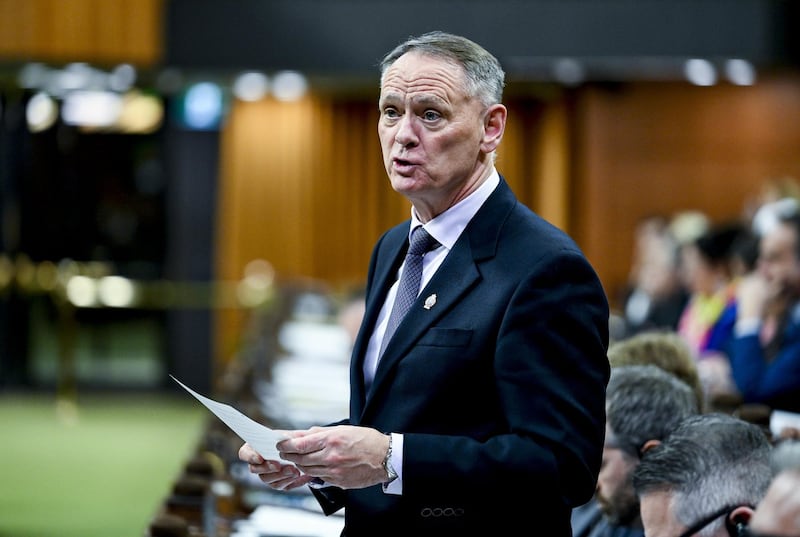
McGuinty visited the base, as part of a Team Canada trade mission to Japan. Three hundred executives representing 175 Canadian companies are in the country this week to drum up business. It is the largest trade mission the government has launched in Asia.
A new agreement enacted by Parliament in June facilitates the co-development, purchase and export of advanced defence equipment and intellectual property between the two nations. McGuinty says the agreement, “opens the door for very detailed exchanges on security matters and for research and development.”
More than 40 defence and security companies joined the minister on this trip to pitch what they can offer to the Japanese. The companies include marine engineering firms, aircraft makers and HVAC. The delegates have expertise in AI and sonar technology, and they know how to track space debris.
McGuinty said that the Canadians will be meeting with Japanese counterparts to, “see where we can sell Canadian know-how and where we can buy Japanese know-how.”
Middle-power alignment
The mission is part of Canada’s defence industrial strategy which has a “build-partner-buy” framework that prioritizes domestic production and advocates for partnering with trusted allies where necessary. It also emphasizes Prime Minister Mark Carney’s clarion call in his Davos speech for middle powers to co-operate to stand up to hegemons.
Both Japan and Canada are under pressure to increase their defence spending. Canada has committed to reaching the new NATO target of five per cent of GDP by 2035. Reaching that target will require buying new military equipment such as a fleet of submarines and spending as much as C$150 billion annually on defence.
In March, Japan authorized more than US$60 billion in military spending this year. The record investment is needed because of the geopolitical risks that surround the island.
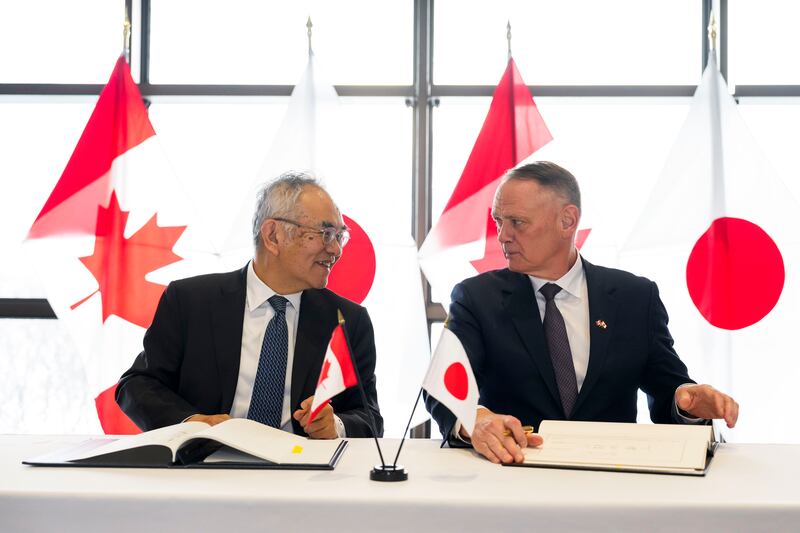
“On a map you see that we are surrounded by China, North Korea and Russia. Those three countries have nuclear weapons and some of those are targeted toward us,” said Kanji Yamanouchi, Japan’s ambassador to Canada.
For context, Yamanouchi adds that China’s military budget in 2000 was US$40 billion, but has now grown exponentially to US$300 billion annually.
“We have to respond and we can’t do it alone.”
The ambassador says Canada has the critical minerals that Japan needs to build its defence infrastructure as well as the technology and AI expertise.
Yamanouchi says Japan wants to work together with like-minded nations like Canada that, “values democracy, human rights and the rule of law.”
He adds the more ties Japan establishes with Canada and other democracies, the more it will feel like “we have friends” in the Indo-Pacific region.
Conflicting policies?
But even as Canada pursues new defense trade partnerships with Japan, it is also deepening economic ties with Japan’s biggest regional competitor – China.
Canada’s Indo-Pacific strategy, released in 2022, calls China “an increasingly disruptive global power,” and calls for the federal government to challenge China in areas of “profound disagreement … including when it engages in coercive behaviour – economic or otherwise – ignores human rights obligations or undermines our national security interests and those of partners in the region.”
But Ian McKay, Canada’s ambassador to Japan, says the policy framework doesn’t push an oppositional stance on China.
“(The strategy) recognizes that China is a dominant player and for Canada to have an impact and a raison d’être in the Indo-Pacific region it had to have a stronger relationship with all the players and partners in the Indo-Pacific region,” McKay said in an interview.
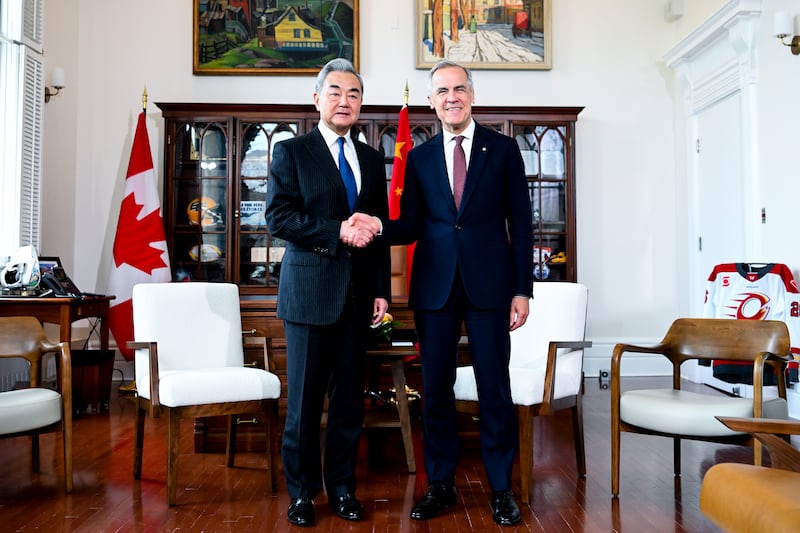
“I don’t think it was ever an adversarial strategy toward China. We were simply recognizing their significant dominance in the region.”
McGuinty insists Canada can do two things at once. That it can pursue closer relationships with Asian allies and stronger economic ties with China. The defence minister says the relationship with Japan will grow stronger with future co-operation on procurement. The Canadian Armed Forces will also be in the region more often with joint military exercises that begin this fall.
“Look, it’s fair to say in the past, that we’ve been in and out of this Indo-Pacific region without the level of commitment that countries expect from us. But the investments we’ve made from two per cent (of GDP defence spending) and beyond…will allow us to dig down deeper and wider into the Indo-Pacific. It will allow us to show up and be here on a regular basis.”

