OTTAWA -- Choosing the winning bid for Canada’s next generation submarine fleet is coming down to the wire. Analysts say the race between the two contenders, German-Norwegian consortium ThyssenKrupp Marine Systems (TKMS) and South Korea’s Hanwha, is too close to call.
Prime Minister Mark Carney has previously said that a decision would be made before the end of June, but sources tell CTV News that the announcement will be delayed a few days. It will likely come before Carney leaves for the July 7 NATO leaders’ summit in Ankara, Türkiye.
The members of the alliance are under pressure from the United States to map out how they will reach the new defence spending target of five per cent of their gross domestic product by 2035. Earlier in June, U.S. Secretary of War Pete Hegseth said NATO partners must show a “credible plan” at the summit of how they will spend at least 3.5 per cent of GDP on core defence such as troops, weapons and equipment.
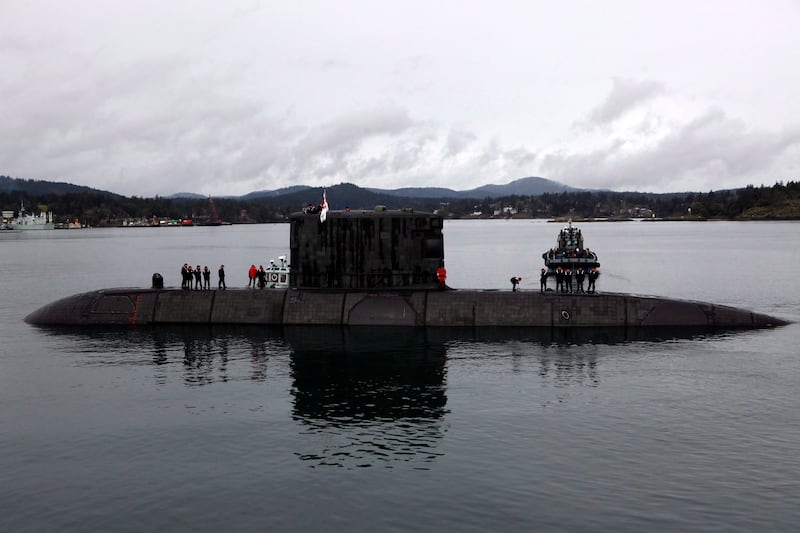
Only one of the Royal Canadian Navy’s existing four Victoria class submarine is operational. The others are under maintenance.
Canada’s patrol submarine project involves procuring up to 12 submarines and paying for 30-50 years of maintenance. The contract over its entire lifespan has an estimated value of more than $100 billion. The submarines are expected to be a primary example of how Canada plans to increase its spending to reach the new NATO target.
Last week, Defence Minister David McGuinty said it’s unlikely that the submarine contract will be split between the two competitors because it would make it more expensive and harder to manage.
“If you split a fleet of any kind, you end up in many ways with compounding costs. You need to service, you need to maintain, you need to sustain two different fleets. That’s a more complicated matter for any country,” McGuinty said from Tokyo, where he was participating in a trade mission. “But we’re evaluating all these things, and we’ll see when we get there.”
Dan Kerry, a defence analyst with Deloitte, calls this a “procurement with purpose.”
“We’re looking not just to purchase a submarine, but we’re entering into a long-term economic and military engagement,” Kerry said in a Zoom interview.
“I would say that the reason we haven’t had a winner yet is because it’s incredibly close. Both are incredibly capable submarines, and both companies have put on very strong economic and political offers to Canada.”
How will they be judged?
The Defence Investment Agency, a newly created body, is responsible for evaluating the two bids.
Doug Guzman is the agency’s CEO. He was appointed by the prime minister and has three decades of experience in the global banking and financial sectors but does not have procurement experience.
The federal government’s evaluation criteria is divided into four sections:
- Submarine platform, weighted 20 per cent. This would pertain to the technical aspects of the vessel.
- Sustainment, weighted 50 per cent and includes the maintenance plans over the submarine’s lifespan.
- Financial, weighted 15 per cent and includes how much it would cost to build the submarine.
- Strategic and Economic Partnerships, weighted 15 per cent.
Guzman has said that the two foreign competitors need to put as many Canadian elements in their bids as possible if they want to win.
TKMS and Hanwha submitted their bids on March 2. The two suppliers were then given an extension until April 29 to sweeten their bids.
“We’re starting at the pointy end of the spear, which is the folks that are trying to sell us stuff, and we’re looking them in the eye and saying ‘you need to make that as Canadian as you can if you want to be favoured in the process,’” Guzman said during his April appearance before the House Standing Committee on National Defence.
Who can deliver the subs faster?
The Royal Canadian Navy plans to retire its aging fleet of submarines in 2035. A submarine takes about six years to build.
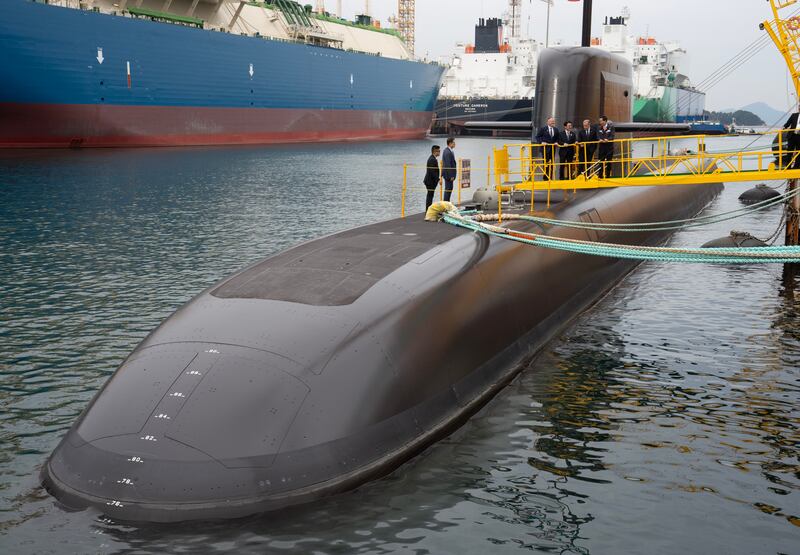
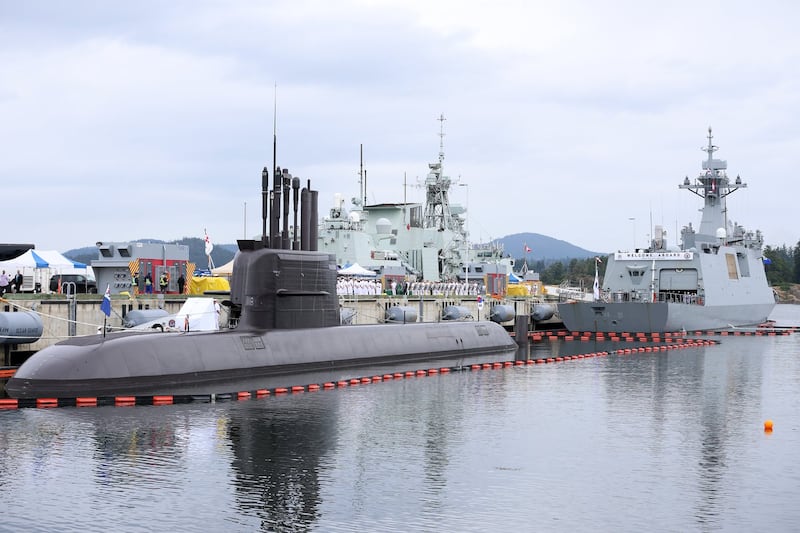
The South Koreans have already sailed the KSS-III across the Pacific to show it off, while the Type 212-CD has yet to roll off a German assembly line.
Hanwha says it can deliver Canada its first replacement submarine by 2032, and three more by 2035. The company says that each submarine will cost around $2 billion to build, and that early replacement of its aging Victoria class fleet will save taxpayers approximately $1 billion in maintenance costs.
TKMS has not provided CTV News a cost estimate for its vessels but has said it is willing to speed up delivery of the submarines by moving up Canadian orders in its production queue.
The German shipbuilder says it can deliver four submarines to the Canadian navy by 2036.
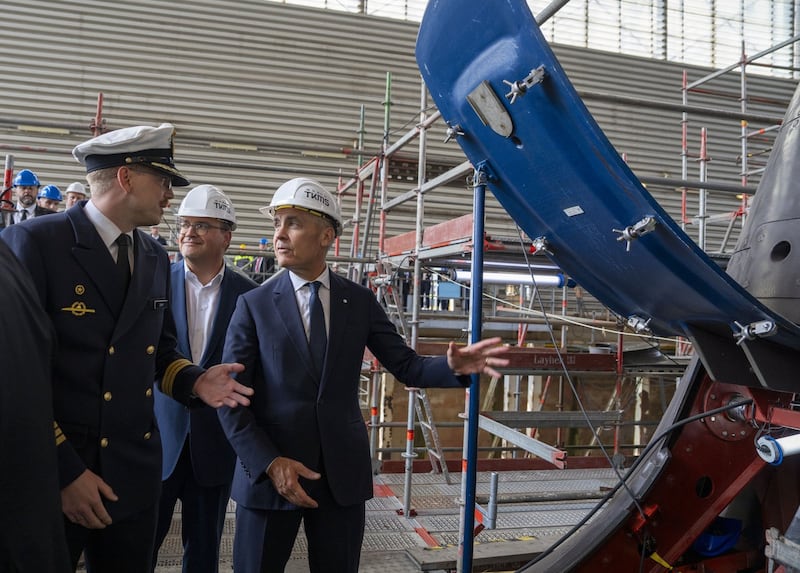
The Germans and Norwegians are offering to “sail together” on their boats as one NATO allied unit and give Canada access to TKMS facilities in Europe, India and Singapore.
“We make clear this is not only about economic benefits, that this is about strategic advantages,” German Defence Minister Boris Pistorius said during a visit to Ottawa earlier in June.
“It’s all about unity of the fleet – about interoperability.”
Meanwhile, the Republic of Korea Navy has offered to provide 200 Canadian submariners with a training facility equipped with a tactical simulator on its navy base in Jinhae.
Economic impact
Both defence corporations are promising thousands of jobs and billions in economic spinoffs but are using different calculations.
Hanwha says it has signed more than 80 partnerships, which according to accounting firm KPMG could turn into more than $70 billion in economic opportunities, with 430,000 jobs projected to be created from 2026 to 2044.
Over those 18 years, Hanwha’s investments could contribute $96.3 billion to Canada’s gross domestic product.
TKMS also put out its economic projections this week. It has inked 19 memorandums of understanding and says there are more partnerships that it has signed but has yet to make public.
There are several instances of Canadian partners playing both sides and signing MOUs with the South Koreans and the Germans.
TKMS is pledging $160 billion in economic activity, $86 billion in GDP and more than 650,000 jobs over the entire project. However, it did not provide a time frame for its calculations. The lifespan of one submarine can range between 30 and 50 years.
Industrial benefits for key sectors
The federal government has been clear that it wants to see economic benefits in the bids that can help the industries hurt most by the U.S. tariff war such as steel, aluminum, autos and forestry.
Industry Minister Melanie Joly has signed similar agreements with both South Korea and Germany to increase collaboration in the auto sector, which includes advancing hydrogen-powered and electric vehicle manufacturing opportunities and battery production.
Sources previously told CTV News that TKMS did not have a vehicle component to its initial bid. It’s unclear if the proposal was revised to include autos after the deadline extension.
Meanwhile, Hanwha has two auto sector lifelines incorporated into its bid.
The South Koreans have offered to build hydrogen trucks and infrastructure in Canada as part of its Project Beaver proposal. The Automotive Parts Manufacturers’ Association (APMA) also entered into a partnership with Hanwha to build armoured vehicles. The agreement gives the APMA 51 per cent ownership and would use materials from Algoma steel in constructing the howitzers.
Both the Germans and the Koreans are proposing to manufacture torpedoes in Canada and buy billions in liquified natural gas.
According to CBC News, the German government is backing major investments in the Port of Churchill in Manitoba to help get critical minerals and LNG to market. It also wants to invest in a carbon capture facility in Alberta.
NATO and Europe vs. Indo-Pacific
While the focus of the federal government during this trade war has been on economic benefits, analysts say Carney may make his final decision based on a political calculation. Does he go with what is tried and true, or does he chart a new course?
David Perry, president of the Canadian Global Affairs Institute, says that the German-Norwegian proposal has the advantage of “familiarity from the NATO context and of what Canada works with in terms of that operational interoperability framework.”
Perry says the German-Norwegian consortium provides an opportunity to have more ready access towards northern operations, which is important to Canada’s arctic defence strategy.
However, Perry points out that if the government were to select Hanwha, it would be a “tangible expression of a really concrete defence linkage across the Pacific.”
“If we were to get a major source of supply from Korea, that would really go a long way to putting some significant teeth into our Indo-Pacific strategy.”
Perry said choosing the Korean bid would also provide greater access to Asia-Pacific region where the economy is expanding at faster rates.
The International Monetary Fund projects growth across the Indo-Pacific region between four and six per cent compared to the sluggish EU at 1.3 per cent.
Regardless of which company is chosen, whether TKMS or Hanwha, Perry says Canadians will benefit.

