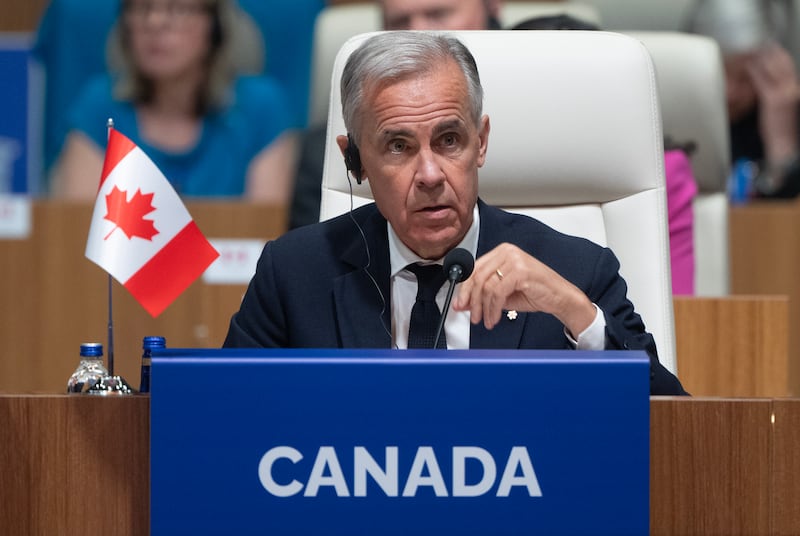
OTTAWA — Prime Minister Mark Carney has arrived in Saudi Arabia as he seeks economic partnerships with a strategically important country whose notorious human rights record is only getting worse.
Carney is in the city of Jeddah on the invitation of Crown Prince Mohammed bin Salman, in what will be the first visit to Saudi Arabia by a sitting Canadian prime minister in 26 years.
“It’s very significant,” said University of Ottawa professor Thomas Juneau, who specializes in the region.
“There is a willingness to deepen relations with Canada, but we are not high on their priority list.”
Carney’s visit follows a gradual thaw in bilateral relations after what Juneau called “a fairly major diplomatic dispute” in 2018.
The Trudeau government had criticized the kingdom’s justice system and its treatment of women, calling on Saudi Arabia to “immediately release” human-rights activists. Riyadh instead withdrew its ambassador from Ottawa and expelled Canada’s envoy.
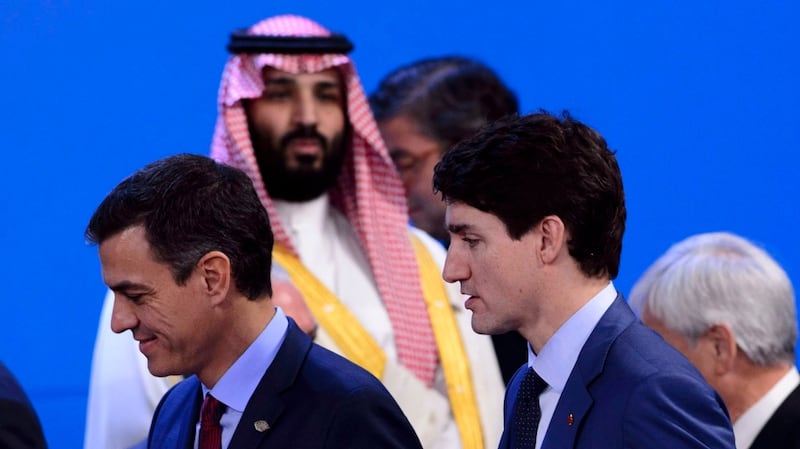
Saudi Arabia halted trade talks with Canada, before restoring ambassadors in 2023.
The dispute followed years of controversy around Canada’s sales of light armoured vehicles to the kingdom.
Juneau said Carney’s visit could lead to investment deals, as well as co-operation on security and defense, green-energy projects and various diplomatic initiatives. The Gulf region produces little of its own food, Juneau noted, and Saudi Arabia is among those interested in Canada’s secure supply chains.
Juneau said he’ll be watching for any discussion of the Israeli-Palestinian conflict, since both countries have “broadly similar” positions that Israel should live in peace next to a sovereign Palestinian state.
He’ll also watch for any detail on Canada saying it could help secure shipping in the Strait of Hormuz should there be a viable ceasefire between the U.S., Israel and Iran. The tentative ceasefire brokered in June collapsed this week, when Iran fired at commercial ships in the Strait of Hormuz on Tuesday, and the U.S. responded with a new wave of attacks on Iran Wednesday.
Juneau said overall, it’s a guess what Carney is trying to achieve with his visit. Carney’s office listed multiple “priority sectors” including mining, artificial intelligence, cleantech, agriculture, tourism, infrastructure, and life sciences.
“It would be useful if the government were more transparent in explaining to Canadians, especially given the difficult past ... what our expectations are,” he said.
Carney has made a clear outreach to Gulf states, including trips to both the United Arab Emirates and Qatar in the last year. But Canada has generally lagged behind its peers on pursuing investment from wealthy oil states and co-operation in diplomacy, security and artificial intelligence.
Juneau said that discrepancy has increased as Canada’s peers have provided more military and intelligence assistance during this year’s Iran war.
Saudi Arabia has turned to South Korea for defence manufacturing and infrastructure needs, Ukraine for drone technology, and Western European countries for nuclear and agriculture projects.
Juneau said Canada remains focused on relations with the U.S. while Riyadh is dealing with the U.S. war on Iran and other Middle East conflicts. But both are seeking more partnerships beyond Washington while remaining under the American security umbrella.
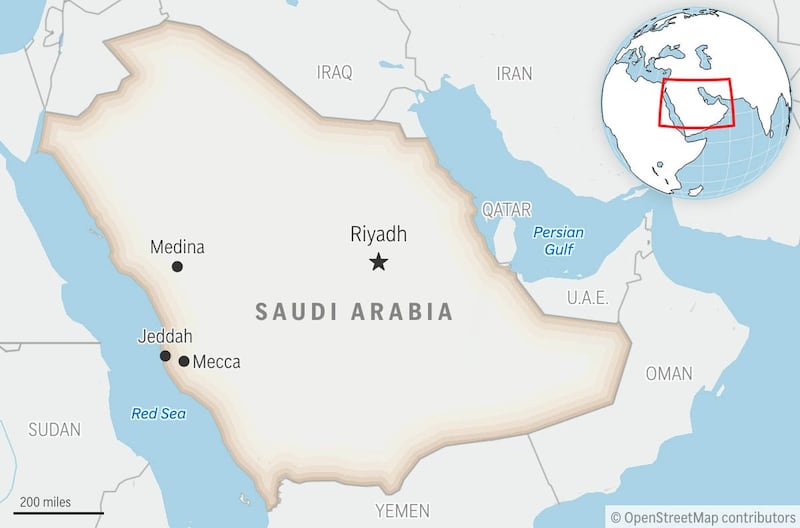
Saudi Arabia has also undertaken an infrastructure boom, with mixed success. Saudi Arabia planned for a futuristic metropolis called Neom that has largely fallen apart due to cost and logistical issues, particularly “The Line,” a 170-kilometre long linear city that was to be carved straight into the desert.
Global Affairs Canada says Ottawa has a “strong bilateral relationship” in its online country profile, noting “significant momentum since 2025” thanks to high-level visits involving trade, AI and agriculture.
“Saudi Arabia is a valued security and economic partner for Canada and its allies,” the department wrote. “Canada values its strong bilateral relationship, reinforced by high-level engagements.”
Juneau said Saudi Arabia is in major transition, with the country diversifying its economy beyond hydrocarbons. The country has made social changes he described as narrow and top-down, but real. Women have been allowed to drive since 2018 but still face male guardianship rules.
“There is social and economic reform, but there is no political reform. There is no liberalization, there is not democratization. If anything, human rights are even worse now than they were 10 years ago,” he said.
“For the Carney government, it’s been pretty clear that human rights are much less of a priority in general — and specifically with respect to its interest in deepening relations with countries in the Gulf area.”
Human Rights Watch says Saudi Arabia has long had an “abysmal human rights record” that has only gotten worse with a recent surge in executions.
“Saudi Arabian authorities harshly repress any dissent, including by handing down long sentences or the death penalty after unfair trials on charges related to peaceful online expression,” the group writes.
The Montreal-based Raoul Wallenberg Centre for Human Rights has called on Ottawa to push Riyadh to drop its travel ban on Raif Badawi, a blogger Saudi Arabia flogged and imprisoned for 10 years over his writing.
Badawi served a decade in prison and has been barred from leaving the kingdom since his release in 2022, despite his wife and children living in Quebec.
This report by The Canadian Press was first published July 8, 2026.
Dylan Robertson, The Canadian Press

