


OTTAWA - Amid conflicting messaging and questions surrounding the agreed-upon revenue sharing between Canada and the U.S., details of the deal to open the Gordie Howe International Bridge were released late Tuesday.
The official details come more than 10 days after the federal government announced the delayed bridge would open on July 27, and contrasts previous comments made by Prime Minister Mark Carney.
According to the online release, the deal is described as a “proposed agreement in principle” that runs parallel to the original Canada-Michigan Crossing Agreement signed in 2012. That initial deal is not being amended or modified by the new agreement.
The deal also states that Canada will share 50 per cent of net bridge and crossing-related revenues with the U.S. for the first fifteen years.
“Net bridge and crossing related revenues is all revenues collected with respect to the bridge, less all incurred operating costs of the bridge,” the deal reads, confirming reporting from Bloomberg last week.
The deal does not mention interest costs or debt payments related to the bridge, meaning Canada will repay its debt but only after splitting net revenue with the U.S. over those first 15 years.
That stipulation conflicts with comments Carney made in an interview with CTV News Calgary on July 12, in which he said money would only be shared after debt costs were recovered.
“We get the revenues. Then the servicing of the costs of the bridge and paying the debt of the bridge, and then what’s left over, there’s a split of that for 15 years,” he said at the time.
Days later, at an announcement in London, Ont. on July 16, Carney reaffirmed that position, saying bridge tolls would not be shared “until all debt is repaid.”
“It’s not splitting the tolls of the bridge. It is an agreement for 15 years to split net revenues,” Carney said. “Splitting of tolls, any sharing of the toll revenue won’t happen until all of the debt is repaid. We will split net revenues over the course of the first 15 years, and those net revenues are after operational costs.”
Those changes are a significant shift from the original deal in which Canada agreed to front the $6.4 billion construction costs and collect 100 per cent of toll revenues until it recoups its full investment. The agreement estimated that recoupment would take at least fifty years after which Canada and Michigan would equally split toll revenues.
As previously reported by CTV News, funds now being shared with the Americans will go towards the United States-Canada Economic Development Fund that will be controlled by the U.S.
The deal also states that both countries will “reasonably agree on the objects” of that fund which “will be for the benefit of the United States and trade between Canada and the United States.”
The release, meanwhile, confirms what a senior government source told CTV News and outlines the U.S. will need to agree if Canada wants to increase tolls by more than 10 per cent or lower them below compared regional averages during the first 15 years of the bridge’s operations.
If toll changes are proposed, the deal indicates that the U.S. must “provide its consent or notice of withholding of such consent within thirty days” of being notified. Otherwise, “consent shall be deemed to have been provided.”
The published agreement also says officials “will develop and finalize the legal, financial and administrative arrangements necessary” and will do so as “expeditiously as possible.”
Conservatives say ‘Liberals have indeed lied’
Conservatives had been calling for the full terms of the deal to be released publicly and were considering using parliamentary tools to force disclosure.
Speaking to reporters in Hamilton, Ont. on Wednesday, Conservative MP and the party’s critic for Canada-U.S. relations Shuvaloy Majumdar accused the Liberals of lying.
“What I would say is that (Carney) has our sympathy when it comes to dealing with a tough and unpredictable negotiator in the United States,” Majumdar said. “He does not have our sympathy for obscuring the facts around the Gordie Howe Bridge. For hiding the details. He’s a very smart man who has a background in finance and banking. It’s hard for me to believe that him and his finance minister did not know what they were saying at the time.”
In a statement to CTV News, when asked about the discrepancy in Carney’s comments, a spokesperson for the Prime Minister’s Office did not answer directly but insisted it is a “good deal for businesses and workers in the region.”
“As the prime minister said, we expect net revenue to be low in the early years as traffic ramps up, with the right incentives to get to profitability,” press secretary Renée Proctor said in a statement. “The more traffic we see, the more toll revenues will be collected, resulting in higher net revenues to be invested in economic development — ultimately driving more trade and more traffic."
Asked why Canada is splitting revenues with the U.S. sooner than planned, Industry Minister Melanie Joly said questions should be directed to Canada-U.S. Trade Minister Dominic LeBlanc.
Pressed on if the federal government has an estimate of how much money will be shared as part of the new deal, Joly said she has not been privy to the negotiations.
“Ultimately, the goal of the government has always been to make sure that we would be able to get good value for money,” Joly said during a media availability in London, U.K., on Wednesday. “But also knowing that there is a lot of unpredictability on the part of the U.S. administration, dealing with the world as it is.”
Canada, U.S. will no longer celebrate bridge opening together
Published details of the deal come on the same day the federal government said both countries will no longer have a joint celebration on Friday to mark the opening of the bridge.
“In light of trade action threatened by the United States earlier this week, it would be inappropriate to proceed with a celebratory event between the two countries,” Jenna Ghassabeh, who is the director of communications for Housing and Infrastructure Minister Gregor Robertson, said in a statement on Tuesday.
The move is in response to U.S. President Donald Trump’s latest threat to slap a 50 per cent tariff on a variety of Canadian goods on Aug. 19., even if they are compliant under the Canada-U.S.-Mexico Agreement (CUSMA).
According to three proclamations signed by Trump on Monday, the U.S. is taking issue with provincial bans on U.S. alcohol, supply management on dairy and certain tariffs and quotas on cars imported to Canada from the United States.
U.S. Ambassador to Canada Pete Hoekstra, meanwhile, had indicated on Monday that he would be attending Friday’s ceremony alongside his Canadian counterpart.
“On Friday, I will be with Dominic (LeBlanc) and with Mark Wiseman (Canadian Ambassador to the U.S.) and we’re opening a bridge,” Hoekstra said at the Pacific Northwest Economic Region annual summit in Edmonton.
But a senior government source tells CTV News that while Hoekstra and U.S. Commerce Secretary Howard Lutnick were expected to attend, Friday’s ceremony will now be a Canadian-only celebration.
CTV News has reached out to the U.S. Embassy to Canada, but they declined to comment.
Robertson’s office has confirmed he will be in attendance on Friday.
The bridge has been ready since last month, and there was expectation it would open in June after Carney appeared to confirm reporting from U.S. media outlets.
But days later, a ribbon-cutting ceremony and the opening was put on hold with Carney insisting at the time that there was “no big drama.”
Earlier this year, CTV News reported that both sides were trying to quietly negotiate an opening date after Trump complained in February that Canada was not treating the U.S. fairly on trade. Trump went on a lengthy tirade on social media that included the construction of the bridge as part of his grievance.
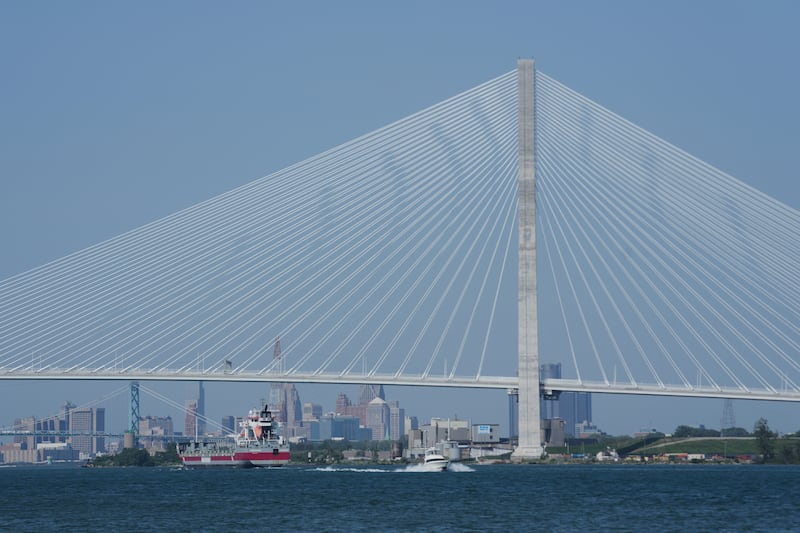
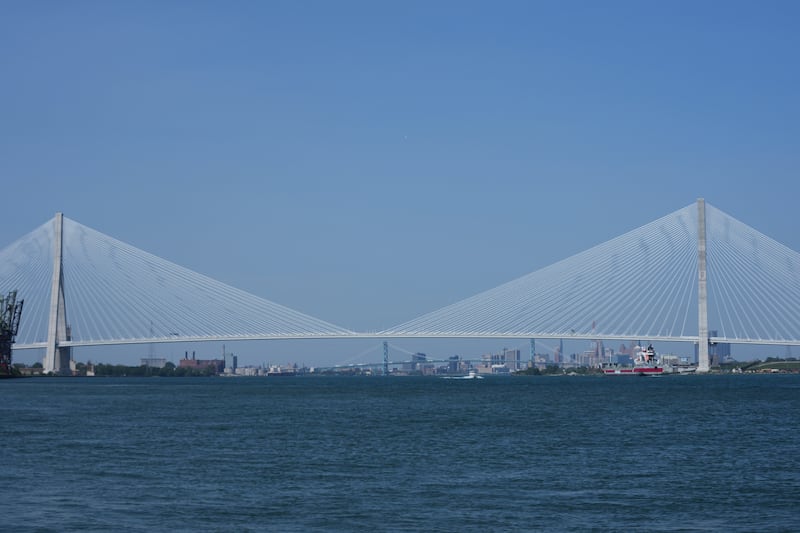
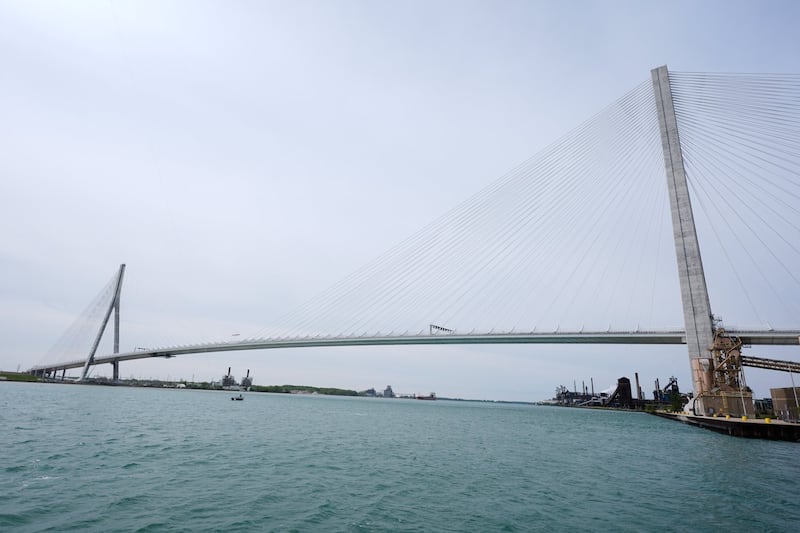
Construction on the bridge began in 2018. The cable-stayed bridge, which will connect Windsor, Ont., and Detroit, Mich., will be among the top five longest bridges in North America.
With files from CTV News’ senior political correspondent Mike Le Couteur and the Canadian Press

