


James Moore is a former federal cabinet minister under prime minister Stephen Harper, and is a contributing columnist for CTVNews.ca.
As I write this, there are 912 days until noon on Jan. 20, 2029. That will be the moment, at the latest, that Donald Trump will no longer be president of the United States.
Between here and there, anything is possible, but certain things are more probable than others. Donald Trump’s affinity for tariffs on products, whether they are protected by the Canada–United States–Mexico Agreement (CUSMA) or not, will certainly continue.
In fact, almost all the global trade uncertainty inflicted by President Trump has been by his executive orders and devoid of any congressional scrutiny, let alone approval.
Let’s go to the list.
- President Trump has used Section 122 of the Trade Act of 1974 for the global 10% across-the-board tariff he imposed on February 24, 2026.
- He has used Section 232 of the Trade Expansion Act of 1962, a tool for “national security” that was torqued by Trump to target Canadian steel, aluminum and autos.
- He has used Section 301 of the Trade Act of 1974 to target random accusations of “unfair” trade practices after supposed “investigations.”
- And this week, he invoked Section 338 of the Tariff Act of 1930 – a previously unused power – which allows up to a 50% tariff on countries seen as discriminating against U.S. exports.
Of course, the rationale is entirely subjective and at the caprice of President Trump. He has used the fentanyl crisis, wildfire smoke, national security, “unfairness” and other various random excuses for exercising his authority – and he will certainly not stop doing so in the last 912 days of his approaching 11-year presence in American national politics.
No ‘deal’ will prevent Trump from being Trump and attacking traditional allies and trade partners, no matter the scenario. We must accept reality on reality’s terms.
What is equally true is that Donald Trump has threatened to impose far more tariffs than he has ever imposed. He likes to rattle the undrawn sword. There is no arithmetic to the madness, no theology behind the belligerence. He largely rumbles around and we have learned the discipline to react to his bite more than his bark.
The impact of the latest tariffs is still being assessed. Joseph Steinberg, professor of economics at the University of Toronto, thinks this tariff threat will cover roughly 5-6% of goods entering the United States that are not currently being hit by tariffs. A possible 50% tariff on a new list of goods that constitute up to 6% of Canada’s total exports could raise the average effective tariff rate on Canadian exports to the United States by roughly 2.5 percentage points.
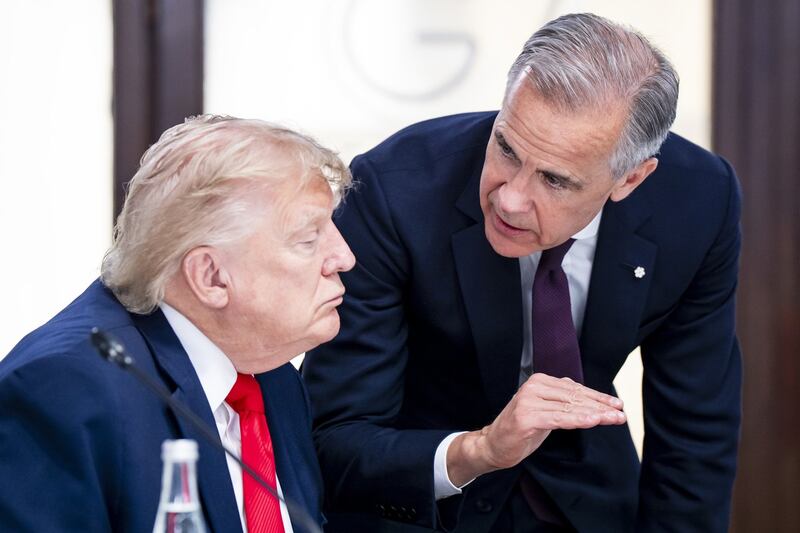
Carney’s best course of action
Regionally, however, the impact will vary dramatically according to Trevor Tombe, an economist at the University of Calgary. He estimates that 13.7% of British Columbia’s exports to the U.S. will now face this new tariff, as well as 10.8% in Quebec and 9% in Ontario.
Meanwhile, just 1% of Alberta, Saskatchewan and New Brunswick exports will be newly hit. The variety will matter in terms of regional political pressures on Prime Minister Mark Carney to respond, but we still have to wait and see if the full tariff threat will be realized after the end of the 30-day threat window.
Also, of course, this could be a start to a larger menu of tariff attacks on Canadian exports. One never knows. This could simply be a tactic around the ongoing CUSMA examination, it could be a distraction from domestic bad headlines, it could be a gimmick related to local politics in specific districts heading into the midterms, it could be he was bored and felt like looking tough and flexing powers to feel strong for a day.
So, what is the prime minister’s best course of action? It will undoubtedly be a combination of triage the economic impacts, preach and push for trade diversification, encourage more internal free trade, protest the Trump threats publicly with nuance, try to charm President Trump directly, animate the supply chain networks of impacted American businesses who will be hurt, consider retaliatory measures, and on and on.
The playbook is now well established, with flex and variance for countering President Trump’s rhetorical heat and Canadian expectation for “elbows” being “up” and so on.
But if it wasn’t already clear before this week, it certainly must be strikingly clearer than ever, that the responsible course of action is to summon the patience and strength to look past President Trump, play the long game and prepare to reset the Canada-U.S. relationship with the next administration.
Don’t rush into a deeper minefield of new intemperate retaliatory measures; don’t react to the ‘Canada isn’t a real country’ rage bait of President Trump; don’t swing at every pitch that is thrown our way. Time is on our side. His policies are failing with American voters who, by a wide margin, favour Canada to Trump, trade to tariffs, cooperation to hostility, reason to rage.
Americans are not demanding that Trump fight Canada, they are on Canada’s side in large pluralities in thinking the madness is mindless. Americans know that the tariff policies have failed to bring back manufacturing jobs as promised, have hurt the efficiency of supply chains, and have poisoned economic relationships. He is losing on the politics, and the economics and time is on our side.
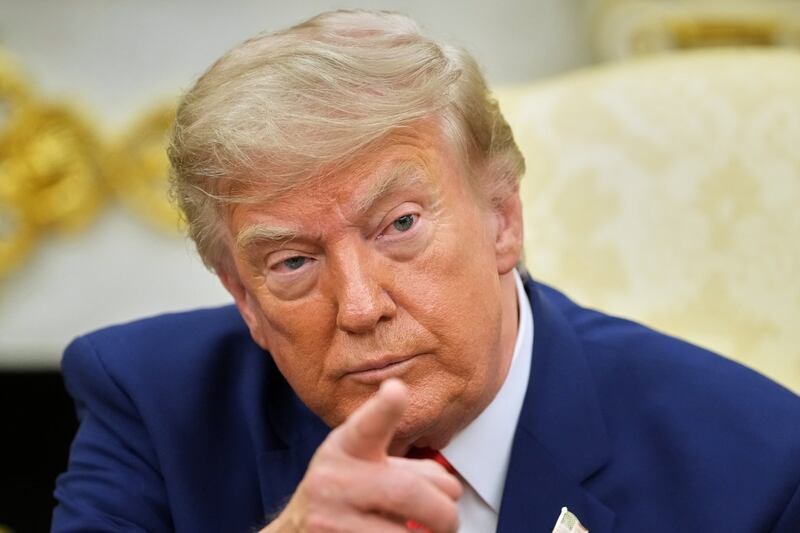
Time, and most Americans, are on our side
It is probable that President Trump’s razor-thin majority in the House of Representatives will be gone in November. It is undoubtable that as his tariff policies punish American consumers and businesses that they will find their voices and champions to run for office in both 2026 and 2028, and unthreatened by a fading President Trump they will find their audiences.
As President Trump sags towards his departure in 2029, legislative efforts will be made to challenge his awful trade policies from both Republicans and Democrats who value an America that is prosperous, responsible and trading with traditional friends and allies around the world.
We saw a sample of that when Oregon Sen. Ron Wyden — Ranking Member of the Senate Finance Committee — announced his plan to enact legislative changes to pull back the tariff authorities the president so clearly abuses. This follows the Supreme Court’s own rebuke in February, when a 6-3 ruling – crossing ideological lines – found Trump had no authority under IEEPA to impose tariffs at all.
In sum, the challenge of managing the Trump relationship is exhausting, tedious and fundamental in the short term. His abuse of power to betray a trusted friend and ally repeatedly is not popular with Americans, toxic to the American economy, and will face ongoing opposition. We will have to lean into all efforts to oppose the measures and mitigate their effect.
But there will be an end to this madness. There will be, in time, a Canada-U.S. reconciliation project that will find purchase and momentum towards better days of peace and prosperity. We will get there — I believe this to be true. But for the coming 912 days, Canada should be focused on resolve, resistance and a confidence that in time the right side of history will eventually defeat awful public policy irresponsibly imposed by a failing president.

