Opposition parties in Quebec and Newfoundland and Labrador were demanding answers Thursday after Montreal media outlet La Presse reported the provinces had struck an energy deal.
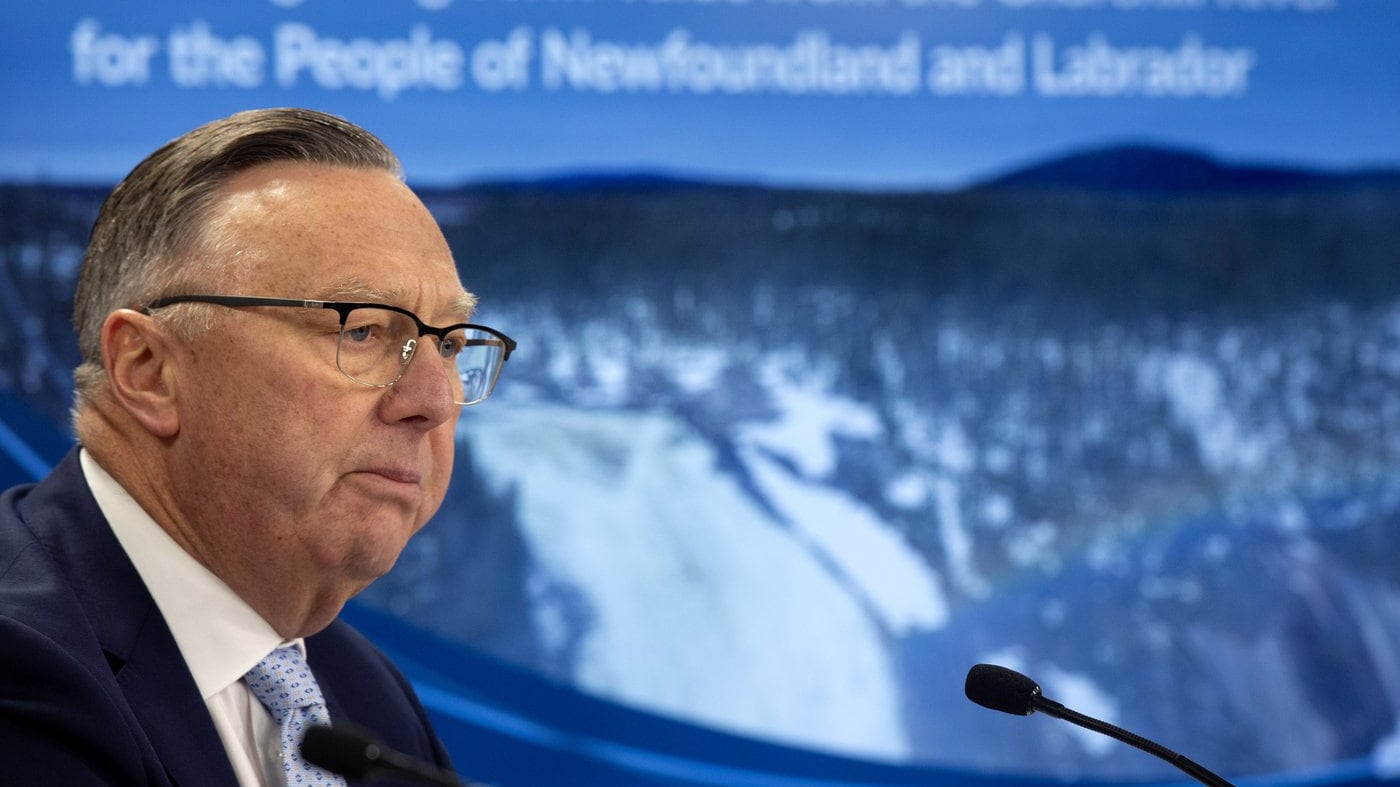
The governments have been negotiating a deal to share energy from the Churchill River in Labrador, and La Presse said Wednesday that they had reached an agreement. However, there were few details from government officials in either province as of Thursday morning, though both sides said negotiators had made recent progress.
On social media, multiple Quebec opposition party leaders asked Premier Christine Fréchette and her party to release the agreement, saying Quebecers deserve to know if their interests are being protected.
“(Fréchette) clearly wants to sign a cut-rate agreement before the clock strikes midnight, based on interests she doesn’t feel the need to disclose to the public, probably for electoral reasons,” wrote Paul St-Pierre Plamondon, the leader of the Parti Québécois, on the X platform.
Quebec is weeks away from a provincial election campaign, and the Parti Québécois is leading in the polls.
In Newfoundland and Labrador, opposition parties said they were frustrated to learn of the latest developments from a media outlet in Quebec, rather than leaders in the province.
“Newfoundlanders and Labradorians will want to understand what has been agreed to, what has changed, and whether Premier Wakeham will follow through on his many promises,” wrote John Hogan, the Liberal leader in Canada’s easternmost province, on Facebook.
In a statement Wednesday night, the office of Progressive Conservative Premier Tony Wakeham said nobody had signed final agreements.
However, a spokesperson said in an email that the province had recently made significant progress in its negotiations with Quebec and the government of Canada, though they provided no details about those talks.
READ MORE:
- Ottawa, Quebec and N.L. to announce new Churchill Falls deal next week: sources
- Churchill Falls agreement could be jeopardized by Quebec election, minister says
- Churchill Falls agreement is coming, says Fréchette, while Wakeham remains cautious
Fréchette had a similar message for reporters in Montreal on Thursday.
“Discussions have accelerated … and that makes me very confident that we can sign something in the near future,” she said.
Leaks from anonymous sources may be part of the buildup to an announcement, according to Daniel Béland, director of the McGill Institute for the Study of Canada. He expects the governments will wait to have a finalized deal before announcing it publicly.
“These anonymous sources might be trying to, in a way, test the water and prepare the ground for an official announcement, so that people don’t see it as a shock,” he said.
This deal could have political fallout for both premiers.
In Quebec, Fréchette is about to begin an electoral campaign with her party trailing in the polls.
It may be a challenge for Fréchette to sell a new agreement as a win for Quebecers, as it was her counterpart in Newfoundland and Labrador who sent the provinces back to the negotiating table, said Béland.
The Quebec elections, which must take place by Oct. 5, also represent a deadline for Wakeham, as a change in government could put an agreement at risk, Béland says.
Wakeham has promised to subject any final agreements to a public referendum in his province before they are signed, though La Presse said he is reportedly prepared to abandon that plan.
Even if a referendum were held and people were to vote in favour of the agreement, it likely won’t be finalized before the election, Béland said.
“There is quite a high risk that another party (could get elected and) say, ‘We have to go back to the negotiating table,’” he said.
But Béland pointed out that Wakeham, who was elected last year, will have time to convince voters the deal was worth forgoing a referendum before he faces his next election.
Wakeham’s office did not immediately respond to questions Thursday about his referendum promise.
Kelly Blidook, a political scientist at Memorial University, said it would be “monumentally stupid” for Wakeham to subject an agreement to a public vote. Referendums can be useful, but the public may not understand a complicated hydroelectric energy deal, the associate professor said.
“It’d be a referendum on, ‘Do we trust Tony Wakeham?’ or ‘Do we dislike Quebec?’” Blidook said. “Those are the sorts of shortcuts people would probably engage in because they wouldn’t actually know if it’s a good deal or a bad deal.”
People may not be disappointed if Wakeham walks back his promise, but it will erode public trust, Blidook said.
According to La Presse, the Canadian government helped facilitate the agreement, with involvement from Tim Hodgson, the federal natural resources minister, Joel Lightbound, the minister of public works. The article said Ottawa offered a tax credit and money for transmission lines.
Neither minister would provide any information when contacted by The Canadian Press. Prime Minister Carney’s team did not immediately respond to a request for comment.
Hydro utilities in Quebec and Newfoundland and Labrador jointly own the Churchill Falls generating station in Labrador, under a contract signed in 1969 and set to expire in 2041. The provinces unveiled a framework agreement in 2024 to end the 1969 deal and establish a new arrangement to share energy from the 5,428-megawatt plant while partnering on new builds and upgrades to expand the Churchill River’s capacity by about 3,900 megawatts.
Since he was elected last fall, Wakeham has made good on a promise to subject the draft deal to an independent review. He sent a negotiating team back to the bargaining table with Quebec in June, looking for — as he put it — more power, more value and permission to transmit power from Labrador through Quebec to export markets.
This report by The Canadian Press was first published Aug. 13, 2026.
— With files from Caroline Plante in Quebec City

