


Canada welcomes the “ambition” to become the European Union’s first associate member, Prime Minister Mark Carney said during an overseas trip geared to deepening ties across the Atlantic.
In an address to the European Parliament on Thursday in Strasbourg, France, Carney responded to an offer made the previous day by European Commission President Ursula von der Leyen.
What associate membership might actually entail remains to be seen, but the offer has already met criticism from U.S. President Donald Trump.
Speaking to media Wednesday, Trump said this membership could be seen as a “hostile act” if done with “bad intentions.”
Key updates
- Carney says Parliament will vote on EU partnership
- Trump threatens new tariffs on Europe
- Carney proposed expanded new rules allowing Canadians to work in EU
Follow for live coverage:
Spain’s PM posts EU flag with maple leaf
Spanish Prime Minister Pedro Sánchez posted an image of the EU flag with a red maple leaf beside it Thursday morning.
In May, during a meeting at a summit in Armenia, Carney and Sánchez vowed to increase ties on defence, energy and infrastructure. They had previously vowed to double two-way trade.
As a gesture, Carney and Sánchez exchanged jerseys for their countries’ national soccer teams.
Luca Caruso-Moro, CTVNews.ca journalist
Parliament to vote on EU ties
Carney says an enhanced partnership with the European Union will be put up for debate and a final vote in Parliament.
During a news conference in Strasbourg, France, today, the prime minister adds that Canada is not looking to become a full member in the European Union.
Canadian officials had previously downplayed the characterization of a deeper alliance with Europe as being an associate member and the formal name is still being finalized.
Trump said yesterday he views Canada potentially becoming an associate member as a “hostile act” in the trade war and threatened more tariffs against Europe.
Carney says a deeper alliance will make Canada a “better partner with the United States.”
The Canadian Press
Greens leader sports Canada jersey
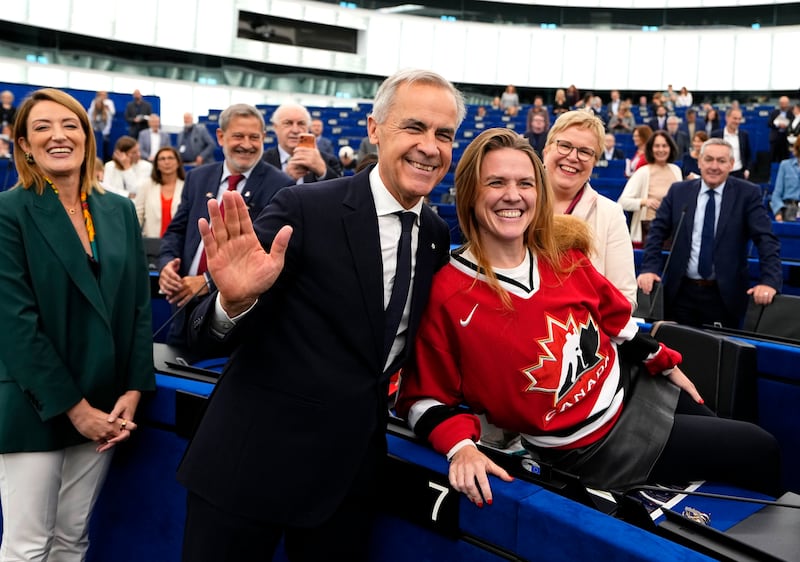
A prominent member of the European parliament sported a Team Canada hockey jersey today.
Terry Reintke, co-president of the Greens-European Free Alliance, smiled for a picture with Carney on the chamber floor.
Her political group occupies 53 seats in European Parliament.
Luca Caruso-Moro, CTVNews.ca journalist
Would youth have more opportunities abroad?
There’s been a lot of talk about opportunities for young people looking to study abroad between Canada and the EU.
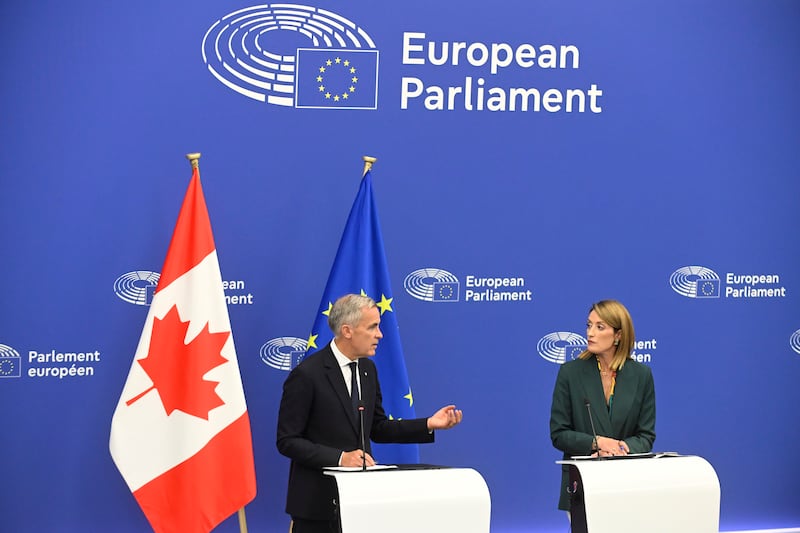
During a news conference with Carney, European Parliament President Roberta Metsola highlighted two policies that she says young Europeans associate with the EU.
“Erasmus is the first thing they mention, Horizon is the second thing they mention, in terms of opportunities that, with Canada, could only get bigger,” she said.
Erasmus+ is the EU’s flagship €26.2 billion (C$42 billion) fund for student exchanges, internships and professional development across the bloc. Horizon Europe is the EU’s main fund for research and innovation amounting to €93.5 billion (C$150 billion) from 2021-2027.
“Just think of the opportunity for young people in Europe in Canada to study in our two jurisdictions, to live and work in those jurisdictions, to learn from each other,” said Carney.
Luca Caruso-Moro, CTVNews.ca journalist
Carney to attend UN assembly
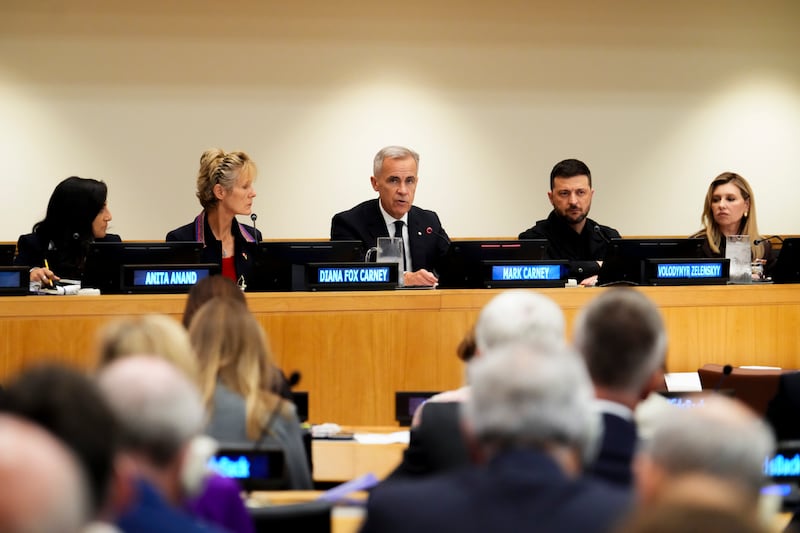
Carney will head to New York Sept. 21-23 to attend the UN General Assembly. Peace in Ukraine and a two-state solution in the Mideast are among Carney’s priority topics, according to a release sent to media Thursday.
The release also noted economic partnerships and maritime security, among other sectors.
“The world is looking at Canada differently. Investment in Canada is growing, our partnerships are deepening, and our influence is expanding,” reads a quote from the prime minister included in the handout.
Luca Caruso-Moro, CTVNews.ca journalist
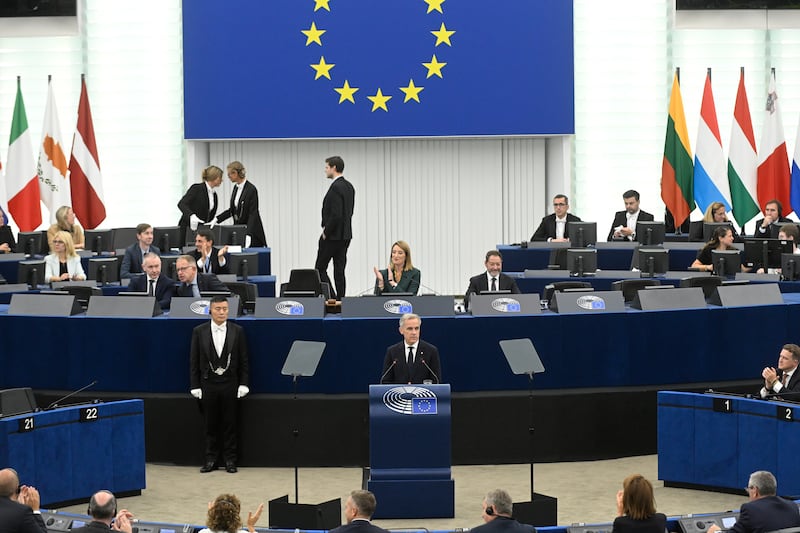
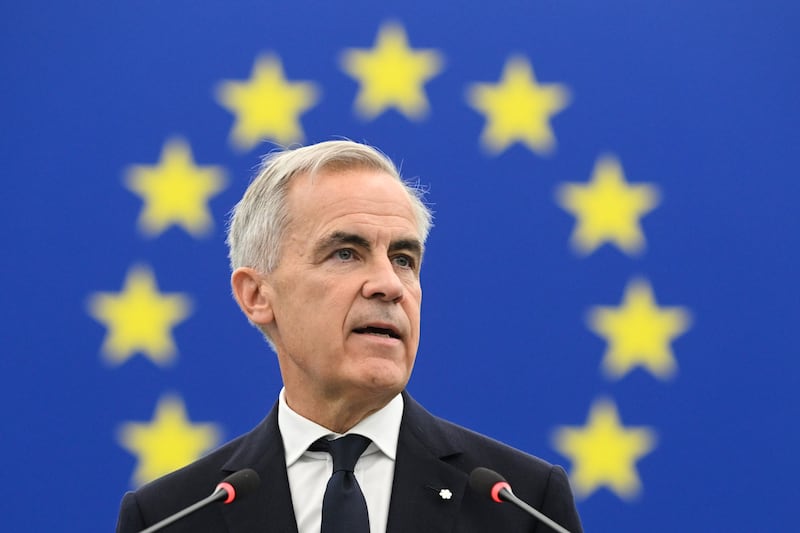
Carney addressing EU Parliament
Shortly after another red-carpet arrival, Carney arrived inside the chamber to applause.
As he made his way around the floor greeting people, Carney took particular note of one German member donning a red Team Canada jersey.
Among the Canadian officials also seated inside the hemicircle were Finance Minister Francois-Philippe Champagne, EU ambassador-designate Jonathan Wilkinson, and a handful of senior PMO staff.
After some quick mingling, Carney took to the podium inside the European Union Parliament in Strasbourg, France. As he did so, from the floor someone could be heard chanting “USA! USA!” The prime minister offered a brief chuckle and then got going.
In his speech — which began at 11:45 a.m. local time — Carney said promptly that Canada and the EU “are not fair-weather allies.”
“We do not pursue zero-sum deals. Our commitment to the rule of law, and our unyielding defence of human dignity, individual freedom, and democracy share the same deep roots, the same unwavering dedication,” he said.
“We hold common values, for which we have always fought, and in whose defence we must always remain vigilant. We believe that a strong economy is not an end in itself but a means to a just society,” he said to applause.
“We are committed stewards of our natural heritage. We believe that our prosperity grows when it is shared. These values, this is a sharing of choice not coincidence.”
Rachel Aiello, CTV News national correspondent
Canada’s EU invitation could be ‘hostile act’: Trump
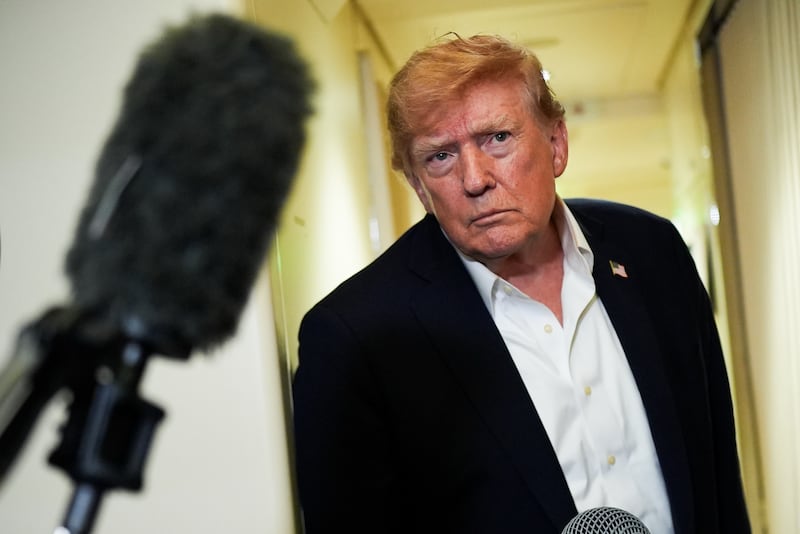
On Wednesday, Trump said Canada becoming an associate member of the EU could be considered a “hostile act” and threatened to put U.S. tariffs on Europe or stop trading with the continent on many things.
“If it’s a good intention, that’s fine. If it’s a bad intention, we’ll put very heavy tariffs on Europe,” Trump told reporters Wednesday evening.
The U.S. president also called Canada a “terrible trade partner” and called talks of it becoming an associate member of the EU “laughable.”
Kayla Thompson, CTVNews.ca journalist. Read the full story here.
‘A world without strong U.S. leadership’
“The policies and rhetoric of the Trump administration are clearly pushing both Canada and the EU to imagine a world without strong U.S. leadership and to act accordingly,” said Daniel Beland, a political science professor at McGill University.
Nelson Wiseman, a professor emeritus at the University of Toronto, said Europeans have long regarded Canada as a country that understands the United States particularly well because of their deep economic and political ties. Carney’s willingness to resist Trump rather than quickly accept Washington’s demands has reinforced that perception, he said.
“Carney’s shrewdness in dealing with Trump has captured Europe’s attention,” Wiseman said.
The Associated Press
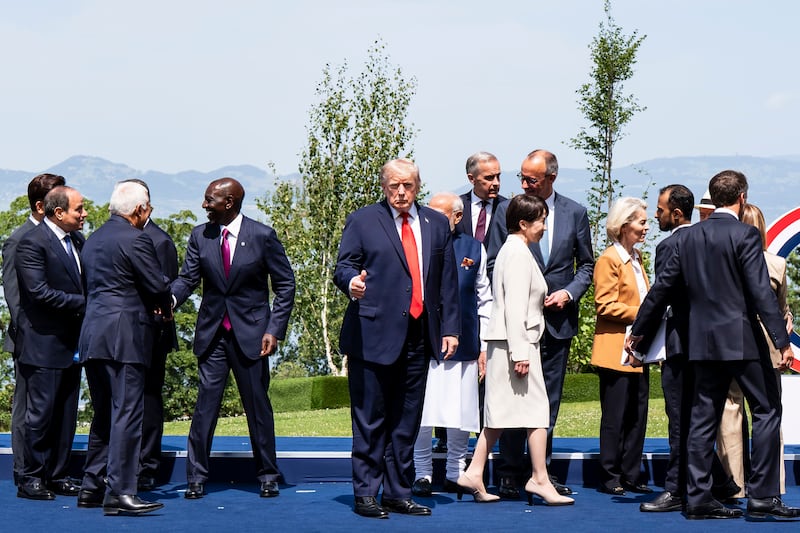
Trump signs memorandum to remove Canadian goods from U.S. procurement
Trump signed a presidential memorandum to identify and remove Canadian items from the U.S. federal procurement system, the White House announced Wednesday.
Kayla Thompson, CTVNews.ca journalist
Trump threatened move earlier this month
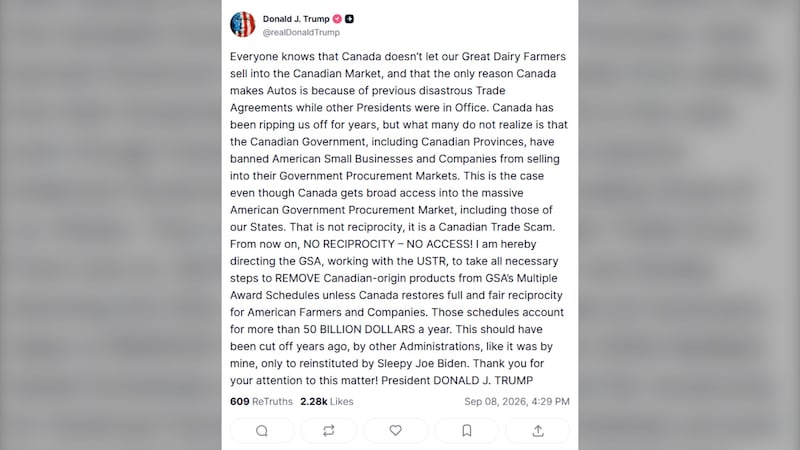
The move comes one week after Trump posted on Truth Social that he was directing U.S. federal agencies that oversee government procurement to remove all Canadian-origin products from its “awards schedules,” one of many announcements the U.S. president made after Canada imposed its latest set of retaliatory tariffs.
Trump claimed the Canadian items within the award schedules account to “more than 50 BILLION DOLLARS a year.”
“The Canadian Government, including Canadian Provinces, have banned American Small Businesses and Companies from selling into their Government Procurement Markets,” Trump wrote.
“That is not reciprocity, it is a Canadian Trade Scam,” Trump posted. “From now on, NO RECIPROCITY — NO ACCESS!”
Hunter Crowther, CTVNews.ca producer
New alliance about sovereignty: Carney
Seeking to quash the fermenting concerns about Canada moving in closer alignment with the EU, the prime minister repeatedly emphasized how he sees such a move enhancing and not compromising Canadian sovereignty.
“Sovereignty requires resilience, the ability to withstand shocks. Sovereignty today goes beyond being able to feed, fuel and defend ourselves. It now requires secure access to AI, semiconductors, critical minerals, payment systems, clean energy technologies, vaccines and space-based communications,” Carney said.
He argued that all EU nations and Canada have gaps in these capabilities that currently rely on other nations or corporations to fill, which creates vulnerabilities.
“Closing these gaps is not possible alone, but it is very achievable collectively. Canada and Europe are each strong. Europe and Canada are stronger together,” he said to applause from two-thirds of the chamber.
“The institutions we have inherited are organized by geography. The strategic capabilities we need are organized by function. We can ally by function if we are bold and deliberate,” the prime minister said.
“The objective is not self-sufficiency. It is collective resilience,” he continued, to more applause.
Rachel Aiello, CTV News national correspondent
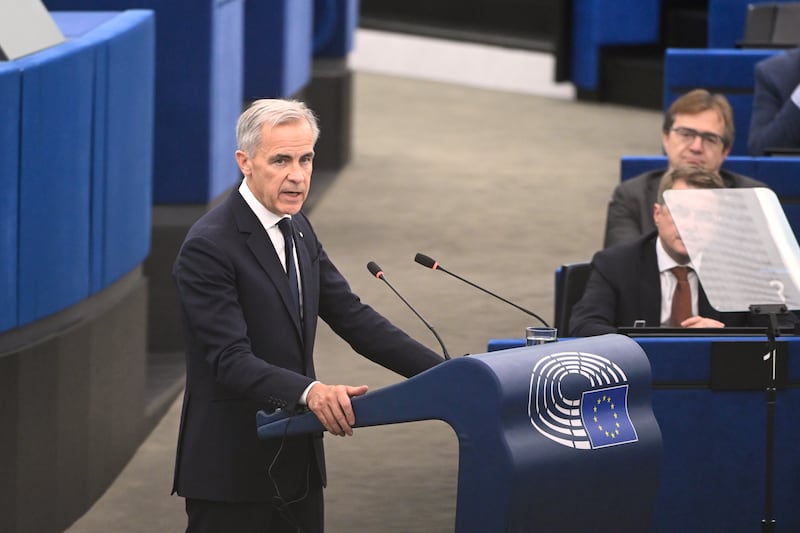
PM outlines ‘mutual advantage’
As was expected to be the focus, the prime minister spent the majority of his speech articulating how he sees a strengthened transatlantic relationship benefitting both sides.
Carney said that the economics of doing so is clear, and explained how the advantage would be mutual.
“Europe brings market power. Research depth. Advanced manufacturing. The ability and the will to set standards that the world frequently adopts. A defence industrial base being rebuilt at speed. Canada brings energy at huge scale and in every form the transition requires,” he said, also citing other sectors that are strengths in this country, including AI.
“Where our strengths differ, they complement. Where they overlap, they create scale. We should build on each other’s strengths – deliberately, systematically, and rapidly,” Carney said.
Rachel Aiello, CTV News national correspondent
Canada welcomes EU associate membership ‘ambition’
Arguably the biggest moment of his speech, was when he addressed head-on European Commission President Ursula von der Leyen’s invitation in her state of the union on Wednesday for Canada to become the EU’s first associate member, also describing it as “an alliance for the future.”
“We welcome this ambition,” Carney said. “An alliance for the future is a unique, positive approach that we will define together.”
Though, noting the mixed messages on what exactly Canada is after — and arguably his attempt to address Trump’s outburst over the EU-Canada talks overnight — the prime minister stated he wanted to be precise about what he is, and is not, proposing.
“I am not proposing a third bloc in order to become a great-power rival, only with better manner,” he said to laughter. “We do not seek power to dominate others. On the contrary.”
“We are pursuing resilience so that no one, no one can control our open markets, impair our sovereignty, threaten our territorial integrity, or undermine our freedoms, our democracies, our rule of law,” he added.
The prime minister said its through these motivations Canada and the EU could “help to create the next just, stable, and prosperous world order.”
“A Canada-EU alliance would create a beacon for other democracies. An alliance not defined by what we oppose, but about what we are for … An alliance that builds resilience for what it allows us to do for our citizens, and our citizens to do for themselves,” he said.
“An alliance strong enough so that no one can dictate our choices. An alliance open enough that others can join. An alliance principled enough that our strength reinforces international law rather than seeks to replace it.”
Rachel Aiello, CTV News national correspondent
What would a new deal entail?
Moving beyond generalities, Carney also offered several concrete examples of ways Canada and Europe could co-operate.
Here are those examples:
- Allowing people to live, work and study where they want on either side of the Atlantic, pitching Canada moving from a partner country to becoming the first non-European member of the Erasmus+ exchange program.
- Pooling resources, co-operating on frontier technology, and leveraging world-class Canadian institutes, if Canada becomes a member of the research funding initiative known as Horizon Europe.
- Canada filling Europe’s need for a reliable supply of critical minerals and in exchange benefiting from Europe’s clean energy technology.
- Building more secure broadband connection and sovereign compute capacity, as well as developing common AI safety protocols and standards.
- Create an integrated market for financial services, to broaden choice and reduce costs for consumers, while also improving companies’ access to capital.
Rachel Aiello, CTV News national correspondent
‘Transatlantic forest’
In an effort to address the current geopolitical context intellectually, throughout the prime minister’s speech he wove a metaphor about a forest, calling the moment a “ferocious storm.”
“A single tree will come down in it. A forest will not,” Carney told the EU Parliament.
“That’s because beneath the forest floor, the roots of an oak intertwine with those of its neighbours, exchanging nutrients, adding strength to strength, creating a resilient, self-sustaining ecosystem.”
After saying this, Carney argued Canada and the EU could anchor each other and form “a protective canopy,” under which its citizens can thrive.
At the very end of his remarks, the prime minister returned to this idea, closing with: “Let us now deepen those roots, widen this canopy, and grow a transatlantic forest under which our citizens can flourish as free people on free ground, every single day.”
Rachel Aiello, CTV News national correspondent
Here’s what happened on Sept. 16, 2026:
Canada’s EU invitation could be ‘hostile act’: Trump
Trump said Canada becoming an associate member of the EU could be considered a “hostile act” and threatened to put U.S. tariffs on Europe or stop trading with the continent on many things.
“If it’s a good intention, that’s fine. If it’s a bad intention, we’ll put very heavy tariffs on Europe,” Trump told reporters Wednesday evening.
The U.S. president also called Canada a “terrible trade partner” and called talks of it becoming an associate member of the EU “laughable.”
Kayla Thompson, CTVNews.ca journalist
Read The Canadian Press’ full story here
Trump signs memorandum to remove Canadian goods from U.S. procurement
U.S. President Donald Trump signed a presidential memorandum to identify and remove Canadian items from the U.S. federal procurement system, the White House announced Wednesday.
Kayla Thompson, CTVNews.ca journalist
Trump threatened move earlier this month
The move comes one week after Trump posted on Truth Social that he was directing U.S. federal agencies that oversee government procurement to remove all Canadian-origin products from its “awards schedules,” one of many announcements the U.S. president made after Canada imposed its latest set of retaliatory tariffs.
Trump claimed the Canadian items within the award schedules account to “more than 50 BILLION DOLLARS a year.”
“The Canadian Government, including Canadian Provinces, have banned American Small Businesses and Companies from selling into their Government Procurement Markets,” Trump wrote.
“That is not reciprocity, it is a Canadian Trade Scam,” Trump posted. “From now on, NO RECIPROCITY — NO ACCESS!”
Hunter Crowther, CTVNews.ca producer
‘Conservatives say no EU taxes’: Poilievre
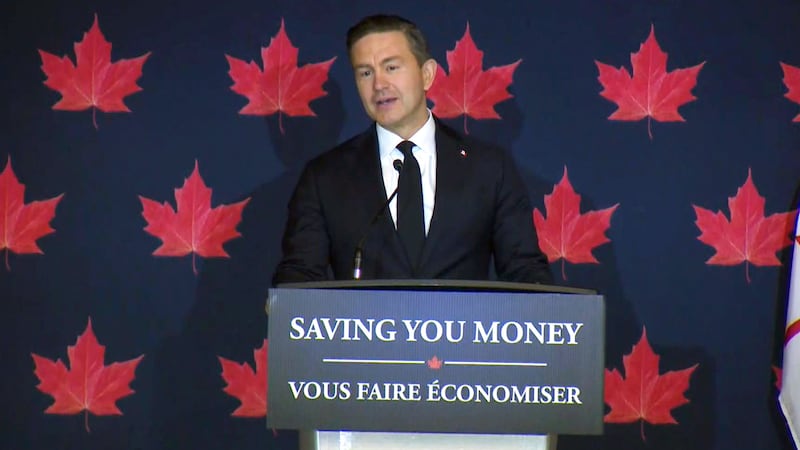
Poilievre says although the Conservative party will continue to support co-operation with European allies, they are unhappy with Carney’s ambiguity about a potential alliance.
“We have the longest history of supporting the NATO alliance, which includes 30 European countries. That’s not new,” the party leader told a room full of Conservatives in Penticton, B.C. “The Prime Minister, however. needs to get his story straight.”
As Poilievre called out Carney for “secretly negotiating” a possible associate membership or a unique alliance with the EU, he added that the Conservatives are clear on one thing.
“Conservatives say no EU taxes, no EU laws, and no EU open-border rules on immigration in Canada.”
Kayla Thompson, CTVNews.ca journalist
Poilievre criticizes Carney during caucus remarks
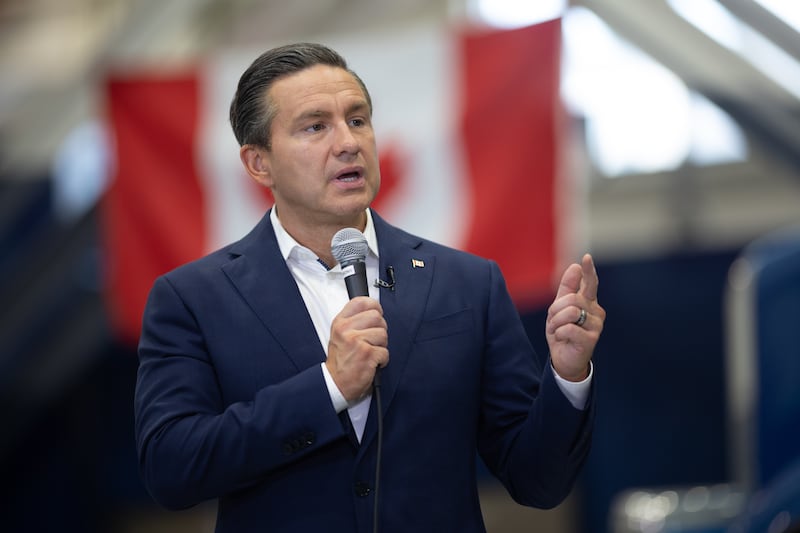
Poilievre says although he refrained from criticizing Carney during his trip to the United States, he joked that now that he’s on home soil, he’s prepared to “make up for lost time.”
Speaking after the first day of the Conservative caucus retreat in Penticton, B.C., Poilievre told colleagues that “our job is to unite to fight for Canada abroad, at the same time as doing our duty of holding the government accountable here at home. That is what it means to be a loyal Opposition.”
Poilievre went on to criticize Carney for what he described as a failure to deliver results for Canadians at the gas pump, the grocery store and on rent, while planning “summits and speeches and symbolic signing ceremonies.”
Kayla Thompson, CTVNews.ca journalist
Poilievre: Canada must be independent
Conservative Leader Pierre Poilievre says Carney “can’t seem to get his story straight” about the nature of the deal between Canada and the EU.
Poilievre appears to be poking at the different terminology used by Canadians and Europeans in recent days. He referenced the “associate membership” – as von der Leyen put it today – and “unique alliance” – as Carney said yesterday.
“Conservatives are clear: we support the decades-old free trade & NATO defence alliance with Europe,” wrote the party leader on X.
“But no EU taxes, no EU laws, and no EU open-border immigration policies should be imposed on Canadians. Canada must be independent and sovereign. Period.”
Earlier today, reporters pressed Canada’s ambassador designate to the EU Jonathan Wilkinson on what exactly leaders were negotiating. He said that details of a new relationship between Canada and the EU were still in flux, and that once terms are solidified, they’ll decide what to call it.
Luca Caruso-Moro, CTVNews.ca journalist
‘Where is the money for the people?’: NDP’s Lewis slams PM Carney
Federal NDP Leader Avi Lewis came after Carney for the Investment Summit in Toronto this week.
In an interview with CTV Power Play’s Vassy Kapelos, Lewis criticized the prime minister for attempting to woo international capital while working Canadians struggle with a rising cost of living.
“We’re getting distracted by arguing about privatizing airports instead of asking the government, ‘where is the money for the people?’” Lewis said.
“Where is the emergency summit for the cost of housing, for the price of groceries, for the suffering that is going among the people who actually work for a living?”
The NDP leader said the Liberal government should slow down and determine if Canadians actually want major public assets privatized.
Joe Van Wonderen, CTVNews.ca journalist
Privatizing airports costs Canadians more: NDP’s Lewis
Lewis warned that privatization of public assets, including Canada’s major airports, would hurt the wallets of Canadian taxpayers.
During their Wednesday interview on CTV Power Play, Kapelos highlighted David Eby’s support for the proposed privatization, with the B.C. premier saying the money from the sale could be used to support smaller regional airports. But Lewis disagreed.
“We are totally against privatizing airports,” he said, pointing to how airport privatization panned out in Australia and the U.K. “(Privatization) costs consumers and travellers more, it costs the public purse in the long run.”
Lewis worried that privatization of airports could lead to tiered levels of service. He cited Highway 407 in Ontario, sold under then-Ontario premier Mike Harris’ Progressive Conservative government, calling it “a highway that’s so expensive, only wealthy people can use it.”
“Is that the future of our airports under privatization?” Lewis asked.
Joe Van Wonderen, CTVNews.ca journalist
Canada seeks full membership in U.K.-led military coalition
Carney says Canada has formally applied to join the U.K.-led Joint Expeditionary Force as a full-time member, a bid that London is supporting.
The joint force is a military coalition made up of 10 NATO allies which was struck in 2014 to create a quick-response force.
Canada’s military has worked with the force in multinational drills but has not been a permanent member of the group.
On Wednesday, Carney met for the first time with British Prime Minister Andy Burnham, who took office after Keir Starmer resigned over the summer.
The Canadian Press
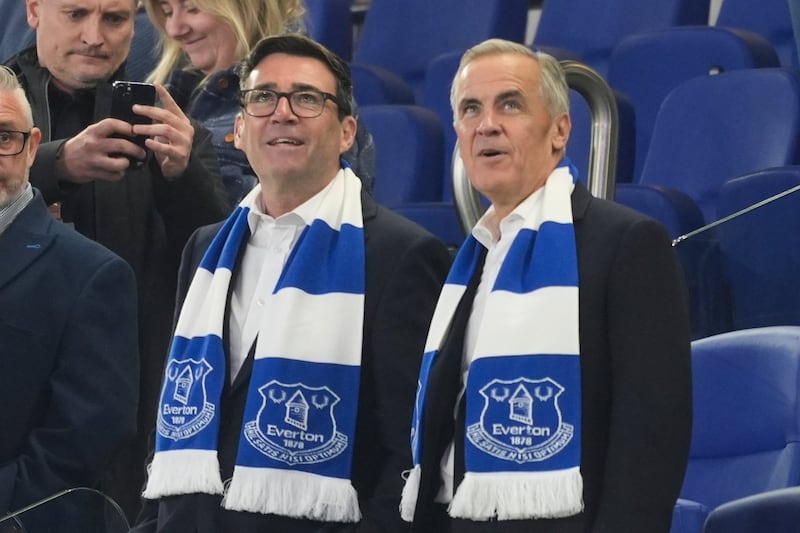
PM Carney, U.K. PM take in soccer match
Carney has arrived in Liverpool where he’ll attend an Everton FC match alongside new U.K. Prime Minister Andy Burnham.
Both men are fans of the club.
Appearing together before the match, Burnham called Carney a “great progressive leader.”
Luca Caruso-Moro, CTVNews.ca journalist
You can read The Associated Press’ full story here
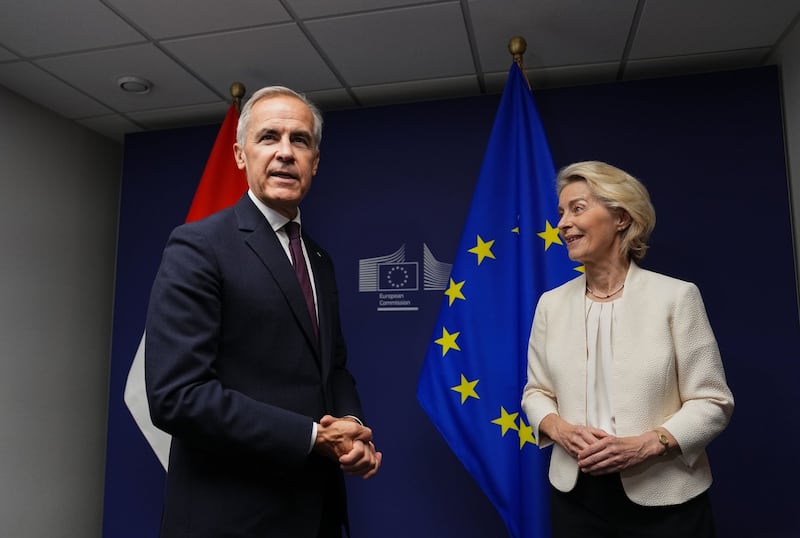
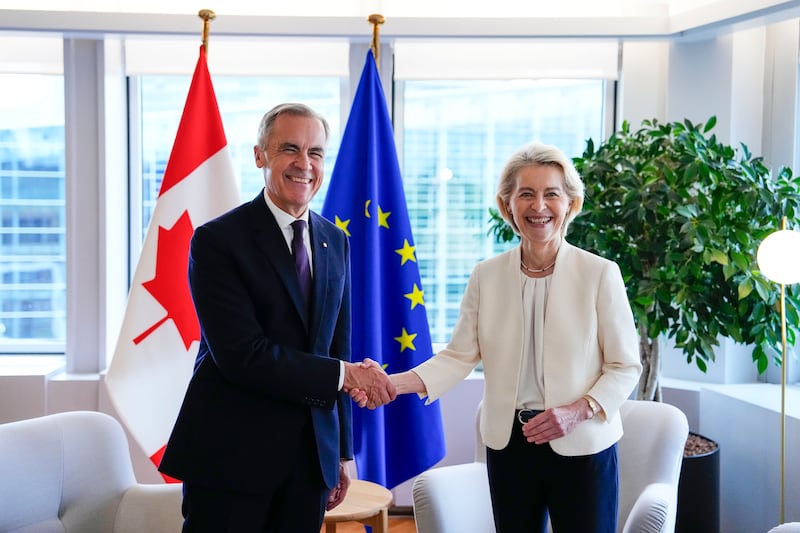
Carney, von der Leyen meet
Carney and von der Leyen discussed “deep co-operation” between Canada and the EU during their meeting today.
That’s according to a readout from the Prime Minister’s Office, which did not include mention of the so-called “associate member” status for Canada.
However, the leaders discussed moving “beyond” their existing trade deal to a “far stronger, more ambitious alliance in the future.”
Areas to expand co-operation include critical minerals, defence, AI, energy, space and “financial services and payments.”
Luca Caruso-Moro, CTVNews.ca journalist
Trump criticizes Canada over drugs
U.S. President Donald Trump is again accusing Canada of not doing enough to clamp down on drugs but did not include it in a list of major drug-producing countries released today.
The list, which is published each year, cites Afghanistan, China, Colombia, Guatemala, Haiti, Mexico and other nations deemed major drug producers.
In a declaration submitted to Congress, Trump praised the efforts of Mexican President Claudia Sheinbaum’s administration to stop the flow of drugs and shut down labs but said Mexico and Canada still need to do more.
Trump alleged that fentanyl is being made in clandestine Canadian labs and transported south into the United States, and claimed Chinese gangs are operating along the border.
U.S. government data shows a minuscule volume of drugs is seized at the northern border compared to the boundary with Mexico.
Trump used fentanyl as a reason to hit Canada with tariffs last year before the U.S. Supreme Court struck down those duties.
Kelly Geraldine Malone, The Canadian Press
Canada must ‘stand on our two feet’
Hours before departing for Chicago to meet Illinois Gov. JB Pritzker, Industry Minister Melanie Joly said Canada is still engaging with U.S. counterparts.
“That being said, we need to stand on our two feet,” she added, speaking alongside Ontario Premier Doug Ford and Toronto Mayor Olivia Chow in Toronto.
She said she’s looking to align policies with the EU to protect Canada’s aluminum and steel sectors.
Luca Caruso-Moro, CTVNews.ca journalist
EU group supports Canadian inclusion
Renew Europe, which holds 77 of the 720 seats in the European Parliament, says it supports making Canada an associate member.
“Let’s take our partnership to the next level!” the party wrote on social media.
Luca Caruso-Moro, CTVNews.ca journalist
What’s in a name?
Ambassador designate to the EU Jonathan Wilkinson says Canada isn’t trying to get ahead of itself when it comes to what to call a Euro-Canuck partnership.
“Eventually, we’ll get to the issue of what’s the best way to describe it,” he said. But membership brings sovereignty concerns, and details of just what Canada would share with the EU is still up for negotiation.
Referring to von der Leyen’s invitation to reach “associate member” status, Wilkinson said, “We’re not there.
“It’s an opportunity for us to talk about that, but we’re really much more focused on getting concrete results.”
“I think we’ve actually got to get to the point where we know what we’re describing,” he also said.
Luca Caruso-Moro, CTVNews.ca journalist
Ford welcomes airport investment plan
Ontario Premier Doug Ford is voicing his support for a proposal to seek private investors for four Canadian airports, noting that it “should have been done years ago.”
Ford made the comment during a news conference on Wednesday, one day after Prime Minister Mark Carney unveiled his plans during a keynote address in Toronto.
In addition to Toronto’s Pearson airport, the federal government is also opening airports in Montreal, Calgary, and Vancouver to private investment.
“I think it’s fabulous. You know, I have to give credit where credit’s due. The PM’s on fire. He’s moving. He’s lowering taxes like we’ve done for years. He’s privatizing airports that should have been done years ago,” Ford said.
Ford told reporters that he would also like to see Toronto’s Billy Bishop Airport opened to private investment.
In July, a proposal to expand the airport with billions in private investments was blocked by the federal government.
Chris Fox, CTVNewsToronto.ca journalist
Canada already has agreements with EU: Poilievre
Speaking to reporters before the prime minister’s trip to Europe, Conservative Leader Pierre Poilievre said Canada already has trade and defence agreements with the EU, in the form of CETA and NATO.
“We want Canada to have free trade with Europe, co-operation with Europe, but we will never surrender our independence and sovereignty over our laws, our tax money, and our immigration policies,” Poilievre said.
He added the Conservatives want to see “an economic action plan” to support Canadians struggling with the cost of living, rather than an unclear goal of potentially conforming to European systems and policies.
Spencer Van Dyk, CTV News writer & producer
Canada, EU share ‘one set of values’
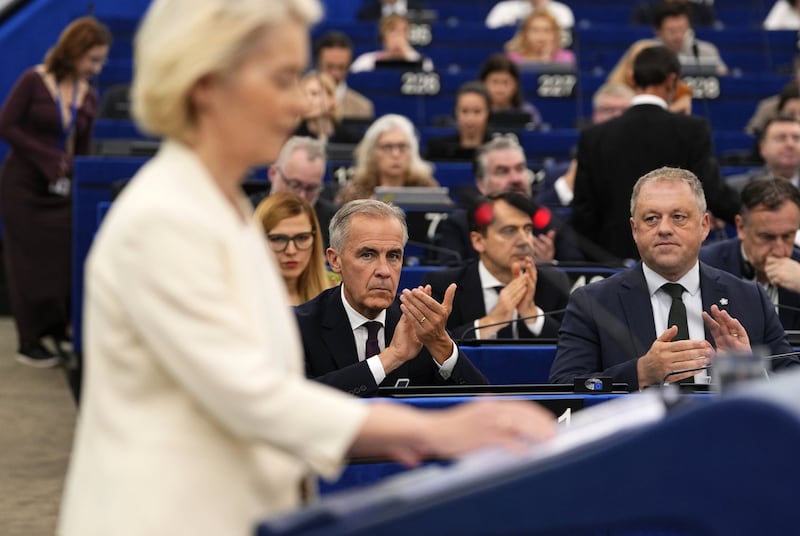
With Carney sitting front row, the president of the European Commission declared to her Parliament that she wants to bring the relationship with Canada “to the highest level possible.”
In her widely watched State of the Union address to the EU Parliament, von der Leyen stated plainly, with Carney seated to her left: “I would like to work with you on opening the door for Canada to be the first associate member of the EU.”
As she said it, many elected officials in the chamber rose from their seats and applauded. Carney got out of his, walked up to her podium, and shook von der Leyen’s hand.
She made this declaration after speaking at length about the challenges Europe is facing and her aspirations for the year ahead.
Von der Leyen also said that at this moment in geopolitics, the EU needs to “urgently reimagine our partnerships,” and that she sees Canada as an ideal country to do that with.
“We share one ocean, one set of values, one way of seeing the world. And we will now build our shared future as well,” she said.
Rachel Aiello, CTV News correspondent. Read the full story here.
No more ‘love letters’
Since Canada joining the EU as an associate member would be a first, there is no rulebook on how that would work or what it would mean in practice. It is unclear who would need to approve membership, and how long that could take.
Currently, all steps toward EU membership must be approved unanimously by the 27 member countries.
The idea of associate membership has been floated in the past for Ukraine, or for post-Brexit Britain, but no concrete steps have been taken.
The relationship between Canada and the European Union has reached a point where the two sides need to move beyond rhetoric and start building something more substantive, said Tobias Cremer, a German member of the European Parliament.
“Now is the time to stop sending each other love letters and put meat on the bone,” said Cremer, from the centre-left Social Democrats.
He argued that any new arrangement should be more ambitious than another trade or defence agreement, describing the goal as a more holistic strategic alliance between Canada and the EU.
The Associated Press
‘Buy Ontario’ is the law: Ford
Ontario municipalities could face cuts to provincial funding if they fail to comply with “Buy Ontario” procurement rules, warned Minister of Municipal Affairs and Housing Rob Flack Wednesday.
In a letter to municipalities, the minister said local governments must maximize the use of Ontario and Canadian goods and services as the province responds to U.S. tariffs and other trade measures.
In practice, municipalities spend more than $22 billion each year on goods and services, and the province says those purchases should prioritize Ontario and Canadian products.
“Failure to comply with Buy Ontario requirements will force us to reconsider provincial funding made available to municipalities, in addition to other consequences under the Buy Ontario Act,” the minister wrote.
Ontario’s Premier Doug Ford also shared the letter to social media Wednesday morning, writing “Buy Ontario. Buy Canadian. For governments across Ontario, it’s not an option. It’s the law.”
Municipalities have been directed to review their supply chains, procurement practices and upcoming purchases to determine whether products and services currently sourced outside Canada can be replaced with domestic alternatives.
Jermaine Wilson, CTVNews.ca & CP24.com journalist

