Eric Ham is based in Washington, D.C. and is a political analyst for CTV News. He’s a bestselling author and former congressional staffer in the U.S. Congress and writes for CTVNews.ca.
U.S. President Donald Trump’s quixotic shakedown efforts have not rattled Prime Minister Mark Carney’s resolve. Trump’s incessant bullying antics have failed to send the Canadian leader into a tailspin. Carney’s spine has stiffened, and his abject refusal to “pay” for his nation’s safety has sent a clear message to Trump and the rest of the world.
In fact, unlike many nations that are now having buyers’ remorse, the architect of the “middle powers” doctrine stood his ground by not giving away his nation’s sovereignty and independence. With a nation standing firmly behind him, the prime minister refuses to cower or fold in the face of tyranny.
Qatar “gifted” a $400-million airplane. Persian Gulf nations have funnelled hundreds of millions of dollars into Trump’s son-in-law’s private equity firm. Middle East nations’ largesse to Trump and his family is both wide and deep. However, as Iran and its proxies tighten their grip on the region, the commander-in-chief—the culprit of the carnage—has abandoned the region.
In the face of all of this, Ottawa decided on a different course. Rather than live under the threat of annexation, premiers and national leaders have begun seeking new markets and opportunities, even if it means forgoing access to the world’s largest economy.
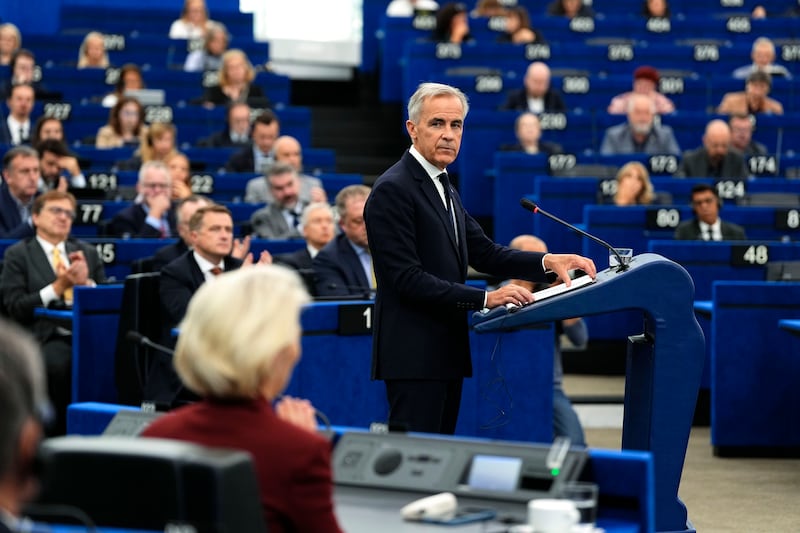
Earlier this week, the prime minister said Canada would be seeking a “unique alliance” with the European Union — a win for the Western bloc and Ottawa. Both sides have made no secret of their desire to forge deeper cooperation to counter growing authoritarianism emanating from the United States.
More importantly, the geopolitical landscape is undergoing a seismic shift as Trump rejects traditional alliances and nuclear superpowers unilaterally exercise military might to reshape the world order according to their vision.
With Russia’s invasion of Ukraine, China’s hard power encroachment on Taiwan, and the United States’ recent seizure of Venezuelan oil, the rise of autocracy is expediting Carney’s middle powers doctrine and moving Western nations to aggressively try to preserve democracy and the rules-based international order, which both Brussels and Ottawa see as under threat.
In the latest escalation of the Canada-U.S. trade war, Trump has signed a presidential memorandum to identify and remove Canadian-origin goods in U.S. federal civil government procurement. The move comes one week after Trump posted on Truth Social that he was directing U.S. federal agencies that oversee government procurement to remove all Canadian-origin products from its “awards schedules,” one of many announcements the U.S. president made after Canada imposed its latest set of retaliatory tariffs.
Trump claimed the Canadian items within the award schedules account for “more than 50 BILLION DOLLARS a year.” He went on to state: “The Canadian Government, including Canadian Provinces, have banned American Small Businesses and Companies from selling into their Government Procurement Markets…That is not reciprocity, it is a Canadian Trade Scam…From now on, NO RECIPROCITY — NO ACCESS!”
He didn’t stop there. Feeling the heat of a Canada more aligned with Europe than with the United States, Trump went ballistic, stating that if Canada becomes the first associate member of the European Union it would be a ”hostile act.” Speaking to reporters, the president said if it’s done with “bad intentions,” he will “put very heavy tariffs on Europe, which is a possibility.”
Allied expansion could rival U.S. GDP
But after two years of unyielding bellowing, his remarks have lost potency. Meanwhile, Ottawa and the EU are showcasing diplomatic and economic muscle. The two are not merely using one another to garner leverage but actually working through a intricate labyrinth of legal and constitutional challenges in an effort to make their relationship binding. In the wake of this courtship, Australia, Wales, Northern Ireland and Scotland have all publicly announced their respective wishes to join the bloc.
Should the expansion go through, their combined GDP would closely rival that of the United States. Such an ambitious effort will cement Carney atop the geopolitical pecking order and leave the U.S. without leverage to further escalate tensions with its northern neighbour.
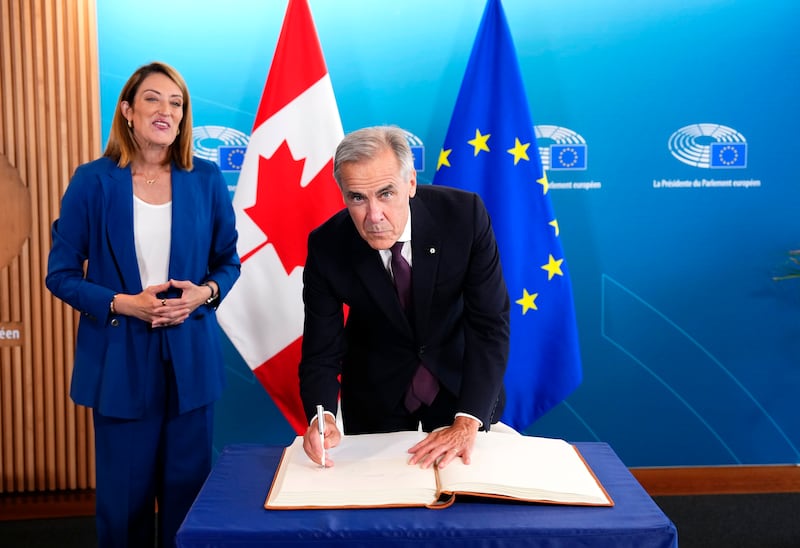
The prime minister’s political prowess is once again on display. Unlike many others who have attempted to pacify the American president with billions, only to be rewarded with nothing, Carney is now looking at potentially lucrative markets that reward Canadian businesses and consumers for generations without the instability, distrust, and insecurity.
There is still more work to be done to fortify the Canada-EU relationship. Moreover, it remains unclear if other nations can or even will cement their status as members. Still, the crisis plaguing the Middle East and the uncertainty coursing through North America place tremendous urgency on capitals to explore new contingencies.
Carney is now leading the way. Navigating a treacherous and perilous new path as the world becomes increasingly more hostile and unpredictable. The prime minister is galvanizing middle powers and displaying the cunning and dexterity to outwit and outsmart global bullies amid a precarious and volatile moment in history.
It is unclear if he will succeed, but what is certain is that folding is not an option.

