James Moore is a former federal cabinet minister under prime minister Stephen Harper, and is a contributing columnist for CTVNews.ca.
If you are lucky, when a crisis hits, the right people will recognize the moment that they are in, assume the responsible posture of prioritizing the public interest over the opportunity for political exploitation, and go to work.
Responsible leaders will, with focused minds and proper analysis, assess the challenges in front of them, carefully consult the brightest minds, triage ways to mitigate the impacts of a crisis, consider mitigation and defence options, then, in time, pivot toward solutions and a clear strategic direction. The discipline needed to drive you through these stages is both awesome and necessary.
This is all simple to say — and feels TED Talk-ish to write — but when you’ve seen a genuine crisis, the fundamentals of an effective response are everything to getting through the moment.
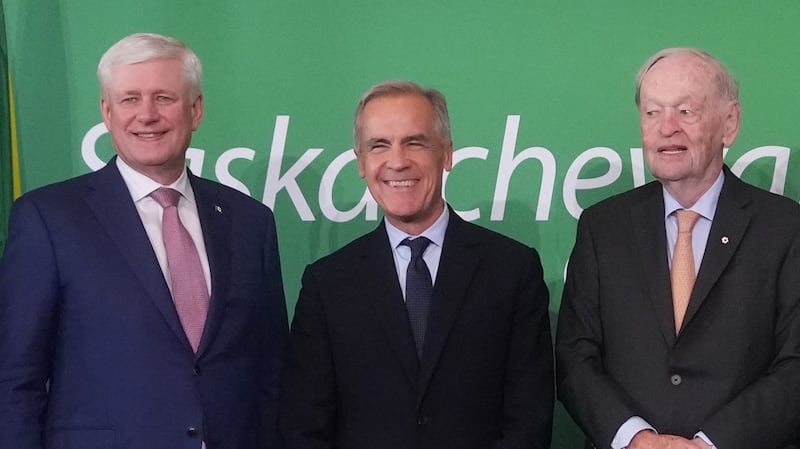
This past week was truly remarkable to witness because it showcased statesmanship and leadership in the mission to bolster Canadian solidarity when we need it most.
The moment when former prime ministers Jean Chrétien and Stephen Harper, and Prime Minister Mark Carney stood together in Canada’s largest city to physically present an image of Canadian cross-partisan alignment on Canada’s mission to address the crises posed by the Trump presidency was an inspirational thing for Canadians to see.
Inspirational show of unity
And Canadians needed to see it. Canadians need to see character and thoughtfulness in a time of anxiety and anger over the crises born of the Trump presidency. These three prime ministers’ time in public life collectively spans more than 63 years of Canada’s 159-year history since Confederation. That’s roughly 40 per cent of Canada’s history that has occurred since 29-year-old Jean Chrétien was elected the member of Parliament for Saint-Maurice—Laflèche on April 8, 1963.
These three men have seen, been key players in, and lived through many events and crises that have shaped Canada over these past six decades: the October Crisis of 1970; the Quebec referendums of 1980 and 1995; the Meech Lake and Charlottetown Accords; the the Sept. 11, 2001, attacks and Canada’s response; the war in Afghanistan; the 2008-09 global financial crisis; expanding free trade around the world (Canada-Europe free trade and the Trans-Pacific Partnership); the Brexit referendum and its global knock-on effects; and more.
These are three men who have had deep disagreements, to be sure. But they share a deep love and commitment to Canada that is tied to their character. They have respect for one another, and they know they have an obligation to their country beyond their time in office.
They demonstrated this week why Canadians trusted them with the awesome privilege of serving as prime minister: when Canada is attacked, you answer the call to contribute to protecting our country. Politics as usual is not for this moment. Statesmanship, good ideas and an unflinching commitment to Canada’s sovereignty and interests should be your north star.
The mission for Canada is now clear: 1) find new customers to buy Canadian goods and services beyond the United States; 2) support those who are being hit by President Trump’s tariffs; 3) make Canada a more attractive place for inbound investment dollars so we can grow the Canadian economy and export-ready products and services; and 4) prepare at some point – probably after President Trump has left office – to entertain substantive talks to stand down the tariff and trade war and to get back to discussing long-term trade and economic reconciliation in North America.
A monumental policy lift
These are all monumental public policy lifts that will require cooperation, deep public policy analysis and a fully engaged Parliament when the fall session begins. The prime minister has announced a massive new “productivity mega-deduction” to allow businesses to write off the full cost of capital investments in their first year, rather than depreciating it over time. The change lowers Canada’s marginal effective tax rate to 6.4 per cent from 13 per cent — which would be less than half the U.S. rate and a direct policy answer to Trump’s tax incentives. These are fantastic changes, but what more can we do?
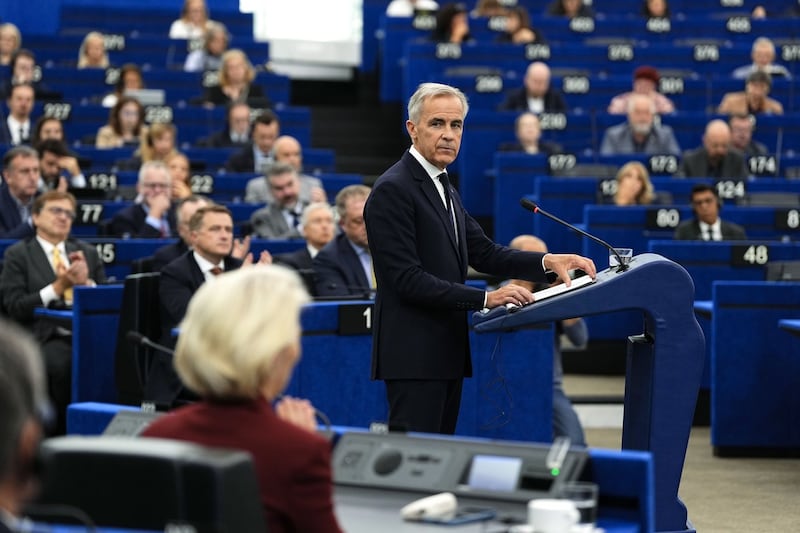
The prime minister has been roundly feted in Europe, and the concept of an “associate” membership for Canada with the European Union has taken flight. It is not something that actually exists in practice with any other country, and it is unknown how it would improve Canada’s current market access under its existing free-trade arrangement with Europe and its security commitments under NATO. But let’s talk about it, get some details before Parliament, and get some structure around the principles of greater liberalization and what it might mean for Canada’s interests in rebalancing its opportunities across Europe in the years ahead.
Proposals and concepts are everywhere on how Canada can weather the current storm from Donald Trump and come out the other side of the next two years of unrelenting belligerence in the time he has left as president. A responsible and functioning Parliament will bring those ideas forward and stress test them for all their virtues and weaknesses.
I hope that the symbolic and substantive example of cross-partisan leadership that was on display by former prime ministers Chrétien and Harper and Prime Minister Carney will spill over into Parliament and provincial legislatures through the balance of this year and beyond, and that those who have been entrusted with the privilege of governing Canada carry forward the positive momentum we saw this week, as we prepare for the difficult months ahead and the opportunities that wait on the horizon.

