Nova Scotia has opened the door to allow Nova Scotia Power to refinance the shutdown of its coal-fired power plants, in order to save customers from an extreme rate hike.
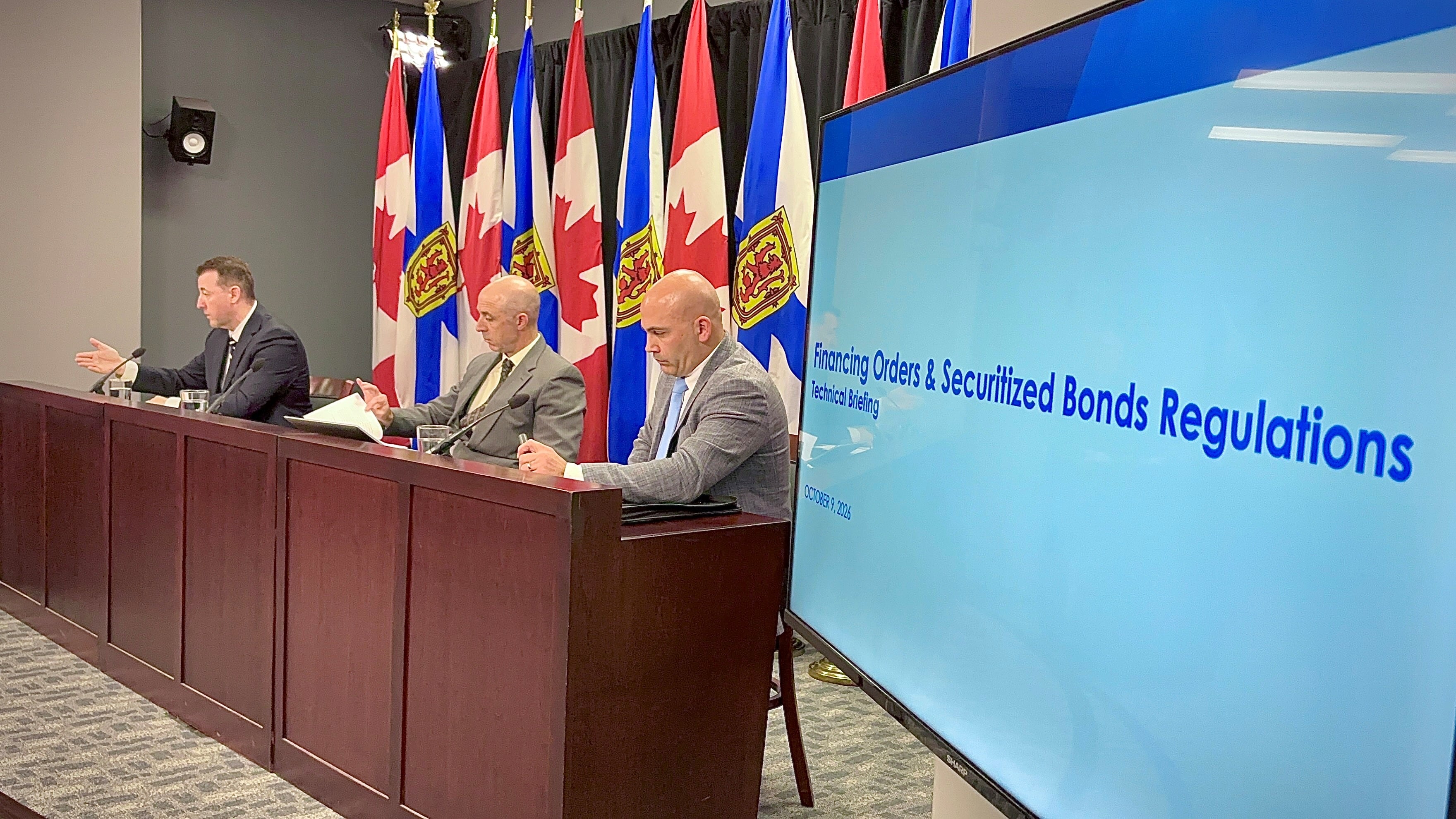
The Houston government passed new regulations under the Public Utilities Act, that will allow Nova Scotia Power to seek approval from the provincial energy regulator to securitize utility assets, like its five remaining coal plants.
Federal and provincial clean energy regulations require Nova Scotia Power to phase out and close its coal-fired electric power plants by 2030 and, in doing so, the company will look to recoup the costs of those power plant assets, which the utility has previously estimated is around $700 million.
The province passed the new regulations Thursday, almost ten months after Premier Tim Houston told reporters in the legislature that he disagreed with the evaluation of the coal plants. Houston, who is also the energy minister, was not present at the press briefing regarding the new regulations around securitization.
Stephen MacDonald, the deputy minister in the department of energy, didn’t answer a reporter’s question as to why the premier wasn’t present but did say the government introduced the regulations to protect rate payers and keep their power bills as a low as possible.
MacDonald said there were previously no avenues or rules around considering an application for securitization and so these new regulations establish the ground rules to do so, giving Nova Scotia Power the chance to submit its request.
MacDonald says it would be up to the independent energy board to decide whether the securitization of any assets would benefit rate payers and, if that’s the case, the government would support it.
“There are a number of assets that Nova Scotia Power needs to recover from Nova Scotians, the costs of and the most innovative, are the coal plant assets,” said MacDonald.
Under the current regulatory framework MacDonald says Nova Scotians are required to pay Nova Scotia Power the full cost of those assets, plus an interest rate that’s currently calculated around seven per cent.
MacDonald says securitization allows the costs of those assets to be financed over a longer period, and allows for a lower interest rate, which could help lower the costs for ratepayers, who will be responsible for paying off those asset costs.
“Nova Scotia Power is a regulated public utility,” said MacDonald. “And essentially all the costs of operating the electricity system are paid for by Nova Scotians.”
In a statement, Houston said the decision to give the energy board the power to consider a securitization agreement is about saving ratepayers money and removes any politics from the discussion.
“Our only objective is to protect ratepayers,” said Houston in a news release. “I have given the professionals and the board the space and authority to conduct a formal process and determine if it is truly in the best interest of ratepayers.”
On the same day the provincial government announced the new regulations, Nova Scotia Power issued a press release from their president and CEO Vivek Sood indicating they have submitted an application for securitization.
“We know customers are concerned about the cost of electricity, and that’s exactly what this application is designed to help address,” said Sood in a news release. “These are costs that already exist as part of operating and transitioning our electricity system. By financing them differently and reducing borrowing costs, we can create significant long-term savings and help lessen the impact on customer bills over time.”
Although Nove Scotia Power had previously estimated a figure of around $704 million for the unrecovered assets, they have increased that figure and now wish to seek securitization for the amount of $1 billion as issued in their application.
Spead out over 30-years and with a lower interest rate, the utility believes that could result in $265.6 million in savings.
As part of the new regulations, a 60-day review process by the energy board will begin and it must issue an order within that timeframe.
For more Nova Scotia news, visit our dedicated provincial page

