OTTAWA — Ahead of the upcoming Canada-EU Summit in Montreal, European officials say the exact details of an agreement will not be finalized this week, but that they’re hoping to hammer out those details of Canada’s “associate membership” in the 27-member bloc to make an official announcement next year.
The officials made the comments in a background briefing to reporters ahead of the summit, set to take place Thursday and Friday, also calling it one of the most important summits the EU has ever held.
European Commission President Ursula von der Leyen made headlines last month when she formally invited Prime Minister Mark Carney to take the Canada-EU relationship to the next level, saying in a state of the union address that she wants to open the door for Canada to be the first “associate member” of the group.
Carney said at the time that Canada is open to the proposition.
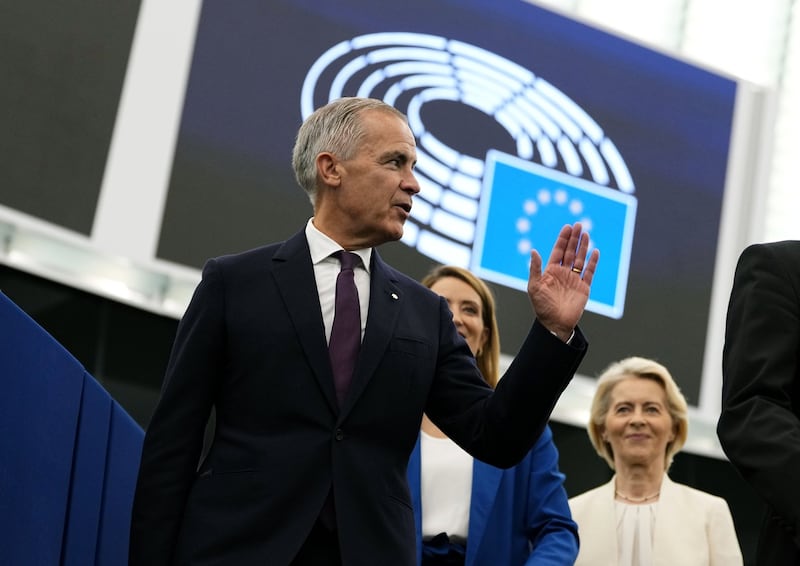
The officials briefing reporters on Tuesday, meanwhile, insisted member states are on board with what would be the closest-ever alliance with another country — the closest one could get to the EU without official membership — but conceded there is debate over the name.
They also said they don’t envision a partnership of this kind being offered to others, explaining that there could be two types of deal: an “alliance of the future,” which could be open to other countries, and what is currently being described as “associate membership,” which is being drawn up with only Canada in mind.
The officials said the goal is to have the concept ready for endorsement by the next Canada-EU summit next year.
Speaking to reporters on his way into a cabinet meeting on Parliament Hill Tuesday, Carney said he’s “looking forward” to the summit, adding “a lot of work has gone into this.”
“This is the launch of further formal discussions, negotiations over the course of the next year,” he said.
“The good news is it doesn’t matter about specific names or nomenclature,” he added. “What matters is the difference that it will make to lives of Canadians, young Canadians in terms of opportunities to study, work and travel, our Canadian businesses in terms of new opportunities, Canadian researchers in terms of depths of opportunity, and Canada as a whole becoming a more independent, more sovereign nation.”
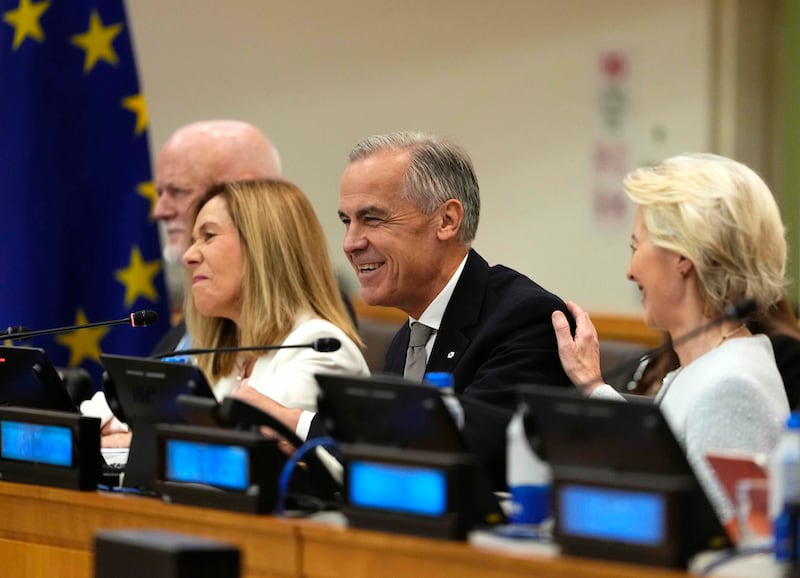
In an interview with CTV Question Period last month, Canada’s Ambassador to the EU Jonathan Wilkinson also said neither side of the talks had landed on what to call the new partnership, whether “associate member” or something else.
“I think it’s totally fair for Canadians to ask, ‘What does it mean?’ It’s totally fair for the Europeans to ask, ‘What does it mean?’ Because it’s quite new for them as well,” Wilkinson told host Vassy Kapelos, when pressed on the potential connotations of the “associate member” name.
“It is actually about a series of initiatives that are focused in areas that are both economically important — from a trade and from a security perspective — but also about enhancing Canada’s overall sovereignty,” he added. “This is about building sovereignty, making ourselves more secure and more sovereign. It’s not about the reverse.”
The summit is taking place on the 10-year anniversary of the Canada-European Union Comprehensive Economic and Trade Agreement (CETA) being signed. A handful of countries a decade later, however, have still not ratified the deal.
The EU officials in Tuesday’s briefing called CETA a success story, and said they’re working with the remaining member states to ensure ratification.
As Canada seeks to deepen ties with the EU, meanwhile, it’s still embroiled in a trade war with the United States. U.S. President Donald Trump reacted to the potential of Canada’s EU “associate membership” last month, saying it could be considered a “hostile act,” calling it “laughable.”
Conservative Leader Pierre Poilievre has also weighed in, speaking to reporters ahead of the prime minister’s trip to Europe last month, saying Canada already has trade and defence agreements with the EU, in the form of CETA and NATO.
“We want Canada to have free trade with Europe, co-operation with Europe, but we will never surrender our independence and sovereignty over our laws, our tax money, and our immigration policies,” Poilievre said.
He added the Conservatives want to see “an economic action plan” to support Canadians struggling with the cost of living, rather than an unclear goal of potentially conforming to European systems and policies.
With files from CTV News chief political correspondent Vassy Kapelos

