James Moore is a former federal cabinet minister from B.C. under prime minister Stephen Harper and is a contributing columnist for CTVNews.ca.
VANCOUVER — There is no sugarcoating the results of the midterm elections in the United States for President Donald Trump and his administration.
This was an astonishing and vast repudiation of the president. When Republicans lose in South Carolina, North Carolina, Mississippi, Texas, Kansas, Iowa, and Georgia solidifies as a blue state, it is impossible not to affirm that a judgment has been made by the American voters on Donald Trump’s leadership.
It was a historic night politically that kicks off the reframing of American politics for the post-Trump era in both the Republican and Democratic parties.
The reverberations of the results in American politics will take some time to sort out. We do not yet know how President Trump will react or who he will blame, but the wise assumption is that he will not take personal responsibility and will scapegoat anyone within reach.
He may have a series of reactions between now and January when the new Congress is sworn into office, but it would be wise to assume that anything is possible from this president. Unpredictability and emotional twists are his pattern, and it is predictable.
What is also predictable is that The Democratic-controlled House of Representatives and Senate will flex their powers in a way that will become incredibly uncomfortable for the Trump administration and the president’s friends, business partners, allies and family.
The investigative powers of Congress will be on full display in the coming months to inflict maximum damage on a weakened and departing president.
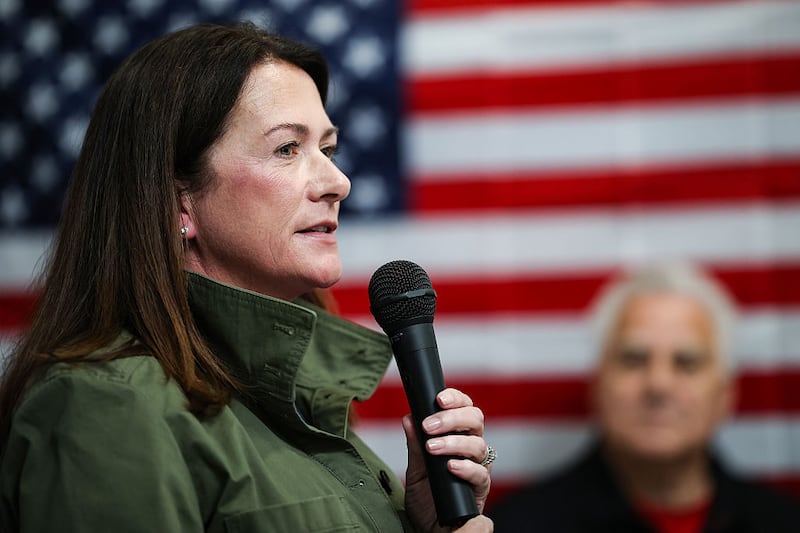
Here is but one example to consider: In South Carolina’s first congressional district, a seat Donald Trump carried by 13 points in 2024, Democrat Nancy Lacore has declared victory over the Trump-endorsed Republican, Jenny Costa Honeycutt.
Who is Nancy Lacore? She is a retired Navy Vice-Admiral with 35 years of service who served as Chief of the Navy Reserve until August 2025, when Defense Secretary Pete Hegseth abruptly removed her without explanation. It was the same purge that ousted the head of the Defense Intelligence Agency after his assessment of U.S. damage to Iranian nuclear sites contradicted the president’s narrative.
Lacore is now poised to take her seat in a Congress that will lead a bipartisan dissection of Secretary Hegseth’s prosecution of the Iran war and his management of the Pentagon.
This is but one example, but there will be plenty more investigations into business dealings, the goings-on of the Trump family as they build their astonishing wealth and lever their association to the President for private gain, and more. Part of the new Congress will be preoccupied with these investigations that will, no doubt, enrage the President and cause enormous distractions for the time he has left in office.
One of the results of these midterm elections as we head towards the presidential cycle of 2028 — coupled with the final 24 months of the Trump era of American politics — is that America will be inward-focused.
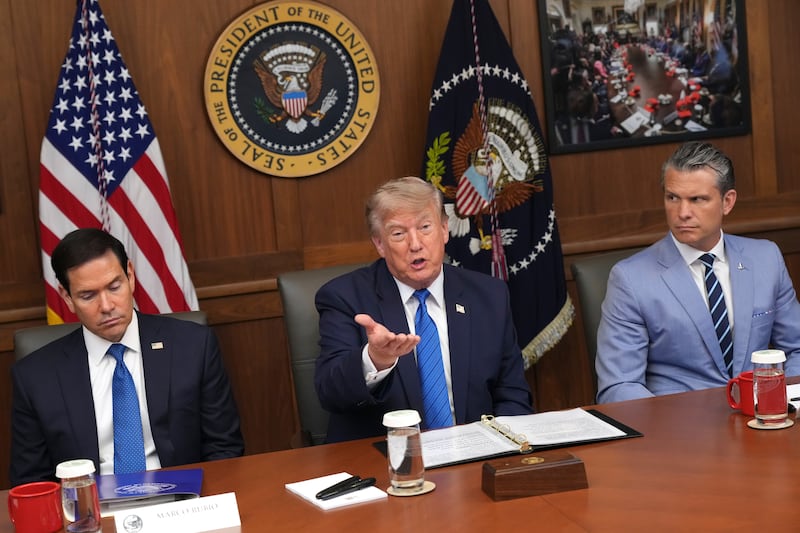
The Republican Party will triage the gut punch that voters just delivered, Trump-era figures like Vice-President JD Vance, Defense Secretary Pete Hegseth, Secretary of State Marco Rubio, Senators like Ted Cruz (TX), Josh Hawley (MO), Tim Scott (SC), John Thune (SD) and others, will look to life after Trump and dream up a strategy of moving past a president who is deeply disliked by most Americans, but still beloved and influential within Republican primaries.
On the Democratic side, the race for 2028 has begun and the fight between factions within the party has begun. There are those on the hard left and those who represent a more moderate and contemporary vision, and they will be in conflict as the Democrats figure out what they are for, other than their burning hate for anything Trump.
Ottawa’s strategic wait
For Canada and the government of Prime Minister Mark Carney, there is much to consider in how to frame their thinking about what lies ahead in this new American political context. But there are two observations about the tariff component of this election that I hope we take to heart.
First, Americans do not want or like the Trump tariffs. The economic argument for tariffs was always high on belligerence and low on substance, but it is now bipartisan in its lack of political appeal. President Trump is on an island in his orthodoxy on the subject, and he will stay there.
Second, Canada should not make a tariff deal, negotiated with this repudiated and departing president, that would entrench and normalize tariffs that neither Americans nor Canadians want. No one in either country has voted for a permanent new tariff model, and, in fact, the opposite is true. Voters want tariffs repealed and economic partnership and friendship restored in time.
Prime Minister Carney was not elected to approve a tariff-affirming policy that puts Canada at an economic disadvantage with the United States, and Donald Trump’s tariff policy was rejected by American voters this week. There is no mandate to affirm tariffs, and there is no political constituency to cement a permanent tariff model that hurts Canada’s economic growth. Do not do it.
The midterm elections were a cymbal-crash moment in American politics. The Trump era is coming to a close and a new future is ahead. Both parties will find their way forward toward the 2028 presidential election, and they have soul-searching to do in terms of their values, policy emphasis, leadership choices and how they plan to approach these next two years in the service of America’s domestic priorities.
For Canada, we are in a better place today than we have been in some time when it comes to our American neighbours. It turns out that attacking our sovereignty, belittling our nation, assaulting our economy and insulting our dignity had an unbelievably bad night.
Attacking Canada is not what Americans want their leaders to do. I am hopeful that we are now coming out of the worst era of the Canada-U.S. divide in my lifetime and that better days lie ahead.

