
The federal minister of immigration had a response to some sharp comments from the leader of the Conservative Party during a visit to Dieppe, N.B., on Thursday.
Lena Metlege Diab, minister of Immigration, Refugees and Citizenship, provided more details on a targeted, time-limited measure announced in this year’s budget that will help provinces and territories meet their labour market needs for immigrants who are already living and working in Canada.
The initiative will support the transition to permanent residence of up to 100,000 workers as well as family members in 2027.
“These are people whose skills and experience are already supporting Canadian employers and communities,” said Diab. “These are not people that are arriving new. In some cases, these people have been here for years.”
Diab said the workers have been supporting the economy in key industries in towns and cities across Canada.
“It is the right thing to do,” said Diab. “These are people already living in Canada. They will not put additional pressure on housing, infrastructure and public services. This is a targeted, one-year measure. It is not a new program. It is not a permanent increase to our immigration levels.”
Released last week, the levels plan includes targets for 380,000 permanent residents and 370,000 new temporary residents each year through 2029.
It also comes with a pledge to make upwards of 200,000 longtime temporary residents permanent by the end of next year.
During a press conference in Stellarton, N.S., earlier this week, Diab said half of the 200,000 target will be made up of workers already in Canada and will be chosen in collaboration with the provinces and territories.
The plan has caught the attention of Conservative Leader Pierre Poilievre who called the federal government’s new immigration measure “bonkers” during a video released Sunday.
“This is insane. Population growth already outstripped housing, health care and jobs for a decade,” said Poilievre in his video.
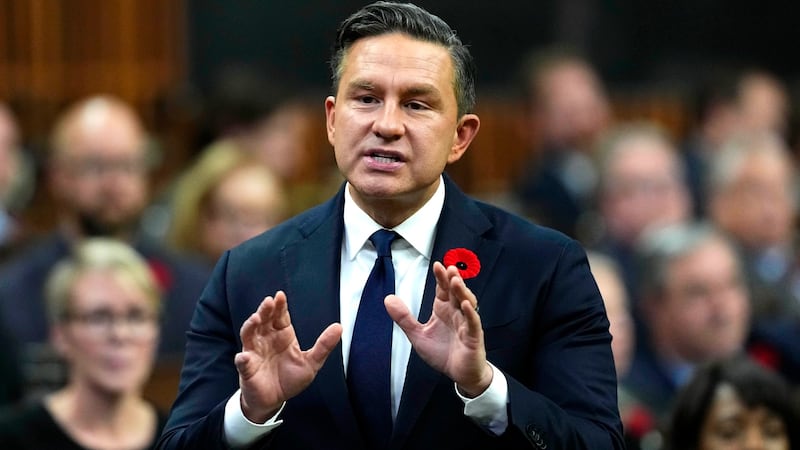
“I feel sorry for him and the people that are working with him. I really don’t believe he understands Canada,” said Diab on Thursday. “I really feel he doesn’t understand our workers. He doesn’t understand our businesses. He doesn’t understand Canadians, no matter who they are.”
In his video, Poilievre claimed the plan will bring roughly 200,000 more permanent residents each year than when Justin Trudeau was prime minister.
“The arrivals are not the same as admissions,” said Diab. “That 100,000, these are people that are already in the country. These are not coming new. They’re not going to take away things.
“In fact, they are helping you, you and you. In your schools and hospitals and building your homes. That’s what they’re doing. We have these people in our country. They’re working, paying taxes.”
Diab said she understands how some Canadians are rightly concerned.
“We brought in too many people in the past. That is exactly whey we have stabilized our numbers in the last couple of years,” said Diab.
Provinces and territories will be offered program allocations and will be able to decide how much of the additional space they use to transition workers who have established themselves in their communities while meeting their labour market needs.
The Provincial Nominee Program allocations are intended to be used by the end of March to support the transition of workers and family members to permanent residency in 2027.
The governments of each province and territory will be able to identify workers who have already applied for permanent residence and are waiting for a decision.
With files from The Canadian Press

