James Moore is a former federal cabinet minister under prime minister Stephen Harper and is a contributing columnist for CTVNews.ca.
Negotiating a trade deal with the U.S. has always been a high-stakes chess match.
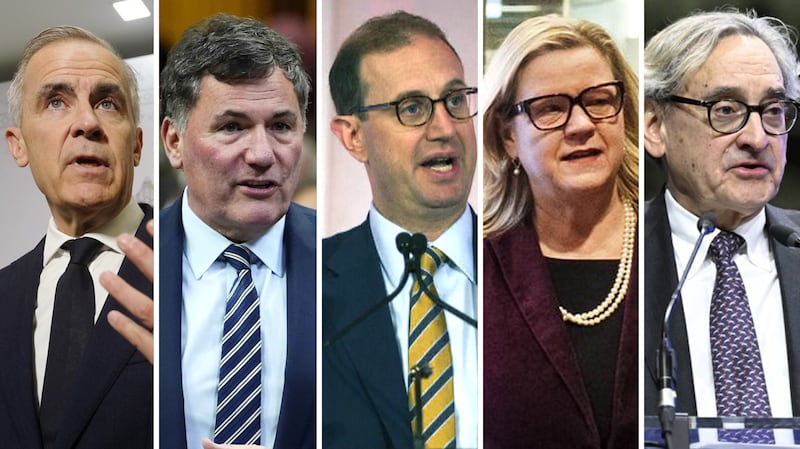
I don’t envy the task resting on the shoulders of Prime Minister Mark Carney and his core team, including Canada-U.S. Trade Minister Dominic LeBlanc, Ambassador Mark Wiseman, Chief Trade Negotiator Janice Charette, and Privy Council Clerk Michael Sabia.
In Canada’s history, there have been few issues where economics, national pride, sovereignty, pragmatism, security and law are in such violent conflict that landing an ideal outcome is effectively impossible; but finding a credible pathway is fraught with endless complications and consequences that it can break one’s mind.
But here we are. And our chosen decision makers have to lead and make the tough calls in strategizing Canada’s path forward in the remaining two years of the tariff-loving Trump administration that is growing more erratic and unhinged by the day on nearly every front.
Meanwhile Canada’s economy and key sectors struggle with Section 232 tariffs on autos, aluminum, steel and lumber and Section 338 tariffs on other sectors, and Canada United States Mexico Agreement (CUSMA) re-negotiations on the horizon all triggering uncertainty about jobs and investment decisions and a time when we can afford it least.
There is growing chatter of a coming announcement of some form of a new “trade/tariff deal” with the Trump administration, and I am filled with questions.
What is the actual tariff rate, sector by sector, and how does it compare with what Canada faced before 2025? Will you publish the full text before Canada is bound by it? Have affected industries been consulted so they can assess what new rates would mean and whether they will cause comfort and stability for their business decisions in the coming year? Will Parliament have a chance to vote on this?
About 90% of U.S. imports from Canada have stayed tariff-free, largely thanks to CUSMA. Does this deal put that at risk by validating tariffs onto goods that were exempt? Are we sure they consented-to tariffs would be circumscribed and not expanded by definitional interpretation later?
After years of saying tariffs between allies are unacceptable, why is accepting a new permanent minimum tariff now a “win”?
Name one thing the United States is giving up in this deal that it can’t take back tomorrow if Donald Trump has a tantrum and wants to?
The trust gap
Trump has broken deals before, including his own CUSMA. What in this agreement stops a new tariff threat next week or month, or anytime between now and the end of his term? Why should we believe him if he says he won’t? Why do you believe him? Is there a snapback, a dispute mechanism, anything enforceable to point to?
When forest fire smoke next summer agitates him, or if he grows tired of Canada for any reason at all, or if Peter Navarro or Stephen Miller convince him with lies that Canada has been treating America unfairly and needs to be hit with a new tariff, why should we think he won’t do so?
America has just elected a new Congress led by members of both the House of Representatives and the Senate who campaigned against Trump’s tariffs. Why wouldn’t Canada wait for the new Congress to be sworn into office before making any deal with a White House whose trade and tariff policy was so firmly rebuked by American voters?
Opposition to tariffs on Canada is a more popular political stance than almost any other contemporary policy question being debated. Tariffs are massively unpopular in the Republican Party, the Democratic Party, with independent voters, with farmers, with the business community – momentum is clearly on the side of Canada and against the side of Trump’s failed tariff policies. Why would we accept Trump’s tariffs now?
Congressional leverage
House Democratic Leader Hakeem Jeffries, in line to become Speaker in January, celebrated the House vote in February to “detonate the Trump tariffs on Canada,” and since the midterms has put restoring Congress’s authority over tariffs on his 100-day agenda.
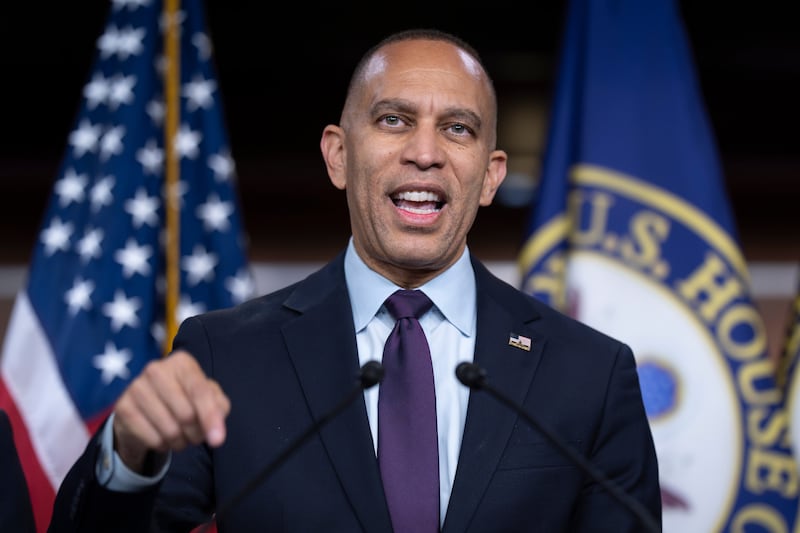
Why would we slow momentum towards this pro-trade and anti-tariff agenda? Should he go tools-down now if we are going to accept a minimum tariff threshold for certain Canadian exports to the United States? Why should they fight?
It is said that Democrats lack a veto-proof majority, so Trump could veto any repeal effort. Yes, but a Congress that can pass a repeal with bipartisan votes changes the leverage at the table and will have the long-term benefit of stigmatizing this terrible Trump tariff policy for the coming primaries in both the Republican and Democratic Parties, and could drive bipartisan momentum toward long-term trade and tariff reconciliation between Canada and the United States.
So let it happen. Unleash the debate and have confidence that the massive weight of economics and public opinion opposition to tariffs will win the day. Why sign before we have seen it play out?
Oregon Sen. Ron Wyden, the incoming chair of the Senate Finance Committee, has signaled the Canadian tariffs will be an early target when he takes the gavel. Should he now not do that, given we are accepting the premise that some Trump tariffs are okay?
In August you said America’s signature is written “in pencil.” Canadians agreed and believed you. Why should we believe that Donald Trump’s signature is now written in ink?
None of these questions is meant to diminish how hard this file is, or the effort of Prime Minister Carney, Minister LeBlanc, Ambassador Wiseman, Janice Charette, Michael Sabia and their team, who have carried an impossible burden with skill and patriotism.
But a deal that writes tariffs into the relationship between two of the closest allies in the world is a decision that will outlast this administration, and Canadians deserve to have these questions answered before it is signed, not after.
If the answers are good, the prime minister should have no trouble giving them; if they are not, the best deal may be the one we wait for.