PATTERSON LAKE PENINSULA, SASK. – Construction has officially started on what could become one of the world’s largest uranium mines in northern Saskatchewan.
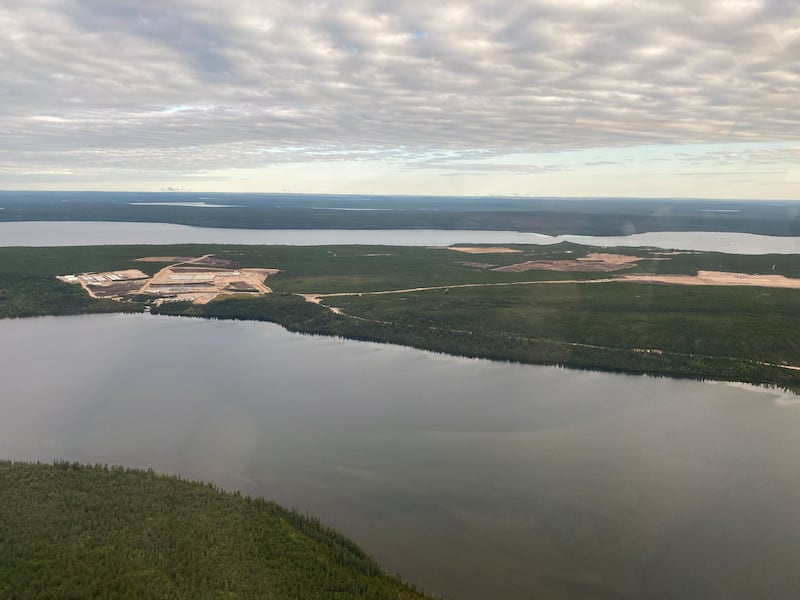
Shovels hit the dirt on Thursday for the underground mine being built in the southwestern portion of the Athabasca Basin along Patterson Lake, about 640 kilometres northwest of Saskatoon, near the Alberta border.
Construction is expected to take four years on NexGen Energy Ltd.’s Rook I Project, which has the potential to become one of the world’s largest and lowest-cost uranium mines, according to the Vancouver-based energy company.
“It is quite powerful on a global scale,” said Leigh Curyer, NexGen Energy founder and CEO.
“We have looked outside the mining industry to look at innovation to try and apply lessons and technologies from other industries.”
Once fully operational, the project will be capable of producing up to 30 million pounds of uranium annually, which represents about 20 per cent of the current global supply and 50 per cent of the supply in the western hemisphere.
The uranium will be processed on site at the mill that is also being constructed.
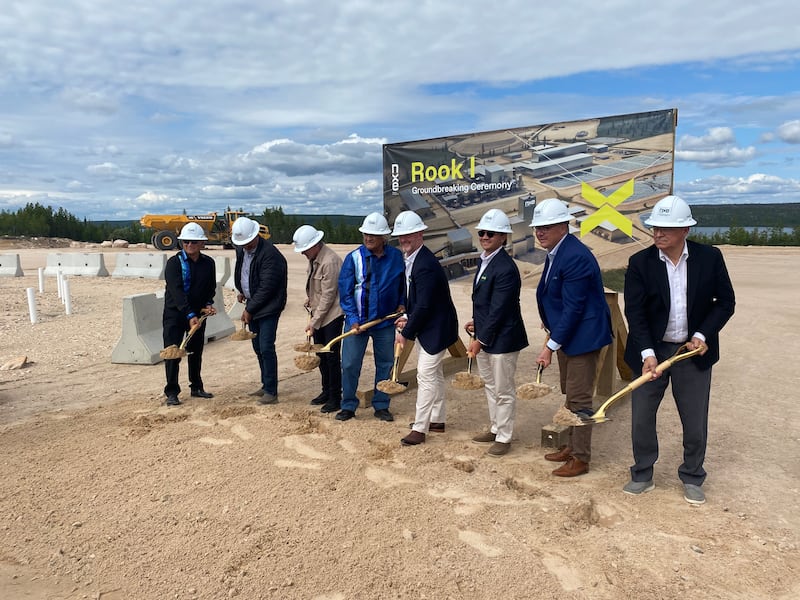
“This is going to create a lot of jobs, and it is going to provide critical supplies of uranium to the world markets,” said Buckley Belanger, secretary of state for rural development and member of parliament for the region.
National and global demand for uranium continues to increase as the world looks for stable and reliable sources of low-emissions energy, including uranium-fuelled nuclear energy.
Ottawa released its national nuclear energy strategy in June. The plans focus on expanding domestic nuclear generation and global exports with a goal of building up to 10 new large-scale reactors by 2040.
Saskatchewan Premier Scott Moe attended the groundbreaking ceremony. He said the province can help meet the global demand for fuel with projects like Rook I.
“This is part of Saskatchewan’s contribution to Canada becoming an energy superpower,” Moe told CTV News.
Canada is already the second largest uranium producer in the world.
All of the country’s uranium comes from mines in the Athabasca Basin, a region known for being rich in uranium.
“It is projects like this that are going to increase Saskatchewan’s global presence in that space and going to increase the global presence and opportunity for those that live in northern Saskatchewan as well,” Moe said.
Moe said the timing of the NexGen mine works well with the province’s plans for nuclear energy expansion in the future.
Saskatchewan’s Energy Security Strategy has plans to generate nuclear power through both small modular reactors (SMR) and large nuclear reactors using uranium produced in the province.
SaskPower is currently in the process of selecting a site for the province’s first SMR.
“With nuclear energy becoming more and more important globally, you need more uranium to produce the fuel that is needed in these (nuclear) reactors,” said Kevin Ansdell, a geological sciences professor at the University of Saskatchewan.
Timeline
The process of developing a new mine takes time.
Exploration for the Rook I Project started in 2013.
In March, the company received its final approval from the federal government to begin construction.
Construction is expected to last four years with production slated for late 2030.
NexGen estimates the mine will generate an initial $32.5 billion in total economic impact for Saskatchewan during construction and initial operations.
Ansdell said the timeline for the new NexGen mine is “pretty typical for any type of mine.”
Like other proposed mining operations, uranium mines undergo various levels of approvals and environmental assessments before construction can begin.
Safety considerations
Uranium mines have an additional hurdle to jump through. The projects must obtain licensing through the Canadian Nuclear Safety Commission.
The federal agency regulates the use of nuclear energy and materials in Canada to protect health, safety, security and the environment.
“Uranium mines are essentially way more regulated and, therefore, you could argue are much safer on all aspects relative to many other mines,” Ansdell said.
The NexGen uranium mine will also be more environmentally friendly, according to Curyer.
The tailings leftover from the ore extraction process will be stored underground instead of above, which will give the mine a smaller footprint.
Curyer said the underground storage will help with land reclamation once the mine is no longer in operation.
“At the end of its mining life, which will be many decades from now, after a short period of time, you will be hard pressed to know that there was ever a mining operation in the area,” he said.

