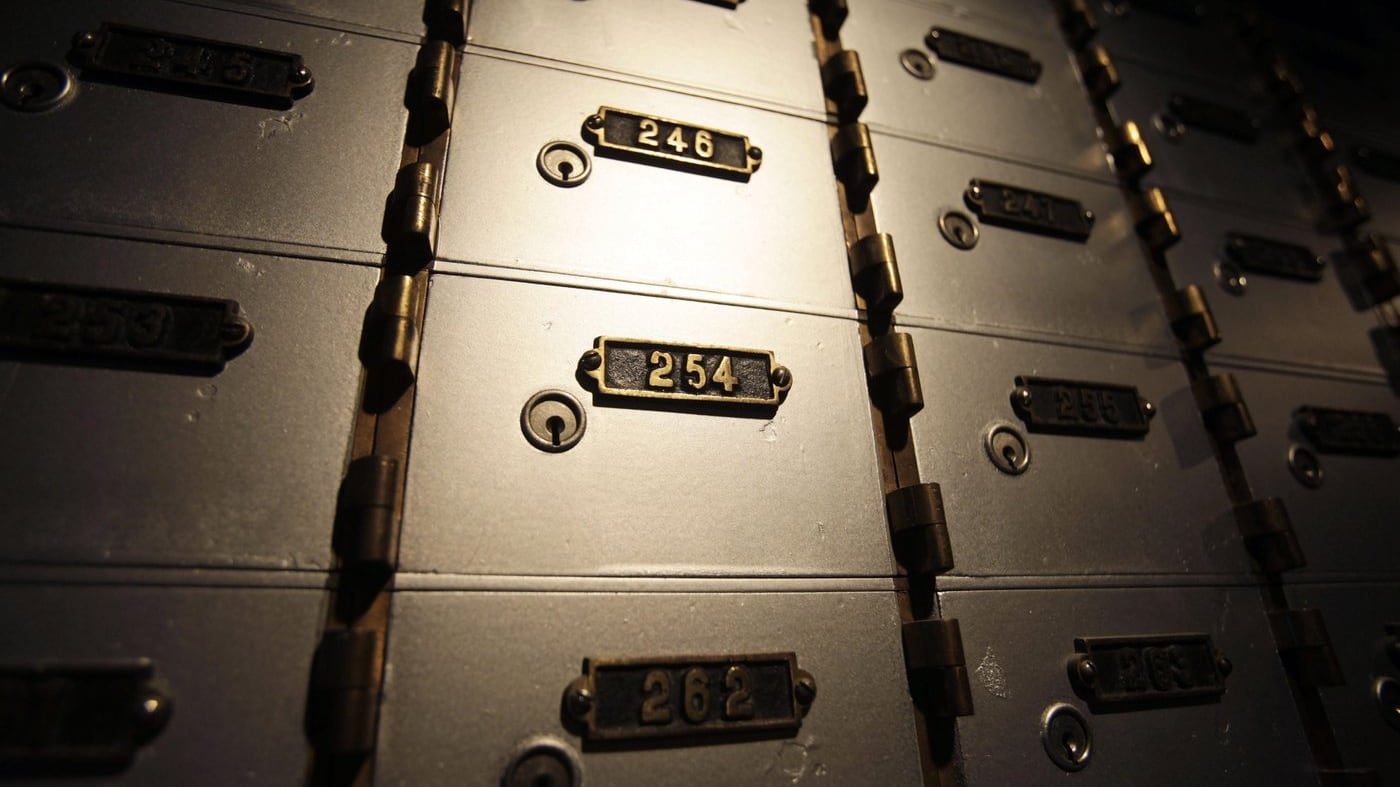
Most of us haven’t set foot in a bank vault, but many of us still have the instinct: important documents and prized possessions belong somewhere locked away.
Yet a safety deposit box only holds real value if our financial lives are organized enough that someone else could easily step in if something happened to us.
David Boldovitch, financial adviser and group benefits broker at Bold Financial, has watched this problem play out with real families, not because they made a bad decision, but because they never made one at all.
He’s seen cases where life insurance documents were locked in a safety deposit box, inaccessible for weeks after the policyholder passed away, because the family didn’t know which company held the policy or that the policy even existed.
“This resulted in a significant delay of the claim ultimately being paid out,” he said.
For Toronto-based photographer Michael Cooper, the wake-up call came unexpectedly. He got a safety deposit box to protect his passport, property deed and will from a potential theft, fire or flood at his house. Then he learned something most people don’t find out until it’s too late: a box can be frozen upon the holder’s death, sealed pending probate, right when a family might need a will most urgently.
“I realized that’s not the best place for a will,” Cooper says. He moved it and the deed into a fireproof box he keeps at home instead.
It points to a bigger money lesson: the safest choice isn’t always the most easily accessible one.
Cooper’s advice to a friend weighing whether to get a box was simply “What are you trying to protect?”
Before writing off a safety deposit box, it’s worth asking what they still do well.
Vancity, one of Canada’s largest credit unions, says the case for one hasn’t disappeared; it’s just narrowed to a genuinely secure spot for things that are costly to replace: original documents, collectibles or sentimental items with no digital equivalent.
As financial lives digitize, fewer things need a physical vault. But Vancity notes growing concerns about cybersecurity and climate risks, such as floods and fires, may be pushing some people to consider them more, not less, for the handful of items that are genuinely irreplaceable.
Access varies by institution; at Vancity, boxes are available at select branches, and the credit union finds an available one when a member needs it.
If you’re going with a provider outside a bank or credit union, Vancity flags a risk worth checking: private vault companies can offer strong security, but consumers should review their oversight, financial stability and consumer protection framework, since none of that is standardized the way it is at a regulated institution.
The offerings differ at the major banks.
National Bank has stepped away from offering safety deposit boxes for new customers; existing boxholders can keep theirs, with a transfer option if their branch closes.
TD Bank says demand hasn’t slowed.
“We continue to see strong interest in safety deposit boxes, particularly in larger urban centres,” a spokesperson said.
TD’s guidance echoes the document-literacy problem here: the bank recommends a joint holder, trusted family member, executor or power of attorney know the box’s location and number, where the key is kept, and a general inventory of contents. Even the banks championing these boxes are, in effect, telling customers: write it down, tell someone.
Scotiabank strikes a similar note, calling these boxes “a valued service” offered at most branches.
That divergence signals a bigger trend: institutions making different bets on physical infrastructure versus digital tools. “Put it in the bank” isn’t automatically the safest default anymore, and it’s worth calling ahead, since even Vancity’s model depends on availability, not guaranteed access.
None of this is really about safety deposit boxes. It’s about a habit millennials are uniquely positioned to build early: document literacy. Most are still assembling the pieces: insurance, a will, investment accounts and mortgage documents. The instinct to lock things away can quietly work against us if no one else knows where “away” is.
The fix doesn’t require a vault or a lawyer’s office. It requires an afternoon: a single document (digital is fine) listing what you have, where it lives, and who needs to know. Share it with a partner, a parent or whoever would be picking up the pieces after you pass.
As Boldovitch puts it, the real safeguard was never the vault. It’s the summary sheet sitting somewhere your family can actually reach: updated and accessible.
That’s the whole millennial money hack. Not an app, not an account type, just knowing where things are before someone else has to go looking.
This report by The Canadian Press was first published Aug. 24, 2026.
Kumutha Ramanathan, The Canadian Press

