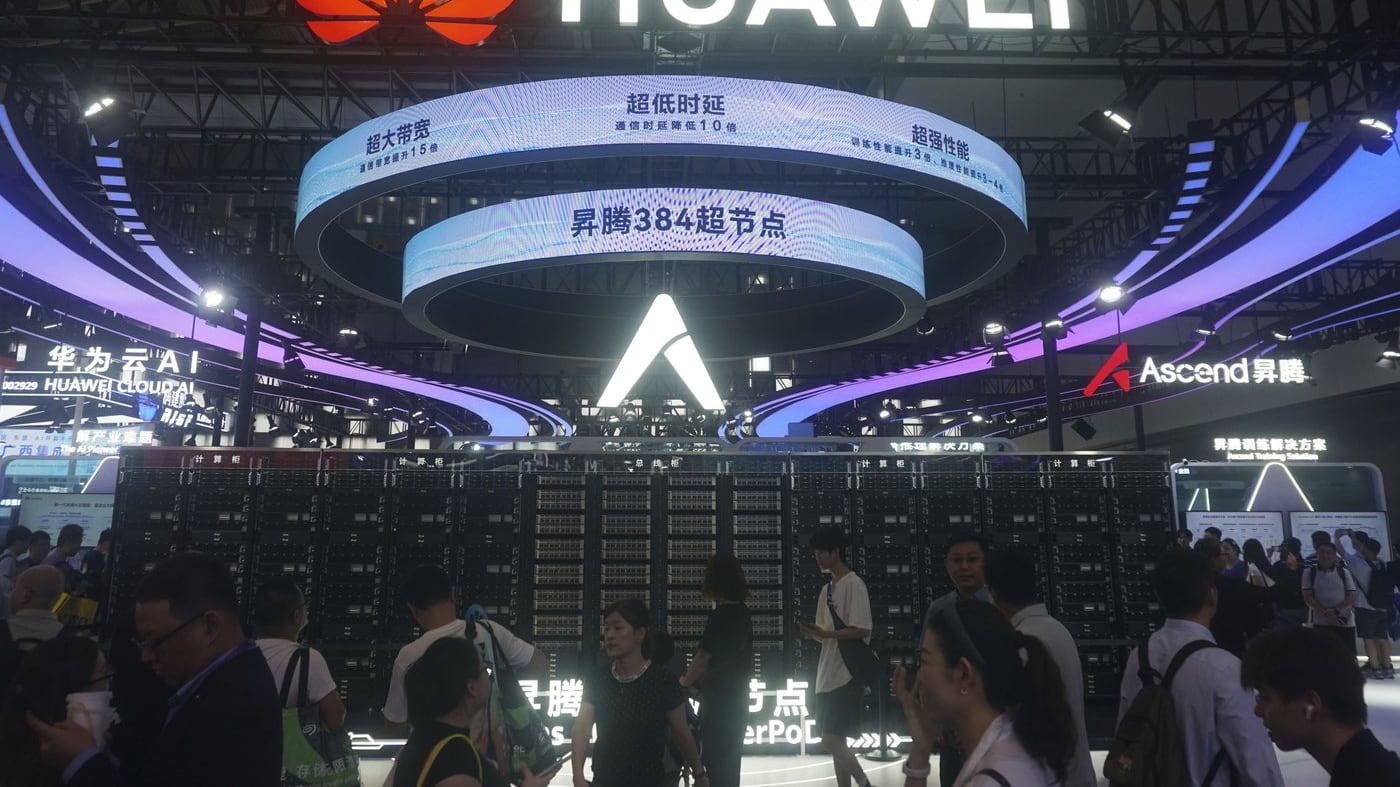
China’s Huawei Technologies reported a 36 per cent plunge in first-half net profit on Monday as soaring input costs and heavier spending on research and development outweighed revenue growth.
The Shenzhen-based tech and telecoms giant said net profit for January to June fell to 23.81 billion yuan ($3.54 billion), accelerating from a 32 per cent drop in the same period a year earlier, while revenue rose 9.6 per cent to 467.82 billion yuan, as it continued to recover from U.S. sanctions.
The results underscore the cost of Huawei’s push to reduce reliance on foreign technology and expand its AI computing and chip capabilities after years of U.S. export restrictions. Rising memory chip prices have also weighed on profitability at its consumer business division, which includes smartphones.
Huawei said research and development spending rose 25.2 per cent to 121.38 billion yuan, equivalent to 25.9 per cent of revenue, as it stepped up investment in AI, communications technology, smart devices and intelligent automotive solutions.
The company’s cost of making its products rose 12.4 per cent, faster than revenue growth, while administrative costs also increased sharply.
The company said its first-half results were in line with its forecasts, but its full-year outlook remained under review because of external uncertainty and higher input costs.
HUAWEI SPENDING MORE
Huawei, whose business includes smartphones, AI chips and telecoms equipment, did not provide a breakdown of revenue by business segment. It said all of its businesses recorded year-on-year revenue growth in the first half.
The company has made a strong revenue recovery since U.S. sanctions and export controls restricted its access to advanced chips and Google’s Android operating system, contributing to a 29 per cent fall in annual revenue in 2021.
Huawei, one of the Chinese technology groups most heavily affected by U.S. curbs, has since poured investment into developing domestic alternatives in chips, software and AI computing infrastructure. Its 2025 revenue rose 2.2 per cent to 880.9 billion yuan, its second-highest annual total after a record 891 billion yuan in 2020.
This year, Huawei has promoted AI-focused telecoms products, new computing hardware and smart-driving technology, while launching new smartphones, tablets and wearable devices in China and overseas.
Its day-to-day operations used 39.88 billion yuan in cash in the first half, compared with generating 31.18 billion yuan a year earlier. Spending on goods and services rose much faster than cash received from sales, while inventories rose 42 per cent from the end of 2025.
Increased R&D and changes in the company’s business mix also weighed on profitability, Huawei said.
The filing also disclosed a U.S. court date next week in Huawei’s case involving alleged bank fraud and sanctions violations. A separate case related to alleged theft of T-Mobile trade secrets is scheduled for trial in October next year.
(Reporting by Eduardo Baptista; Editing by Miyoung Kim and Muralikumar Anantharaman)

