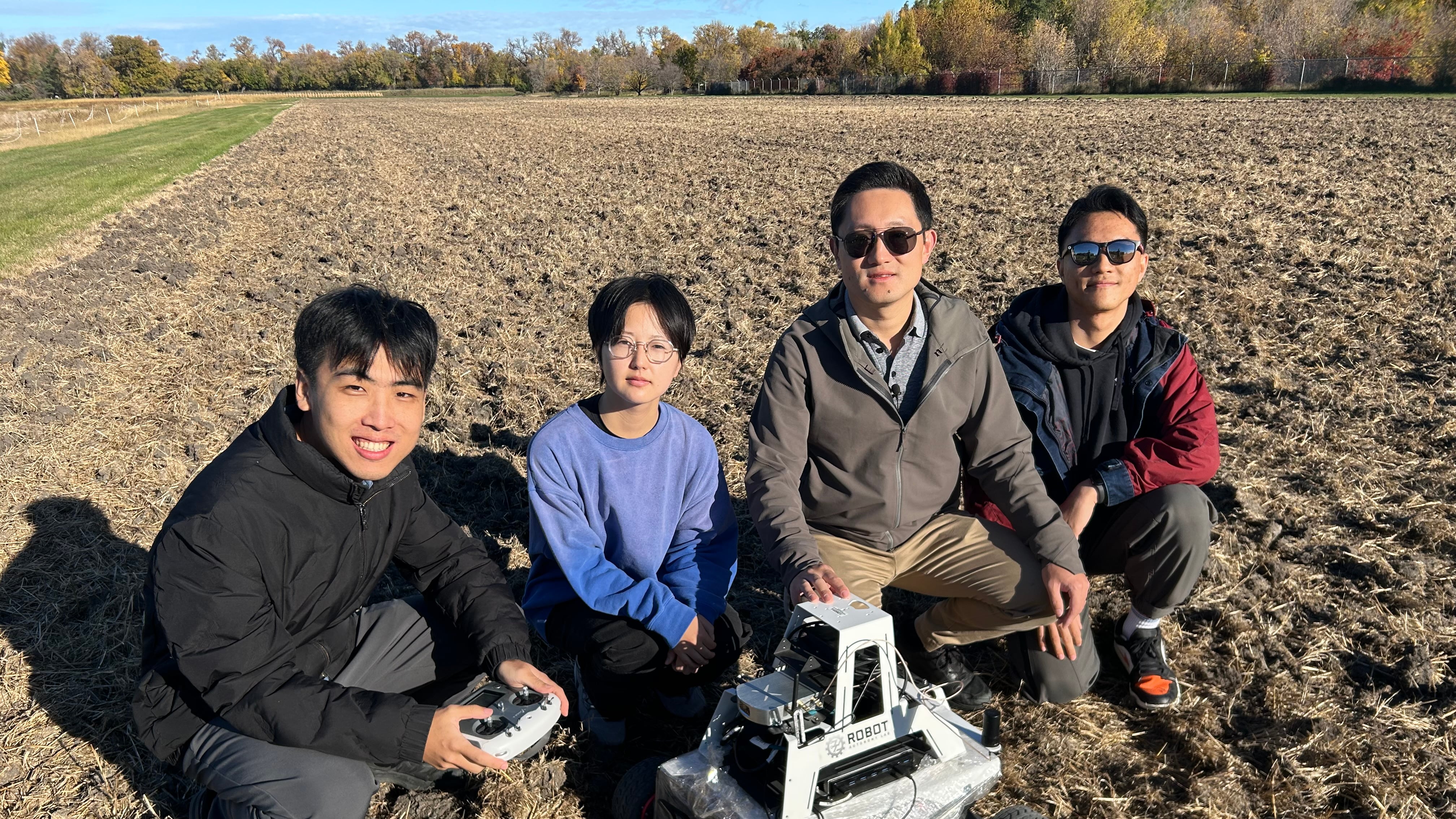
WINNIPEG – At a farm field at the University of Manitoba, Jay Wang and a team of researchers are developing technology they hope will one day allow agricultural machinery to operate on its own.
Wang is developing, what he calls, a “brain” for farm machinery, combining artificial intelligence (AI) with physics to help machines make decisions when things go wrong.
“We are trying to develop a novel solution for agricultural machinery, so they can travel by themselves,” said Wang, an assistant professor of mechanical engineering at the University of Manitoba.
“We want the tractor to drive by itself, to be fully autonomous and go 24/7.”
For autonomous farm equipment to work effectively, researchers say machines need to be able to respond to unpredictable conditions. Wang says his team is working to teach agricultural machinery how to adapt to those changes.
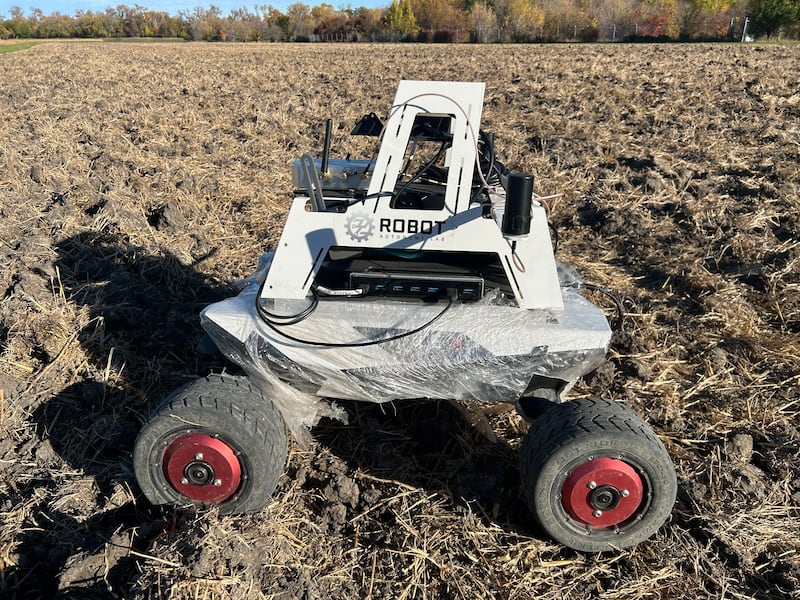
“That’s the technology we are developing and hopefully we can use this technology to help farmers,” he said. “We will use less labour, we will use less oil, and we will produce more food.”
The ultimate goal is to make existing farm equipment autonomous, reducing the need for someone to operate the machinery from behind the wheel.
University of Manitoba research student Jerry Li says that could eventually allow farmers to let autonomous machines handle some tasks on their own in an industry that is already heavily labour-intensive.
“We want to do automated farming and help our farmers, so with our technology, you can just stay home and let the machine automatically run on the farm,” he said.
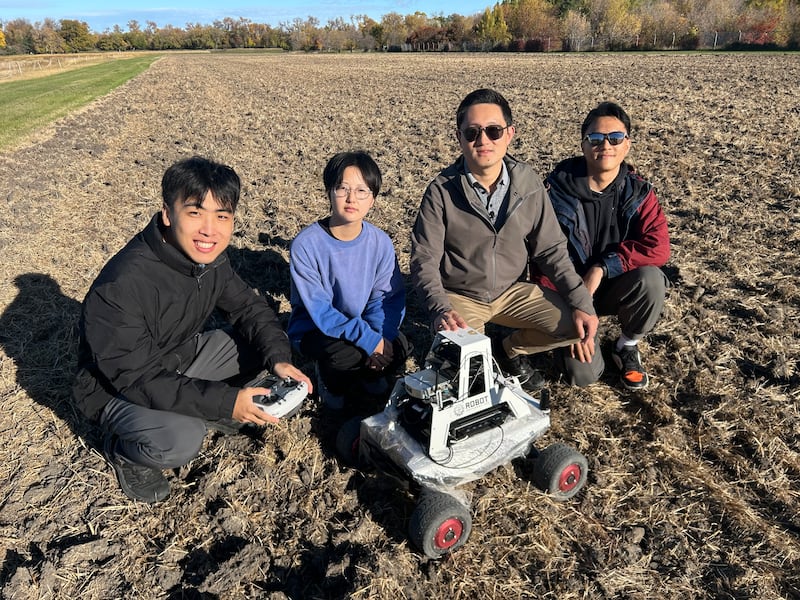
Wang and his team at the University of Manitoba are not the only researchers using AI to better the agriculture industry.
Dilshan Benaragama and Nasem Badreldin are developing innovative technology designed to maximize crop yields while minimizing chemical use, applying treatments only where they are needed.
Benaragama, an assistant professor at the University of Manitoba, told CTV News last month that the goal is to make farming smarter, more affordable and environmentally friendly.
“We are focusing on bringing in technology, like most advances in remote sensing technology with drones and then combining with AI technologies to solve problems in western Canadian farms,” he said.
AI another tool for agriculture industry
Tech analyst Carmi Levy says AI could give farmers another tool to deal with the growing pressure to produce more with fewer resources.
“Farmers are always struggling with doing more with less,” he said.
“Artificial intelligence can be one of those enabling technologies that allows them to cover more ground; that allows them to plant and harvest more efficiently, larger amounts of land in less time; to adapt for things like weeds and changing climate and weather.”
“Despite the overarching fears of artificial intelligence wiping out huge numbers of jobs, the reality on the ground is it could allow smaller farms to survive and thrive and compete, whereas otherwise they might simply go under,” he said.
Wang says his focus is to develop the best technology as possible.
“We hope using our technology to really help the farmers in Manitoba to make our agricultural machinery fully autonomous,” he said.
He says his goal is to have this technology extend beyond farming, hoping one day, it could be deployed in other sectors, including space exploration.