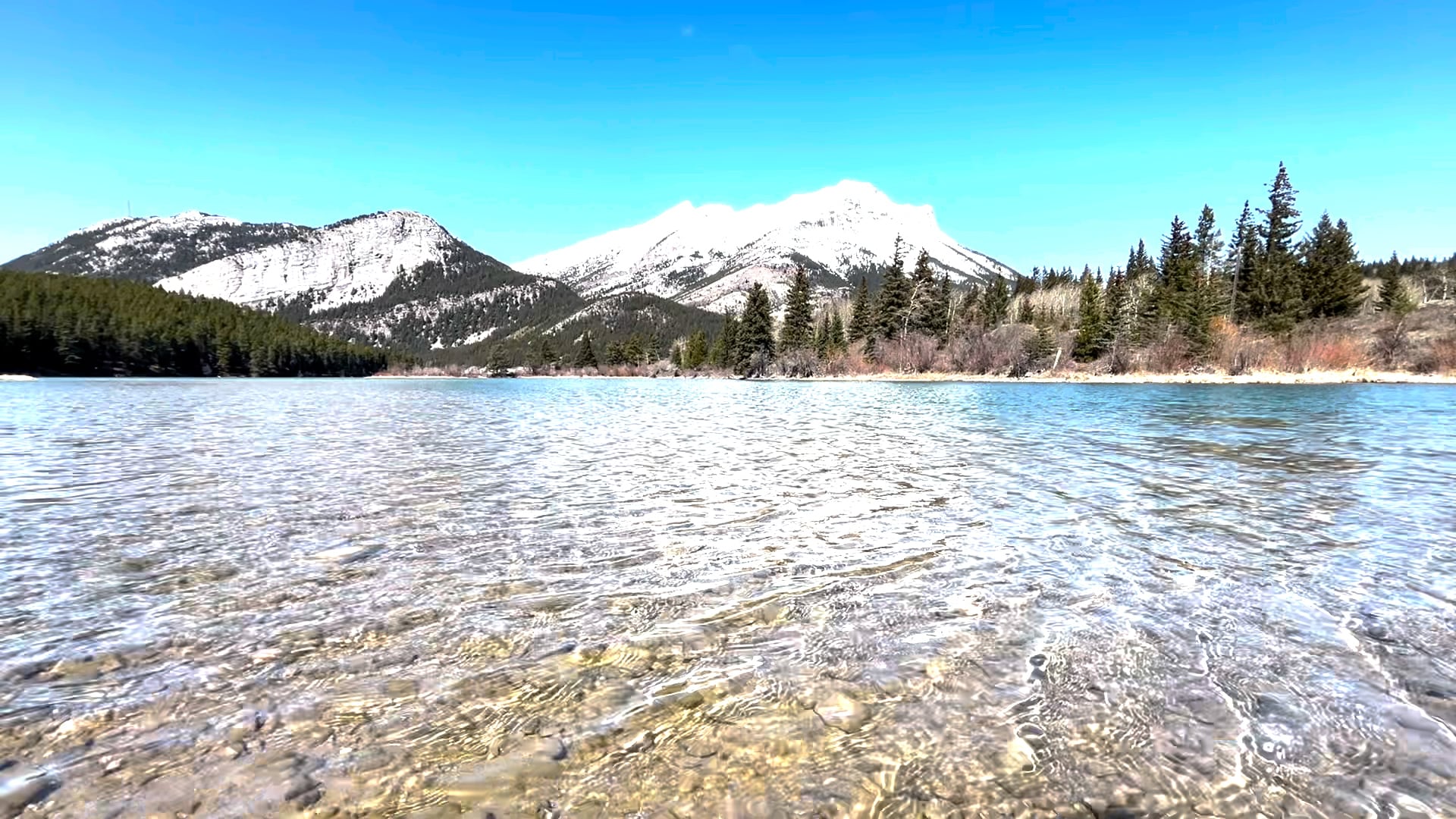
A recently published scientific study is raising fresh concerns about the long-term environmental impacts of coal mining in Western Canada, finding that pollution from a mine closed decades ago continues to contaminate fish in an Alberta lake and could threaten its future.
The peer-reviewed research, released this month by the American Chemical Society, found elevated levels of selenium in fish from Crowsnest Lake in southern Alberta, tracing the contamination to runoff from the Tent Mountain coal mine, which ceased operations in the 1980s.
“This becomes a human health issue,” said Lorne Fitch, a retired fish and wildlife biologist.
“The results were quite striking in terms of levels in fish flesh that are higher than recommended for human consumption.”
The findings come as a legal demand letter, filed by a member of the Piikani First Nation, has been sent to provincial and federal governments, as well as the mine’s current owner, calling for immediate action to stop ongoing pollution and begin cleanup efforts.
The study, led by provincial aquatic scientist Colin Cooke, found selenium concentrations in multiple fish species that exceeded federal and provincial guidelines for safe consumption. Researchers warned that additional coal development in the region could push the fishery beyond sustainability.
Selenium is a naturally occurring element, but in high concentrations it can build up in aquatic ecosystems, accumulating in fish tissue and causing deformities, reproductive failure and population decline.
Fitch said the research underscores how the environmental effects of coal mining can persist long after operations end.
“The impacts of mining, even for a couple of decades, could have implications that reach far into the future in terms of water quality, biodiversity and risk to human health,” he said.
Legacy mines
Crowsnest Lake receives runoff from the former Tent Mountain mine, where waste rock continues to leach selenium into surrounding waterways. The site was partially certified as reclaimed decades ago, but contamination persists.
In a statement, Alberta’s Minister of Environment and Protected Areas Grant Hunter said the province has one of the world’s leading water monitoring systems and that water in Crowsnest Lake remains safe, with selenium levels staying low. The minister added that modern coal mining is subject to stricter standards and stronger environmental protections than in the past.
But experts say the province’s response focuses on water, not what’s happening in the fish.
Mandy Olsgard, a senior toxicologist with Integrated Toxicology Solutions, said the research shows selenium has built up in fish tissue, raising concerns about ecological and food safety risks.
“Water in Crowsnest Lake might be safe for humans, but selenium has accumulated in fish tissues, so it’s not safe for fish — that’s what this publication tells us,” she said.
Olsgard said the disconnect highlights a broader issue around enforcement.
“Yes, we do have stringent environmental quality guidelines in Canada, but we do not have a robust compliance and enforcement system,” she said.
She added that similar contamination has been documented at other former coal sites in Alberta.
“Where I’ve really focused my work is more into the northern mines, around the Grande Cache area and Cardinal River, which are showing the same thing for legacy mine sites,” she said.
‘For the next generations’
The issue is not isolated. In neighbouring British Columbia, coal mining in the Elk Valley — operated by Elk Valley Resources, a subsidiary of Glencore — has faced ongoing challenges controlling selenium pollution, despite significant investment in mitigation measures and regulatory oversight.
In Alberta, concerns are now intensifying as exploration continues for the proposed Grassy Mountain coal project in the same region.
“Grassy Mountain cannot be allowed to go ahead,” said Dave Thomas, a spokesperson for Crowsnest Headwaters.
“Any further coal mining could tip the fishery to the point where fish would no longer survive.”
He added the contamination has implications far beyond the region.
“You’re talking about source water for the Saskatchewan River system. This lake provides water all through the Prairies right to Hudson’s Bay. And that selenium contamination flows all the way through.”
The letter also argues that the pollution is infringing on the rights of Indigenous communities who have long relied on the lake for food.
A Piikani First Nation elder, who supports the legal action, said the impact is already being felt.
“This lake provided our way of life,” said Pale Horse Rider. “But today, the fish from this lake are not edible anymore.”
He said the issue affects both culture and survival.
“We have to maintain the quality of water to sustain our lives for the next generations,” he said.
Fitch said the findings should serve as a warning as debate continues over new coal development.
“This should be a huge warning light to us,” he said.
“About 80 per cent of Alberta’s population depends on water from these eastern slopes.”
The legal demand sets a deadline for governments and the company to respond, with the possibility of court action if no steps are taken.

