Canada’s telecommunications sector could be due for a rebound as investors turn overly negative, according to a new outlook that highlights opportunities in undervalued stocks.
BNN Bloomberg spoke with Vince Valentini, managing director of equity research at TD Cowen, who says companies such as Rogers Communications, Thomson Reuters and Cogeco Communications are trading well below fair value despite improving fundamentals and cash flow growth.
Key Takeaways
- Rogers Communications remains a top pick as leverage concerns ease and wireless market pricing improves.
- Thomson Reuters’ pullback may be overdone as its AI-driven tools maintain a competitive edge.
- Cogeco Communications trades at steep discounts despite high free cash flow and dividend potential.
- Market sentiment on telecoms is overly bearish, creating attractive entry points for investors.
- Free cash flow growth across major telecoms could drive valuation recovery into 2025.
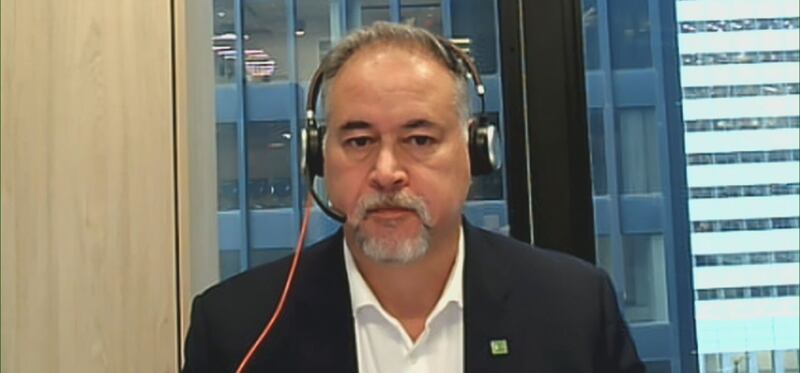
Read the full transcript below:
ANDREW: Time for Hot Picks. Our guest covers the telecom and information sector, and he ranks Rogers as one of his top ideas. He says the telecom giant is trading at a discount, with too much bad news priced into the stock. We’re joined by Vince Valentini, managing director of equity research at TD Cowen. Vince, thanks very much for joining us. Tell us what you think the market may be missing here with Rogers.
VINCE: Thanks for having me, Andrew. Rogers has been our top pick since June. The stock’s had a nice 50 per cent bounce off its lows earlier this year, but I see no reason to back off it as our top pick. They still have a lot going for them. I’m not sure the market’s totally missing this — a lot of analysts seem to be on the same page now in thinking Rogers is a good place to be — but the key drivers are, first, the wireless market is getting better. We’ve seen six straight months of improvement in advertised pricing from all four wireless carriers. That’s going to gradually lead to better average revenue per user and stronger wireless revenue for Rogers throughout next year.
The second point is they’re finally taking steps to improve free cash flow. Notably, they took their capital expenditure guidance down for this year, and I think they’re signalling that capex will come down even further next year. More free cash flow means they can pay down debt faster, and more enterprise value will transfer to equity holders versus debt holders. And last but not least, the sports teams they own just keep increasing in value. There’s a material catalyst coming for this stock next year, as they finally make a move to monetize some of their stake in MLSE and the Blue Jays through a sale to new private investors.
ANDREW: Would they try to pull off an IPO of the sports business, do you think?
VINCE: I don’t think that’s a 2026 event, Andrew. I think the first step is a material injection of cash from new private investors. They need that cash to pay down debt. It’s possible an IPO or some kind of public listing could happen in 2027, but the initial catalyst of a sale to private investors is good enough for the stock, in my mind.
ANDREW: The company, of course, competes with our parent company, BCE. The dividend yield is about 3.8 per cent right now. Is that likely to rise anytime soon?
VINCE: No. They took on a lot of debt to buy Shaw Cable a couple of years ago, and they still have to pay that down. They’ve also been taking on debt to buy up stakes in their sports teams before turning around and selling them. So I think we’re a good two or three years away from them having enough cash to raise the dividend.
But that’s a good segue to another name — a smaller cable company that I think should be on investors’ radar: Cogeco Communications, ticker CCA. Its dividend yield, at six per cent, is actually higher than BCE’s. It doesn’t get as much attention as it should. Their payout ratio is extremely low, in the 30 to 40 per cent range, so they could increase that dividend materially going forward if they want to. It actually trades at the third-highest free cash flow yield of all stocks on the TSX, not just within telecom. That’s a much higher yield than most of its telecom peers, and this is a name that’s generating really good free cash flow. Free cash flow is going to go up materially next fiscal year as a number of rural capex projects in Ontario come to an end, and I think the stock is close to 50 per cent undervalued. That’s another one of our top picks, Andrew.
ANDREW: In their latest quarter, they reported tough competition in the U.S. market. Will that be an overhang for the stock?
VINCE: It definitely is not. Everything about Cogeco is strong. For the free cash flow yield to be pushing 18 to 19 per cent, there’s obviously something bad that investors see, but I think people have paid too much attention to that. They don’t own all of that U.S. business — they have a minority partner in Le Caisse. There’s also a lot of debt within that U.S. subsidiary. When we extract the equity value of what Cogeco owns in the U.S., it’s only about 13 per cent of our target market cap or target price for the name. The vast majority of the company’s value is still in its Canadian cable operations, and those are doing quite well.
ANDREW: And finally, Thomson Reuters — of course, a huge contributor to the wealth of the Thomson family and massive in databases and information vending.
VINCE: I think this is one of the premier companies in Canada that Canadians should be proud of. We have this homegrown global leader in a sophisticated technology space. They’re basically the leading provider of software and workflow solutions to the legal and tax community in the U.S. and around the world.
The stock’s been hammered recently, which is why it’s risen to become one of our top picks. It had been pretty expensive for a long time — we liked the company but couldn’t recommend the stock. Since mid-July, the stock’s gone from almost $300 to about $190, and the valuation multiple has come down dramatically.
What’s happening is that many information services and software names are being painted with the same brush — that generative AI and new startup competitors are going to eat their lunch. I think the market has it wrong. Thomson has a really strong moat around its services, tremendous scale, and it’s constantly innovating its products. I think it can stay one step ahead of smaller upstart players. As the market starts to differentiate between winners and losers in the AI race, I think Thomson will be seen as a winner, and the stock should re-rate closer to where it was a few months ago.
ANDREW: Vince, thank you very much for joining us.
VINCE: Thank you.
ANDREW: Vince Valentini, managing director of equity research at TD Cowen, with a look at his three top ideas.
| DISCLOSURE | PERSONAL | FAMILY | PORTFOLIO/FUND |
|---|---|---|---|
| RCI.B TSE | N | N | Y |
| TRI TSE | N | N | Y |
| CCA TSE | N | N | Y |
BNN Bloomberg is owned by Bell Media, which is a division of BCE.
---
This BNN Bloomberg summary and transcript of the Nov. 12, 2025 interview with Vince Valentini are published with the assistance of AI. Original research, interview questions and added context was created by BNN Bloomberg journalists. An editor also reviewed this material before it was published to ensure its accuracy and adherence with BNN Bloomberg editorial policies and standards.

