Three biotech stocks advancing cancer therapies and next-generation drug platforms are drawing attention as clinical catalysts move closer.
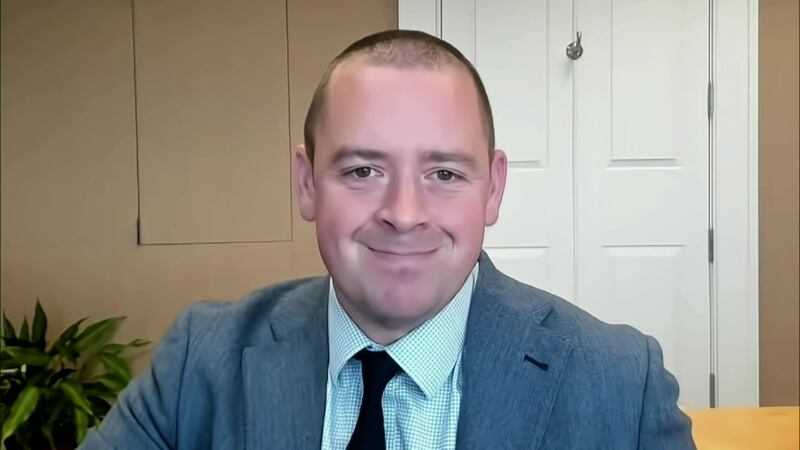
BNN Bloomberg spoke with Robert Driscoll, senior vice-president of equity research at Wedbush, about why he sees potential upside in Revolution Medicines, Monte Rosa Therapeutics and Kura Oncology.
Key Takeaways
- Revolution Medicines is advancing therapies for RAS-mutated cancers, with key data next year that could support regulatory filings.
- The company has shown promising results in pancreatic and lung cancers and holds a priority review voucher to speed potential approvals.
- Monte Rosa Therapeutics is developing molecular glue drugs with prostate cancer data due shortly and a Novartis partnership in autoimmune disease.
- Kura Oncology recently won FDA approval for KOMZIFTI in late-line AML, with earlier-line data due at December’s major hematology meeting.
- All three companies have multiple clinical or regulatory catalysts that could shift investor sentiment over the next year.
Read the full transcript below:
ANDREW: Our guest covers the biotech industry, and that’s the theme for Hot Picks today. We’re joined by Robert Driscoll, senior vice-president of equity research at Wedbush. I love this bit of industry jargon here — Revolution Medicines goes after RAS-addicted cancers, and it sounds like the poor cancers have a substance-abuse problem. It’s not really like that. They depend on mutations in the RAS gene, and Revolution is trying to go after that.
ROBERT: Yeah, good morning everyone, and thanks for having me on. So Revolution Medicines — we call them Rev Med — is a targeted therapy against tumours that, as you said, are driven by mutations in a gene called RAS. About 30 per cent of all cancers are driven by these mutations, the most frequently mutated gene in cancer. We’ve had a lot of trouble trying to drug it over the last 30 years. Even 10 years ago, we still called it undruggable. Lots of companies are still trying. Rev Med has come up with a really neat way of targeting RAS that is maybe broader and ultimately more effective than these other strategies in development. They’ve shown some really exciting data in pancreatic cancer for their lead asset, a really hard-to-drug disease. They’re in late-stage clinical trials now in the second line of pancreatic cancer and just started late-stage trials in the first line. We think in the next few years, they’re going to have a strong franchise in this disease.
Really notably, Rev Med was recently one of the first recipients of the commissioner’s national priority vouchers. This essentially allows them a speedier approval, so it seems the FDA is highly supportive. We recently saw some really compelling data in lung cancer as well. We’ll see more data there next year. With ongoing clinical updates across the programs, we think shares are going to continue to drive higher. The company has about US$2 billion in cash, so it’s really building for that long term and well capitalized as it heads toward commercialization.
ANDREW: And so these are signalling proteins or genes, and they just go into a permanently “on” state. And that’s the core of the problem.
ROBERT: Yeah, exactly. They switch between “on” and “off.” Some of the strategies have gone after the off switch, some have gone after the on switch. We think Rev Med’s approach is the best solution for going after the on switch.
ANDREW: Monte Rosa Therapeutics is your next idea, and they are working with molecular glues. Can you tell us what they are, please?
ROBERT: Yeah, so it’s a brand new class of therapeutics — molecular glue degraders. Instead of binding to a disease-causing protein and hoping that protein is inactivated somewhat, it actually causes it to be destroyed or removed from the cell completely. This has a number of theoretical advantages versus traditional drugs that just bind these proteins. It should be longer acting, potentially more effective, and it opens up new targets for development that we haven’t been able to go after before.
So Monte Rosa’s platform is fuelled by AI to help design these new molecules. They currently have three programs in the clinic. The first is for prostate cancer — we’ll see clinical data in the next few weeks. The second program is for a novel autoimmune disease target recently partnered with a big pharma company called Novartis, which will pay for late-stage clinical development. The third program just went into the clinic for inflammatory diseases, and we’ll see data in the first half of next year. We’re really excited about that. It’s a next-generation drug-development platform that has been productive, and we think it’s undervalued here. Cash balance is about US$400 million as of last quarter, and we expect that to fund operations through 2028.
ANDREW: And finally, a player in cancer treatment, Kura Oncology. What is their particular angle?
ROBERT: Yeah, so it’s an oncology-focused company with a lead drug in development for a large subset of patients with acute myeloid leukemia, or AML. Just last week, their drug, called KOMZIFTI, was approved by the FDA for patients in that late-line setting — very few options, unfortunately, for relapsed or refractory AML patients. We think the profile of KOMZIFTI makes it really attractive for doctors and patients, so we see a strong launch ahead that we expect to drive the stock higher.
Maybe more importantly, the way the FDA views this drug suggests it may be allowed in frontline settings as well. That’s a really big market, and patients might be less sick — they may demand a safety profile that matches KOMZIFTI. Kura is in late-stage clinical development there, and we’ll see data at the large hematology meeting in December, which we’re excited about.
Kura also has another targeted oncology drug in development for renal, or kidney, cancer. We’ll see data for that in 2026, again hoping to drive shares higher. Cash is US$609 million as of last quarter, and they do have a development partner in a Japanese pharma company called Kyowa Kirin as well.
ANDREW: One of the frightening things about cancer is that it evolves within the body and develops resistance. Is that part of what Kura is trying to deal with here?
ROBERT: Yeah, exactly. A lot of the time, these targeted oncology drugs are essentially playing whack-a-mole. Kura is trying to end that process and maybe turn these cancer cells into more normal cells. That’s their particular strategy.
ANDREW: It’s incredible. And the cancer cells, of course, cooperate with each other. They’re part of us, but they’re not a helpful part of us. We’d better leave it there. Thank you very much, Robert.
ROBERT: Thank you.
ANDREW: Robert Driscoll, senior vice-president of equity research at Wedbush.
| DISCLOSURE | PERSONAL | FAMILY | PORTFOLIO/FUND |
|---|---|---|---|
| RVMD NASDAQ | N | N | Y |
| GLUE NASDAQ | N | N | Y |
| KURA NASDAQ | N | N | Y |
---
This BNN Bloomberg summary and transcript of the Nov. 17, 2025 interview with Robert Driscoll are published with the assistance of AI. Original research, interview questions and added context was created by BNN Bloomberg journalists. An editor also reviewed this material before it was published to ensure its accuracy and adherence with BNN Bloomberg editorial policies and standards.

