Luxury stocks tied to premium consumer spending are benefiting from resilient demand as affluent buyers continue to spend amid strong global asset markets. Limited supply models and brand power are supporting pricing and margins across select global franchises.
BNN Bloomberg spoke with Markus Hansen, portfolio manager at Vontobel Asset Management, about luxury companies benefiting from the wealth effect, controlled growth strategies and global demand outside the AI-driven investment narrative.
Key Takeaways
- High-end consumer spending remains resilient as strong asset markets support the wealth effect among affluent buyers.
- Luxury brands with controlled supply models are maintaining pricing power despite higher input costs.
- Jewellery demand is benefiting from branding, innovation and sustained global appetite for precious metals.
- Experiential luxury and global sports franchises offer profitable growth through diversified revenue streams.
- International luxury stocks provide diversification beyond AI-focused and North American-heavy portfolios.
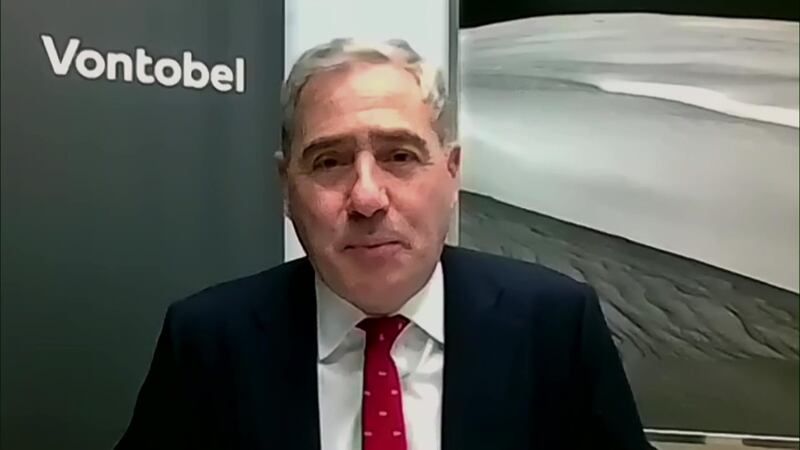
Read the full transcript below:
ANDREW: Let’s get to Hot Picks in luxury stocks. We’re joined by Markus Hansen, portfolio manager at Vontobel Asset Management. Thank you very much for joining us.
MARKUS: Thank you very much. Good morning and Happy New Year.
ANDREW: Happy New Year. Start off, please, with your thesis on Richemont, the jewellery maker. What attracts you to this name?
MARKUS: Absolutely. Just to be clear, at Vontobel we focus on quality growth. We’re a global asset manager, so we’re always looking for fantastic franchises and brand companies that can complement strong performance in U.S. assets. Diversification is important for us.
Consumer discretionary is an area where we find some great franchises. Richemont is a Swiss-based holding company with two major assets: Cartier and Van Cleef & Arpels, which are two of the most iconic jewellery brands globally. It’s roughly a US$120-billion market-cap company with about US$26 billion in revenues. More than 80 per cent of earnings come from the jewellery business.
That business benefits not only from long heritage — we’re talking about proven track records of more than 100 years — but, more importantly, from pricing power and strong demand. As jewellery increasingly shifts toward branded offerings with strong execution, we think Richemont is well positioned. It’s very much part of the high-end luxury segment, combining controlled demand, margin discipline and growing returns.
ANDREW: The chief financial officer warned late last year that higher precious metals prices could pressure margins. Does that concern you?
MARKUS: Not at all. If anything, we think movements in precious metals markets may actually support jewellery demand. Richemont has the ability to hedge and lock in some of its supply, which helps manage input costs.
It’s also worth noting that despite their long histories — Cartier is about 150 years old and Van Cleef just over 100 — these brands continue to innovate. Cartier’s Love bracelet, for example, remains extremely popular, and newer versions continue to sell out. Supply constraints give them pricing power, which we think more than offsets potential margin pressure.
ANDREW: Your next idea has a very evocative ticker symbol in the U.S. — RACE — Ferrari.
MARKUS: Exactly. Ferrari has been around for more than 80 years. It’s essentially a luxury goods company that happens to make cars. If you look at its profit-and-loss profile, margins and returns, it compares closely with top global luxury brands.
This is about a US$66-billion market-cap company with revenues of roughly US$8 billion. The key part of the story is volume control. Ferrari could sell more cars tomorrow if it wanted to, but it deliberately limits supply to preserve exclusivity and long-term brand value.
While 2025 was somewhat lacklustre, if you look at the three-, five-, 10- and 15-year performance, the track record is exceptional. We think Ferrari continues to benefit from strong high-end spending and demand for unique, high-quality assets.
ANDREW: Your final name also involves fast cars — Formula One Group. We may not be buying the cars, but it’s part of the luxury ecosystem.
MARKUS: That’s right. Sports franchises, particularly at the high end, are very interesting. They’re unique, and it’s rare to find sports assets that are both investable and profitable. Formula One stands out.
Formula One has been around since 1950. What you’re buying today is an asset that was formerly a Liberty Media tracking stock and is now an operating business that owns the commercial rights to Formula One racing globally.
The business has three main revenue drivers. First, race hosting: cities around the world bid to host races, and there are 24 races each season, which runs from roughly March to December. Second, media rights: Formula One is among the three or four most-watched sports globally. In North America, it has expanded to three races in recent years, but its following outside the region is enormous. Third, sponsorships: the sponsor base has broadened significantly beyond traditional auto, oil and tobacco companies to include global consumer brands and technology firms.
An additional growth driver is the acquisition of MotoGP, the Formula One equivalent of motorcycle racing, which now represents about 10 per cent of revenues. We believe Formula One Group can apply similar growth strategies to that franchise over time.
Overall, this is roughly a US$25-billion market-cap business with more than US$4 billion in revenues. We think these revenue drivers can support consistent top-line and earnings growth.
ANDREW: I have to admit, for me, car racing can feel like watching paint dry — but when you understand what’s going on, it becomes much more interesting.
MARKUS: Andrew, I’d recommend watching MotoGP highlights. It’s faster, the overtaking is more aggressive, and the camera angles are incredible. It’s definitely worth a look.
ANDREW: So you think motorcycle racing might draw me in?
MARKUS: It might. Watch a couple of races and you’ll see what I mean.
ANDREW: I remember in my youth watching the Isle of Man races — very dangerous back then.
MARKUS: Fortunately, safety has improved significantly, both in Formula One and MotoGP. What’s really compelling today is the global reach of these franchises, which we don’t think is fully reflected in current valuations.
ANDREW: Markus, thank you very much. Markus Hansen, portfolio manager at Vontobel Asset Management.
| DISCLOSURE | PERSONAL | FAMILY | PORTFOLIO/FUND |
|---|---|---|---|
| CFR SWX | Y | N | Y |
| RACE UN | Y | N | Y |
| FWONK NASDAQ | Y | N | Y |
---
This BNN Bloomberg summary and transcript of the Jan. 6, 2026 interview with Markus Hansen are published with the assistance of AI. Original research, interview questions and added context was created by BNN Bloomberg journalists. An editor also reviewed this material before it was published to ensure its accuracy and adherence with BNN Bloomberg editorial policies and standards.

